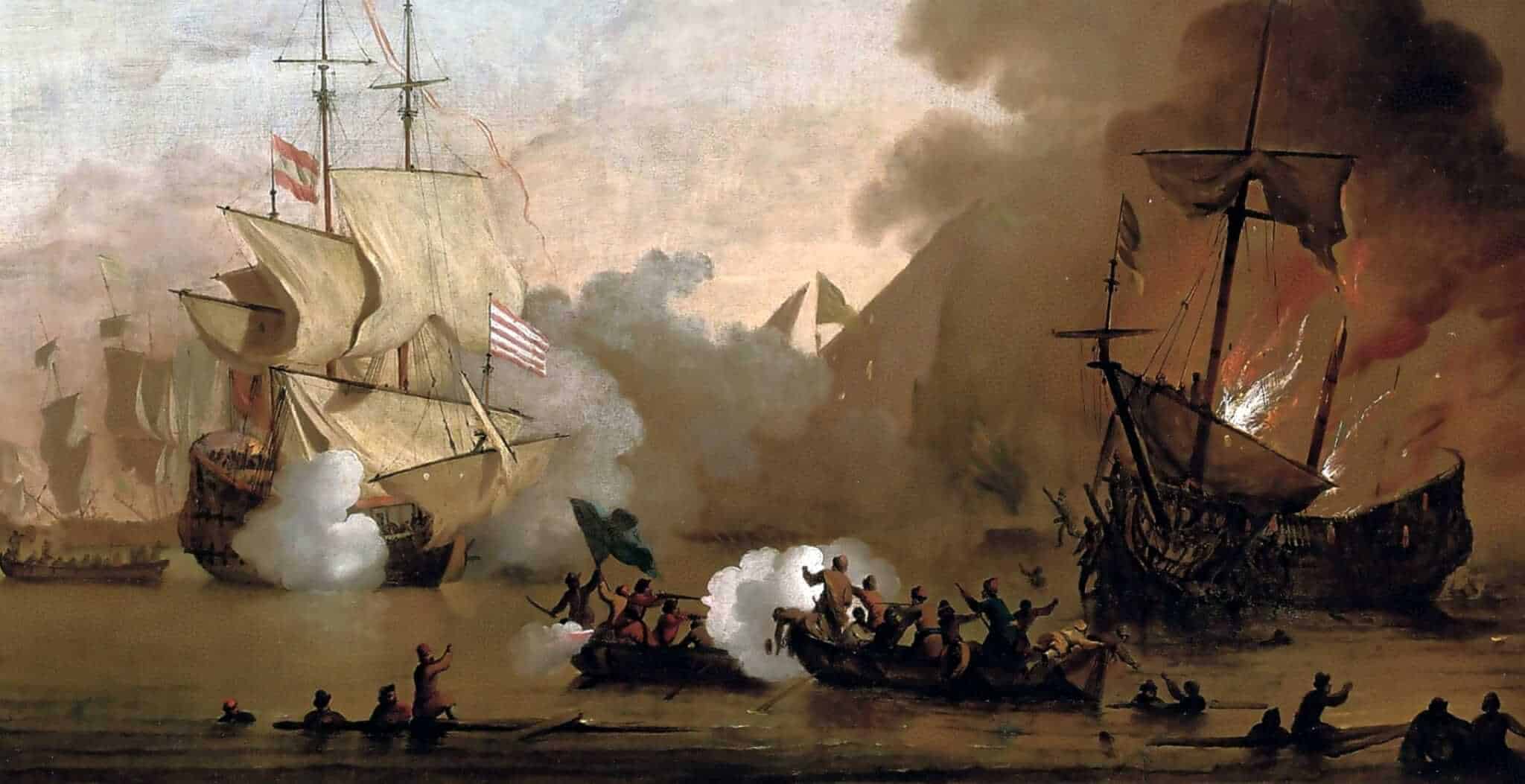


In the 16th and 17th centuries, privateers enjoyed a successful trade around the world. Privateer ships were warships that were privately owned, but had government permission to attack enemy ships. The privateer would then share any booty with the government.
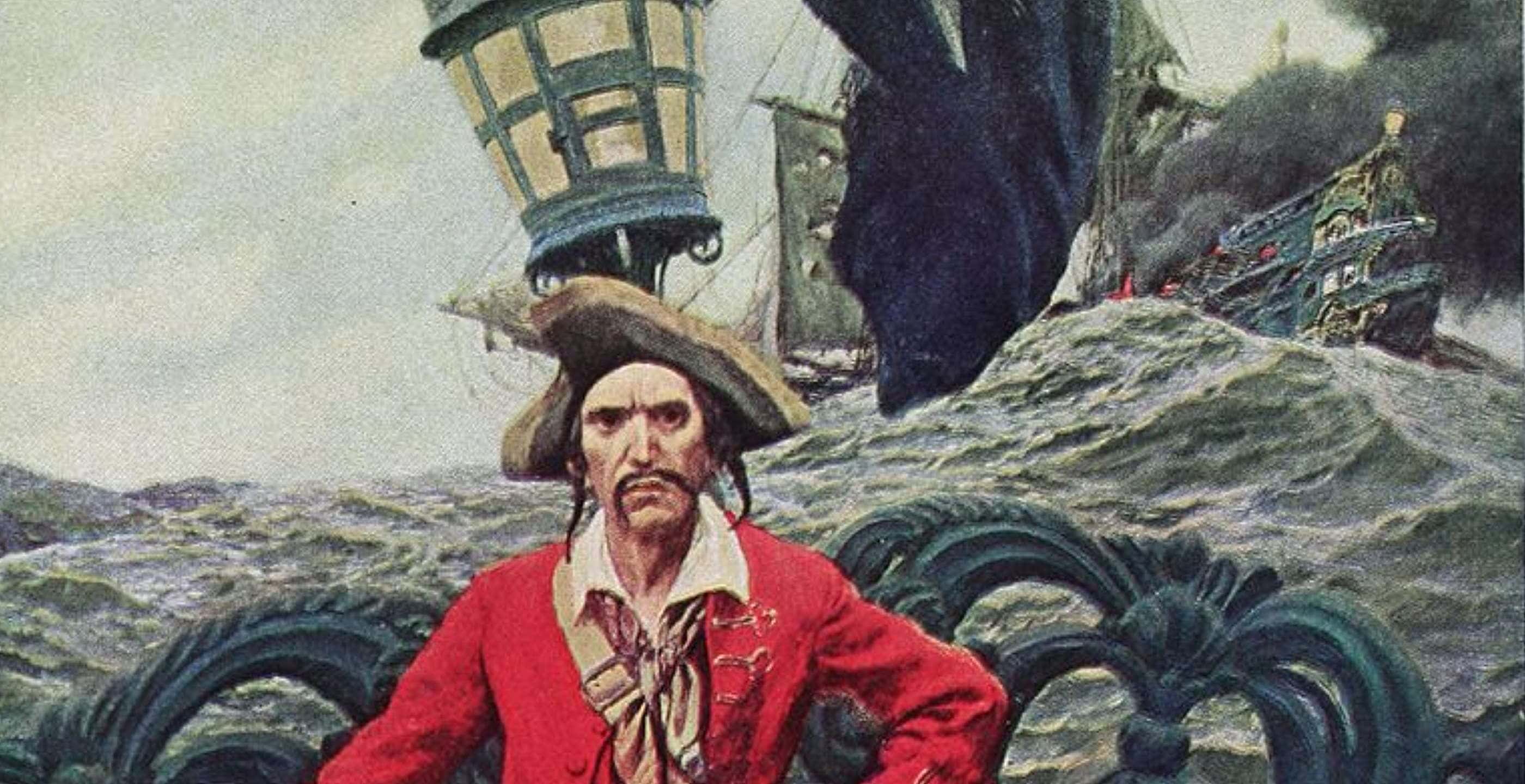
Captain Kidd can be said to be the most unfortunate pirate ever to sail the high seas! For it was his bad luck to sail as a privateer/pirate just when the rules changed and the privateer/pirate became an outlaw.
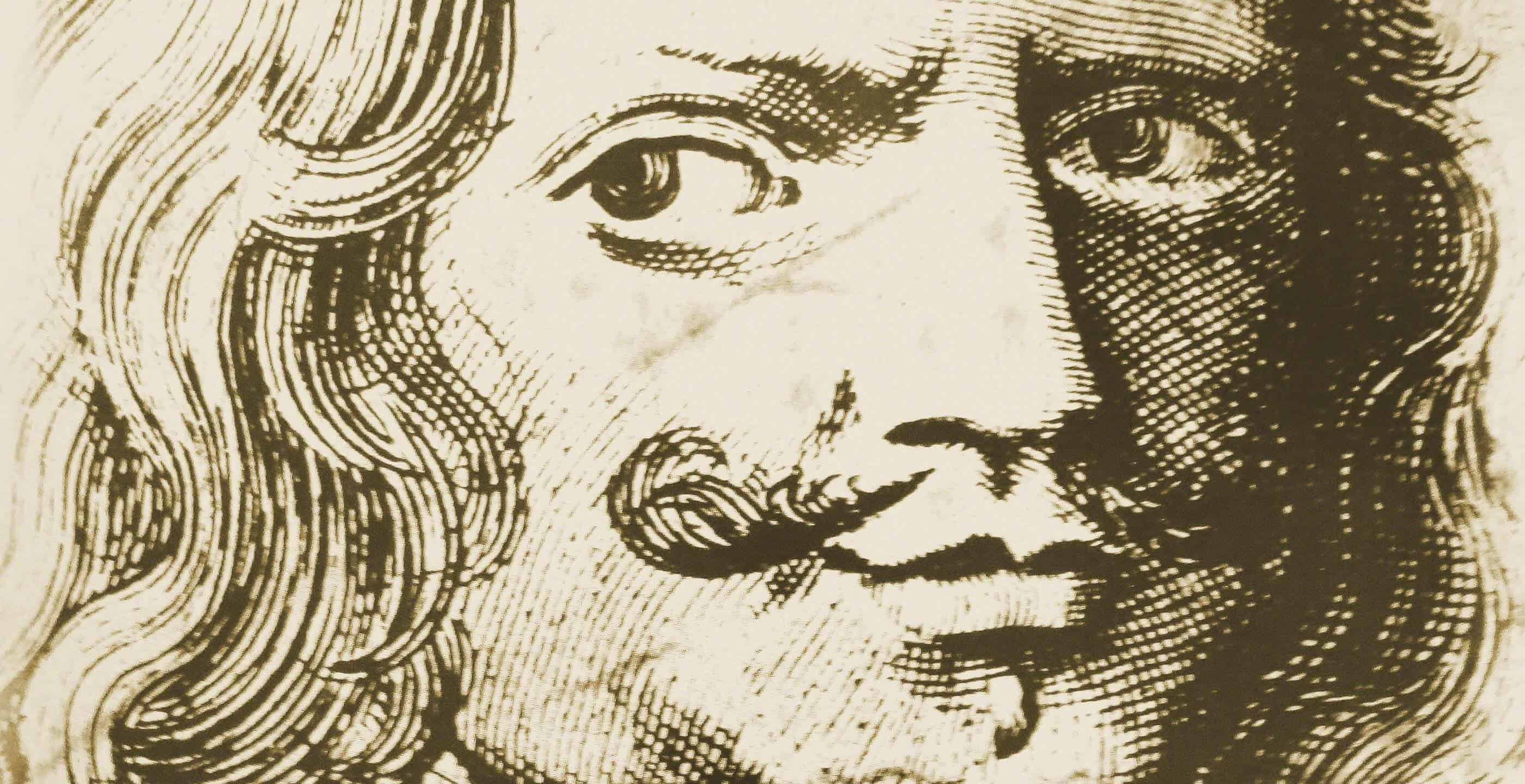
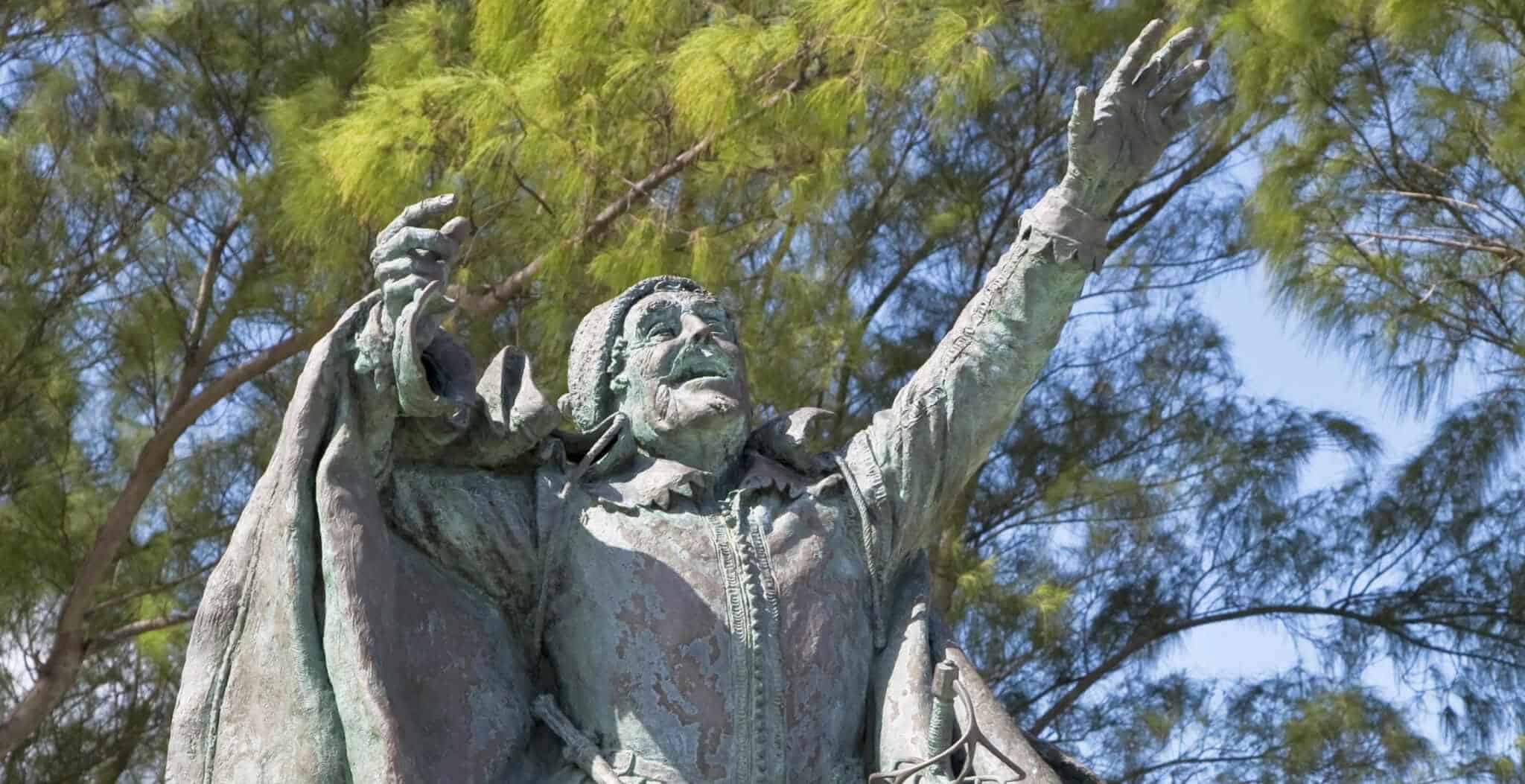
William Kidd was born in Dundee, Scotland, in 1654, the son of John Kidd a seaman, and his wife Bessie Butchart. He became a sea captain, his first ship being the Antigua. He emigrated to New York in the 1680’s where he met and married Sarah Bradley Cox Oort, a wealthy widow.
During the war between England and France in the 1690’s, Kidd became a successful privateer in charge of the vessel Blessed William, defending American and English trade routes with the West Indies. He was commissioned by the English government to take charge of an expedition against pirates in the Indian Ocean. Kidd’s public mission was to rid the sea of pirates, but it was probably understood by his backers that he would also take every opportunity to capture any enemy ships that had valuable cargo.
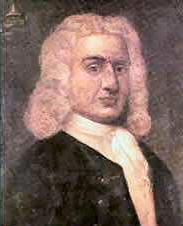
On 6 September 1696, Kidd and a crew of 150 men left New York aboard the 32-gun Adventure Galley, bound for the Indian Ocean. One of the pirates he set out to capture was Robert Culliford, who sailed with a surgeon named Jon Death. The story goes that Culliford would order his men to load their cannons with china dishes, as the china shards would shred the sails of the ships that he was attacking.
Poor Captain Kidd was not very adept at finding pirates. The mood of his crew turned ugly and mutiny was in the air. Finally his crew forced him to turn pirate himself. In late January 1698, the Quedah Merchant was sighted rounding the tip of India. Kidd and his crew attacked and took the ship: the cargo was silk, muslin, calico, sugar, opium, iron and saltpeter and worth a rumoured 70,000 pounds. The Quedah Merchant, renamed the Adventure Prize, was kept by Kidd, as he was forced to abandon and sink his now leaking ship.
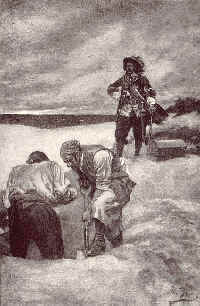 Unfortunately for Kidd, it was now two years since he had begun his voyage and in that time there had been a change of attitude in England toward piracy. Piracy was to be stamped out and was now a criminal act.
Kidd finally arrived in the West Indies in April 1699 to find that he was now deemed to be a pirate and that the American colonies were gripped by pirate fever. Up and down the coast, everyone was on the hunt for pirates.
Kidd managed to negotiate a pardon from the English authorities for his actions, claiming he was forced to piracy by his crew. Kidd sailed for Boston, stopping along the way to bury booty on Gardiners Island and Block Island. Some of the booty on Gardiners Island was later recovered.
The New England governor, Lord Richard Bellomont, himself an investor in Kidd’s voyage, had him arrested on 7 July 1699 in Boston. He was sent to England aboard the frigate Advice in February 1700.
The shamelessly rigged trial started on 8 May and was completed the next day – the verdict was that Kidd was guilty of the murder of one of his crew and guilty of multiple acts of piracy.
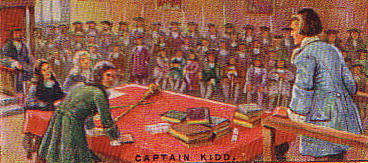
Captain William Kidd was hanged on 23 May 1701. The first rope put around this neck broke so he had to be strung up a second time. His corpse was placed in a gibbet at the mouth of the Thames River and left to rot, as an example to other would-be pirates. His English backers, though tainted by the piracy scandal, kept their estates and power.
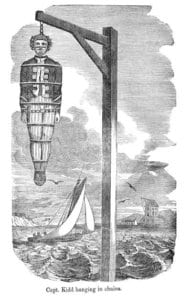
After his death, his legend grew, especially the stories of buried treasure. Authors such as Robert Louis Stevenson with his book “Treasure Island” and Edgar Allan Poe (“The Gold Bug”) helped fuel the myth.