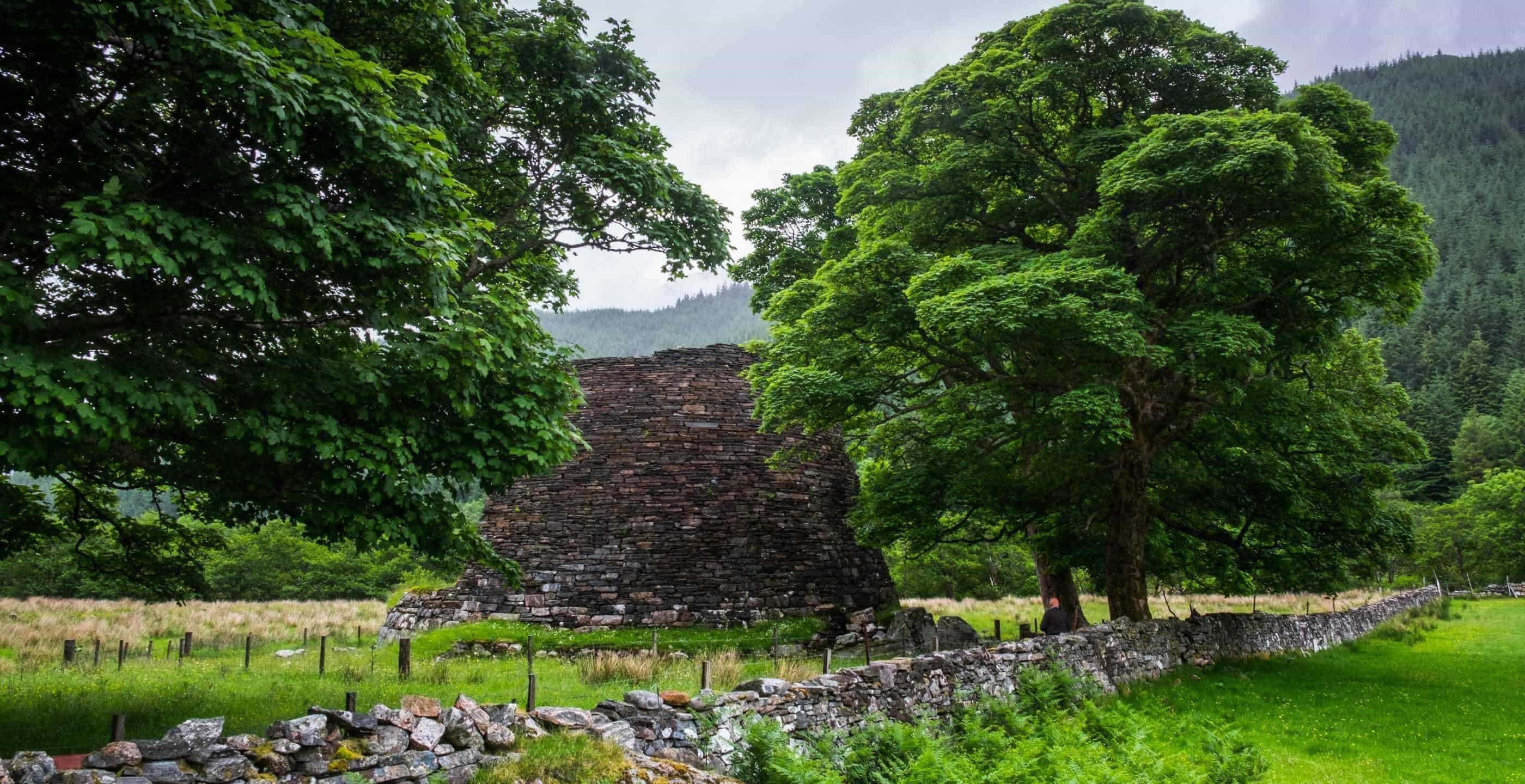


Brochs are mysterious features of Scottish archaeology. These two thousand year old stone structures date from the Iron Age, and it is estimated that at least seven hundred brochs once existed across Scotland. Most are now in a poor state of repair, but the most complete examples can only be said to resemble the cooling towers of modern power stations.
It is only to the north and west of Scotland, and predominant on Orkney, Shetland and the Western Isles, where stone was a more readily available building material than timber, that brochs are to be found. Huge windowless towers, ingeniously engineered, they represent the pinnacle of dry-stone wall building and remain one of the finest construction achievements of Iron Age Europe.
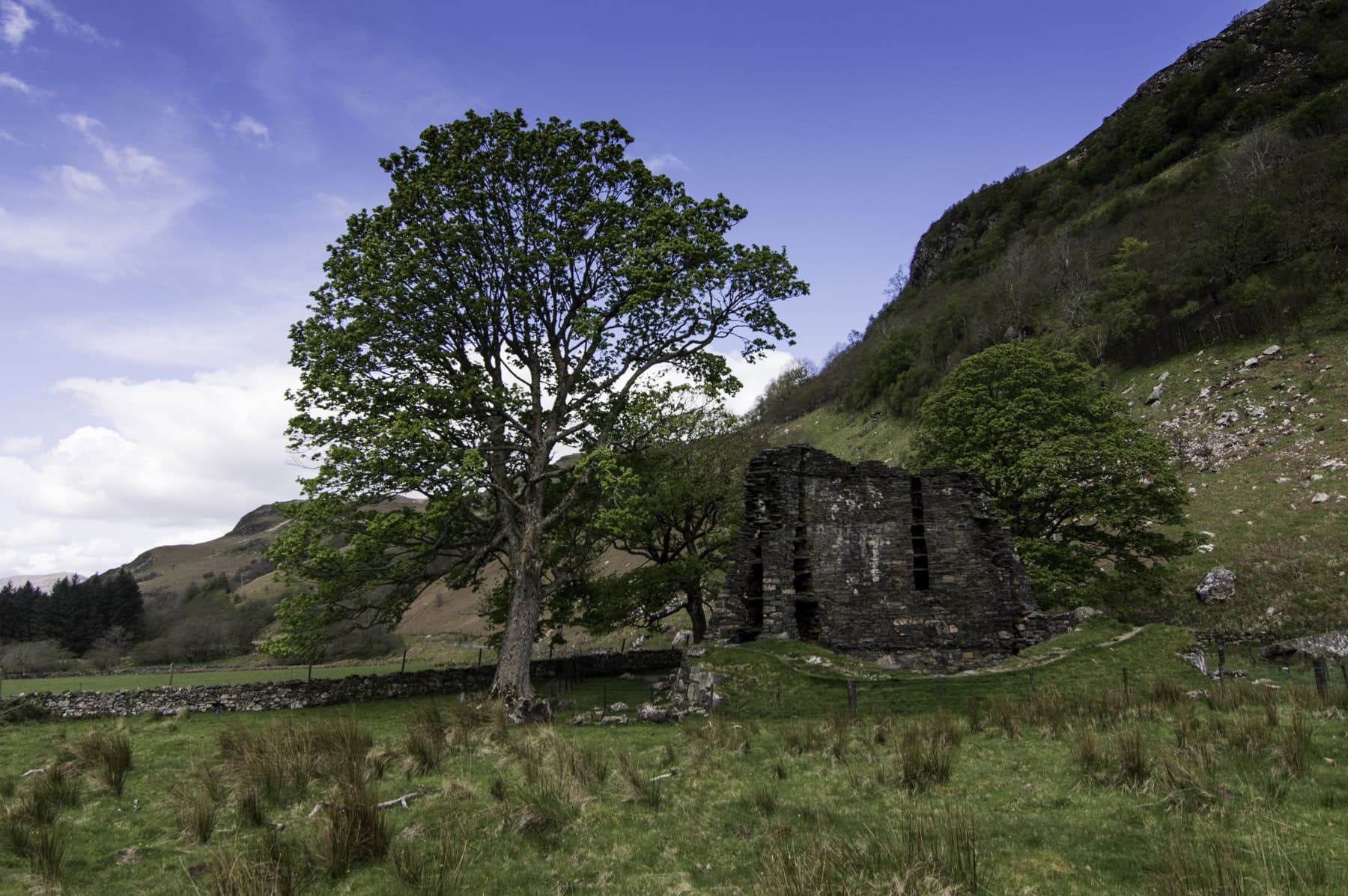
Built during the last few centuries BC and the first few centuries AD, brochs combine features of fort, fortified house, and status symbol, and could feasibly have served several different purposes in different places and at different times.
As a type of fortified house they typically had one, small, easily defended entrance leading to a central inner circular “courtyard”. They were formed by two concentric, dry-stone walls, producing a hollow-walled tower with small rooms and storage areas between. Steps were also built into the gap between the walls providing access to upper wooden platforms. Perhaps not standard living quarters for all; many people would have only taken refuge in the broch when a raiding party was sighted, squeezing some of their valuable livestock into the central courtyard. It is likely that the whole structure would have been topped with a conical, thatched roof.
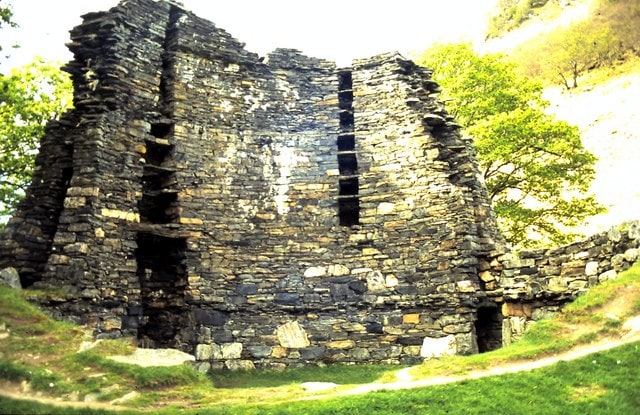
As a fort it is believed that brochs were never built to deter serious or sustained attack as their defences were simply too weak; the rough stone walls could be climbed by determined attackers and the entranceway lacked external protection and so could easily have been rammed. Lacking external windows and access to the top of the walls, the defenders inside were denied both visibility and the tactical advantage of height, from which missiles could be launched.
As mentioned above, brochs were also meant to impress, and as such were probably the homes of tribal chiefs or important farmers. Fragments of pottery recovered from such sites reveal that their owners enjoyed a lifestyle that included imported wines and olives from the Mediterranean – many years before the Romans invaded!
For some reason around AD 100 the fashion for broch building declined, but recent archaeology evidence suggests that they continued to be occupied throughout the Scottish Late Iron Age (AD 300 – 900).
Without doubt the finest remaining example is the Broch of Mousa in the Shetlands, which has survived the intervening millennia virtually intact. Mousa Broch rises to 13.3m (44ft) high making it the tallest prehistoric building in Britain. The broch stands on the now uninhabited island of Mousa, a mile or so off the east coast of Shetland’s Mainland. Visitors can still climb to the top by a narrow stair within its walls. Access is by passenger ferry (April – September) from Sandwick, 15 miles south of Lerwick.
Standing above a rocky shoreline, Mousa was one of a pair of brochs built to guard the Mousa Sound. The other, less well preserved, is at Burraland on Shetland’s Mainland on the opposite side of the sound.