

There are two men whose names were a clarion call to all Scots.
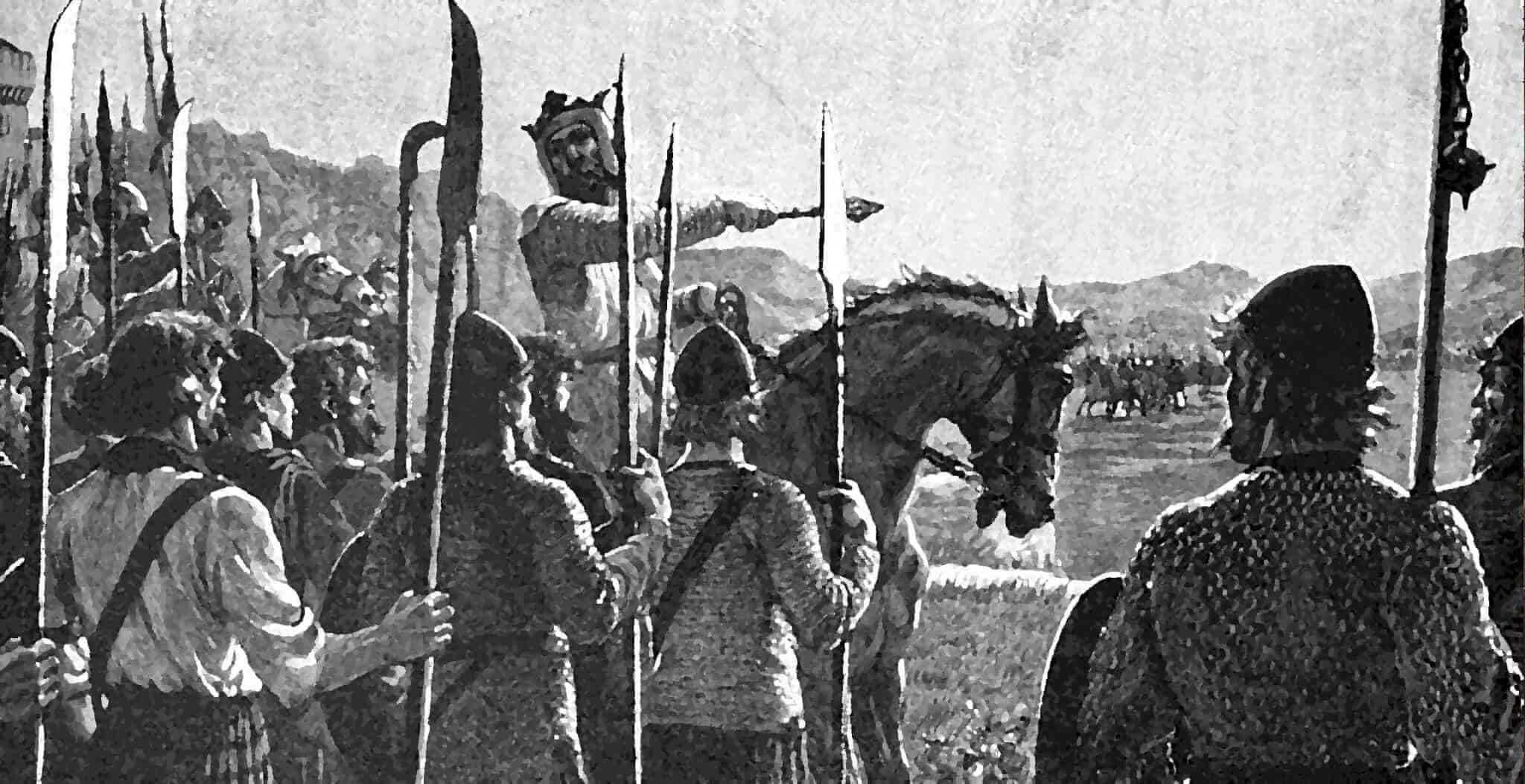
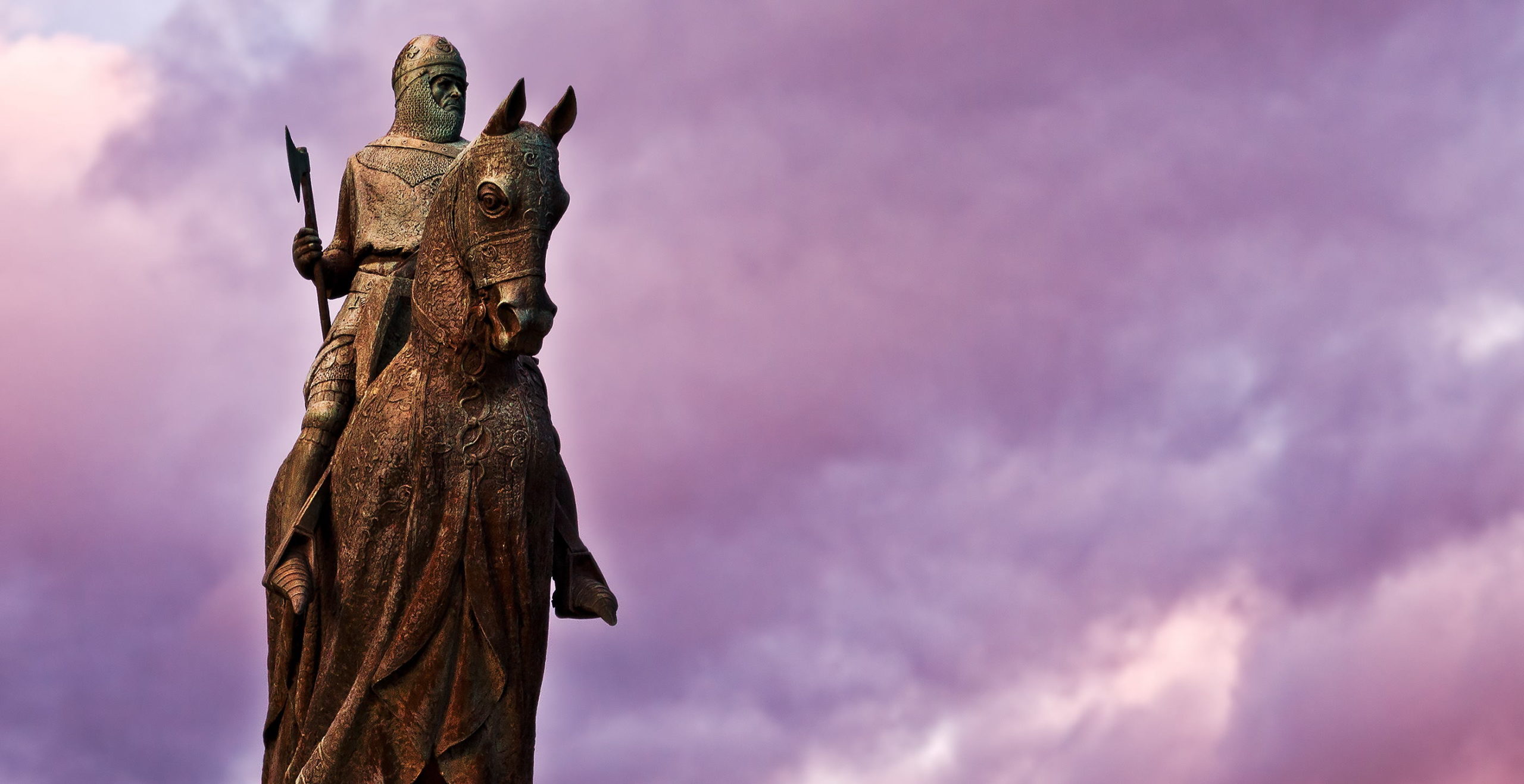
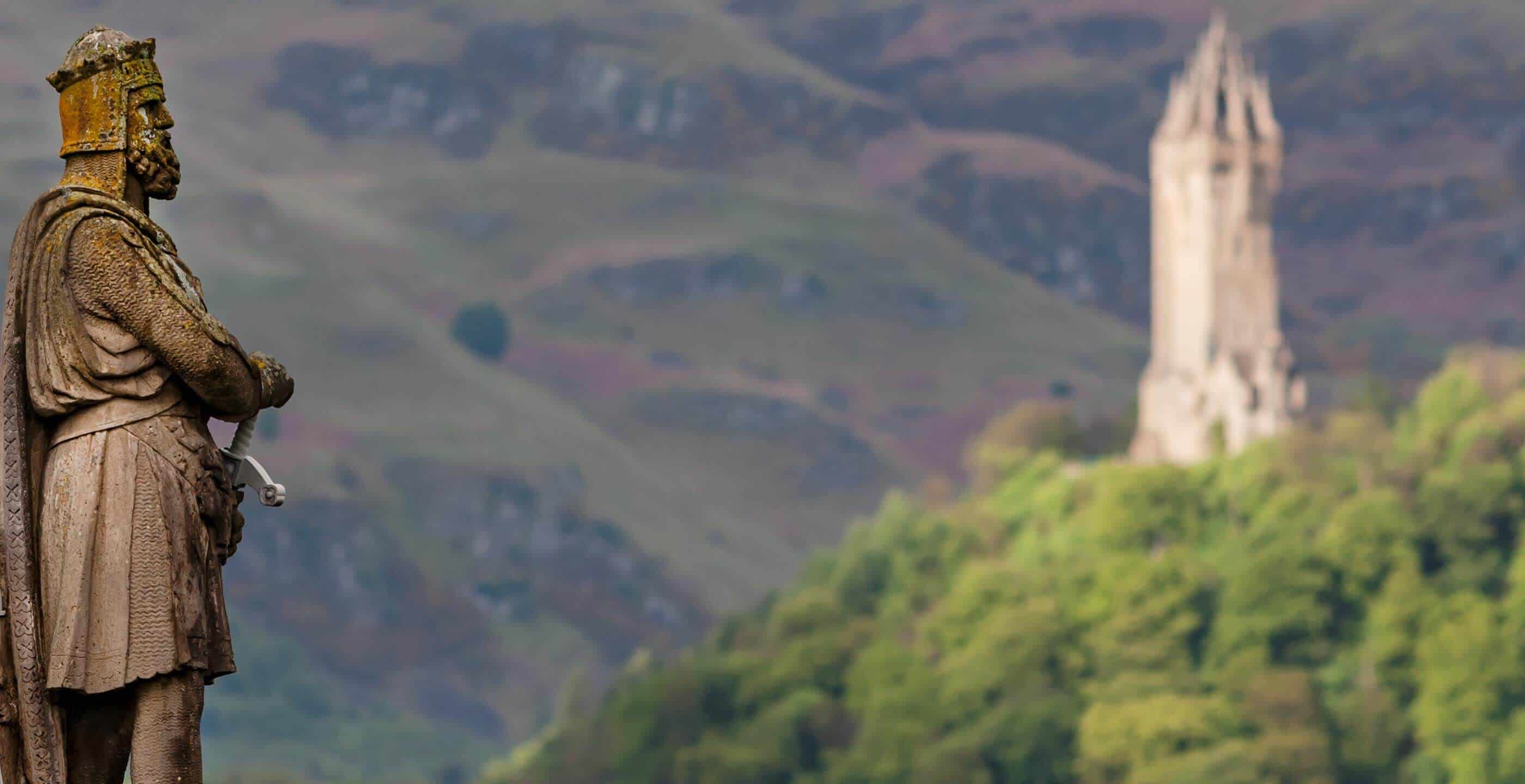
Robert the Bruce, who took up arms against both Edward I and Edward II of England and who united the Highlands and the Lowlands in a fierce battle for liberty: and a humble Lowland knight, Sir William Wallace.
Sir William Wallace 1272 – 1305
Wallace killed the English Sheriff of Lanark who had apparently murdered Wallace’s sweetheart.
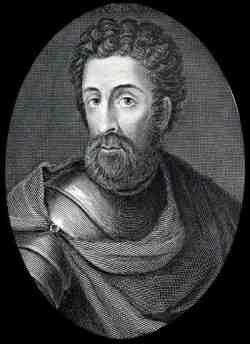 A price was put on his head, so Wallace took the bold course and raised the Scottish Standard. Supported by a few of the Scots barons, he inflicted a resounding defeat on the English at Stirling Bridge in 1297. The jubilant Scots made him Guardian of Scotland but their joy was short-lived.
Wallace then made a fatal mistake; he took on the English Army who greatly outnumbered his men, and in a pitched battle at Falkirk in 1298, Edward I of England annihilated the Scots battalions and Wallace became a fugitive for 7 years.
While in Glasgow in 1305 he was betrayed and taken to London where he was tried for treason in Westminster Hall. He was one of the first to suffer the fearsome penalty of hanging, drawing and quartering. His head was ‘spiked’ on London Bridge and fragments of his body distributed among several Scottish cities as a grim reminder of the price of revolt.
Ironically, the surname of William Wallace, he of Braveheart fame and icon for Scottish independence, actually means “Welshman”. In the early Middle Ages, Welsh kingdoms extended as far north as the rivers Forth and Clyde, and the people there spoke dialects of Brythonic, a family of Gaelic languages that includes Breton, Cornish and Welsh. The folk in northern Scotland, the Isle of Man and Ireland spoke other dialects of Gaelic known as Goidelic.
Robert the Bruce 1274 – 1329
Robert the Bruce, as every school-child knows, was inspired by a spider!
Bruce had paid homage to Edward I of England and it is not known why he changed his allegiance later. Maybe it was ambition or a genuine desire to see Scotland independent.
In 1306 in the Greyfriars Church at Dumfries he murdered his only possible rival for the throne, John Comyn, and was excommunicated for this sacrilege. Nevertheless he was crowned King of Scotland a few months later.
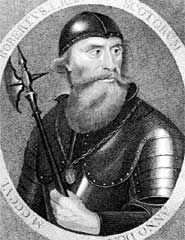 Robert the Bruce was defeated in his first two battles against the English, and became a fugitive, hunted by both Comyn’s friends and the English. Whilst hiding, despondent, in a room he is said to have watched a spider swing from one rafter to another, time after time, in an attempt to anchor it’s web. It failed six times, but at the seventh attempt, succeeded. Bruce took this to be an omen and resolved to struggle on.
His decisive victory over Edward II’s army at Bannockburn in 1314 finally won the freedom he had struggled for. Bruce was King of Scotland from 1306 – 1329.
Robert the Bruce is buried in Dunfermline Abbey and a cast taken of his skull can be seen in the Scottish National Portrait Gallery.