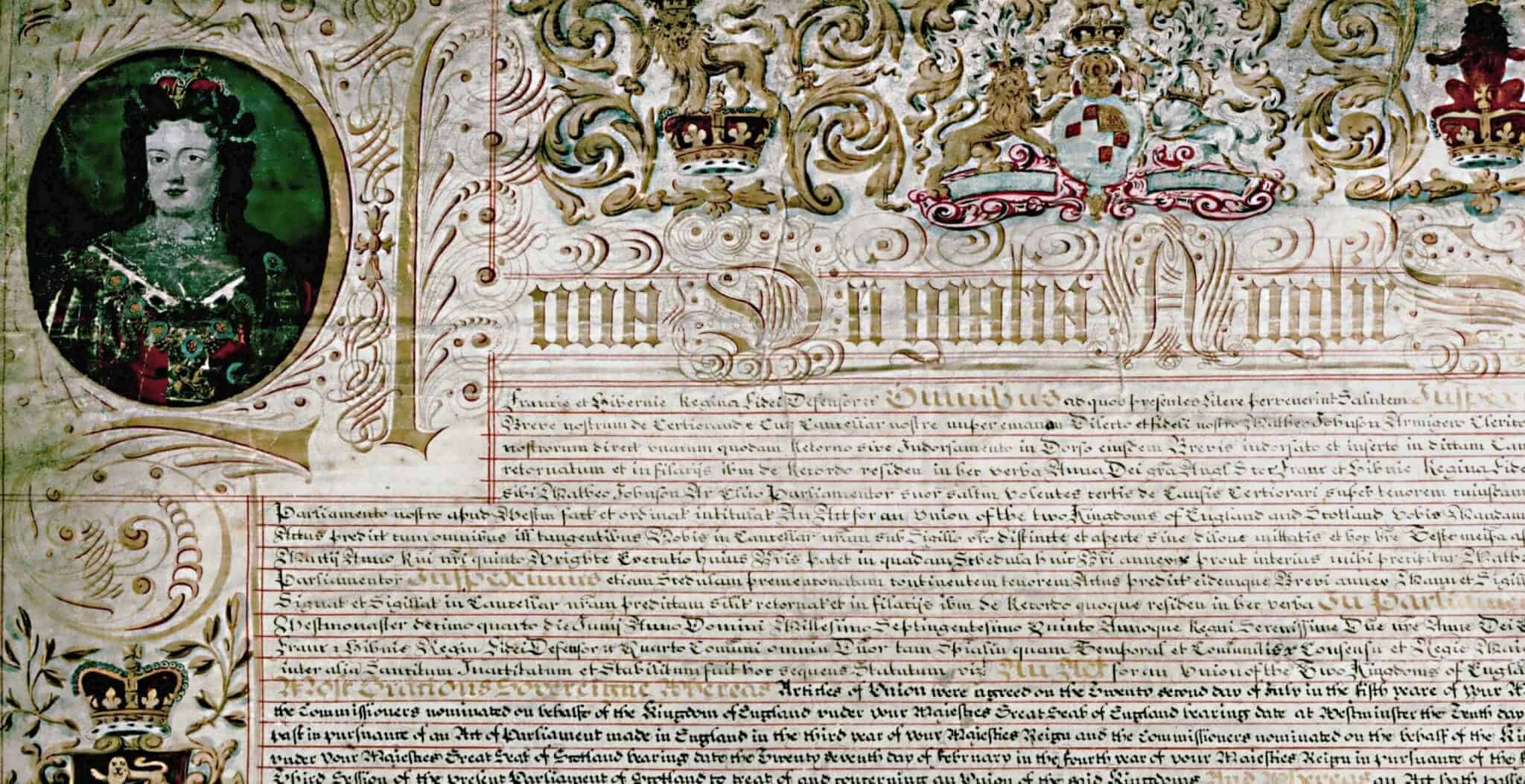


Uniting the kingdoms of Scotland and England had been proposed for a hundred years before it actually happened in 1707.
Suspicion and mistrust between the two countries had prevented the union throughout the 17th century. The Scots feared that they would simply become another region of England, being swallowed up as had happened to Wales some four hundred years earlier. For England the fear that the Scots may take sides with France and rekindle the ‘Auld Alliance‘ was decisive. England relied heavily on Scottish soldiers and to have them turn and join ranks with the French would have been disastrous.
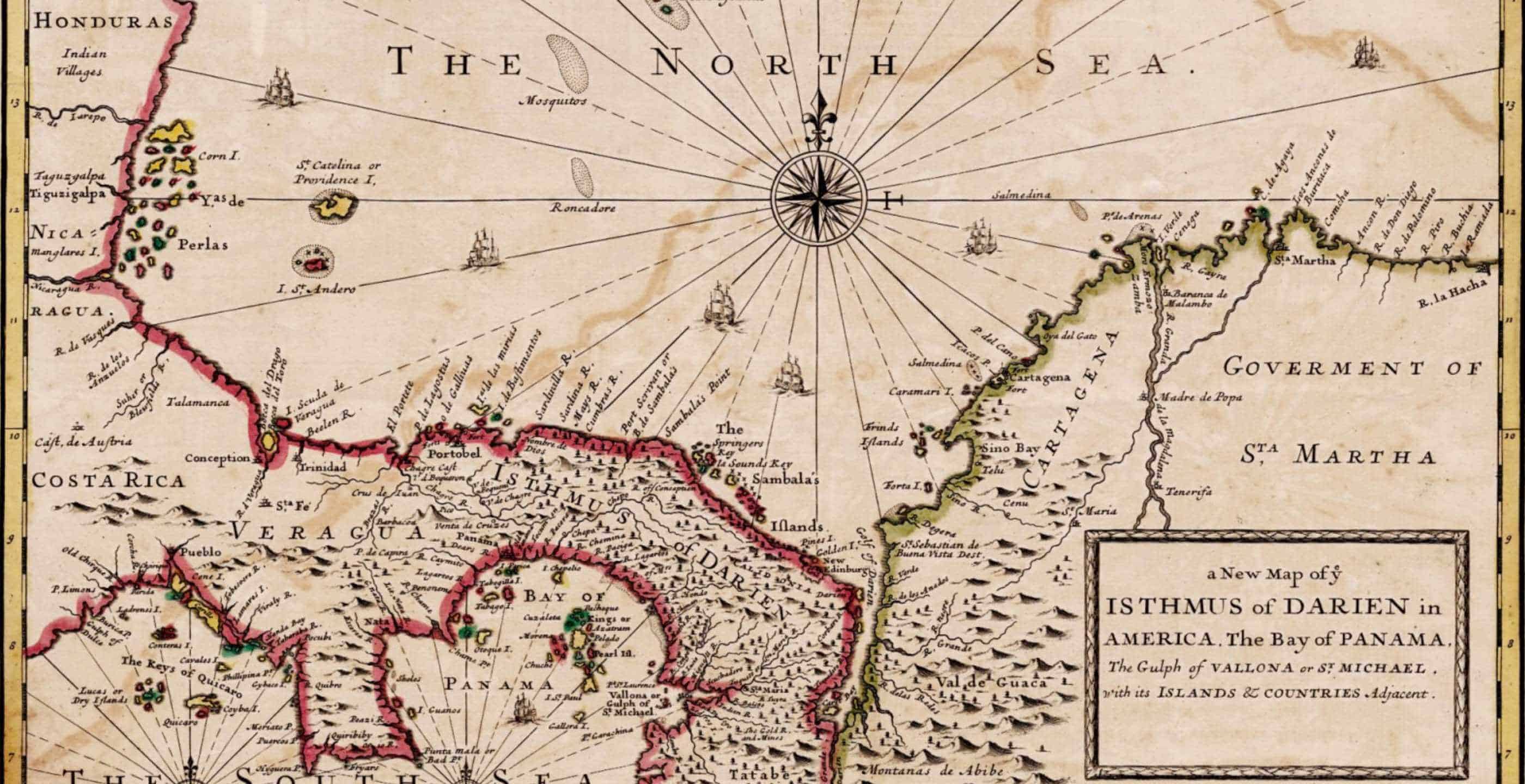
In the late 1690s however, thousands of ordinary Scottish folk had been tempted to invest their hard earned money in a plan to link the two great oceans of the world by establishing an overland trading route between the Pacific and Atlantic. Almost every Scot who had £5 in his or her pocket, invested in the Darien Scheme, to establish a Scottish colony in Panama.
Poorly planned, the venture ended early in 1700 with significant loss of life and financial ruin for the Kingdom of Scotland.
With many influential individuals and whole families left bankrupt by the disaster, a few financial incentives appear to have convinced some dithering Scottish MPs of the potential benefits of a union with England. In the words of Robert Burns, they (the Scottish MPs) were “bought and sold for English gold”.
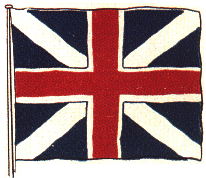
The ‘Old’ Union Flag
In a poorly attended Scottish Parliament the MPs voted to agree the Union and on 16 January 1707 the Act of Union was signed. The Act came into effect on May 1st 1707; the Scottish Parliament and the English Parliament united to form the Parliament of Great Britain, based in the Palace of Westminster, London, the home of the English Parliament.
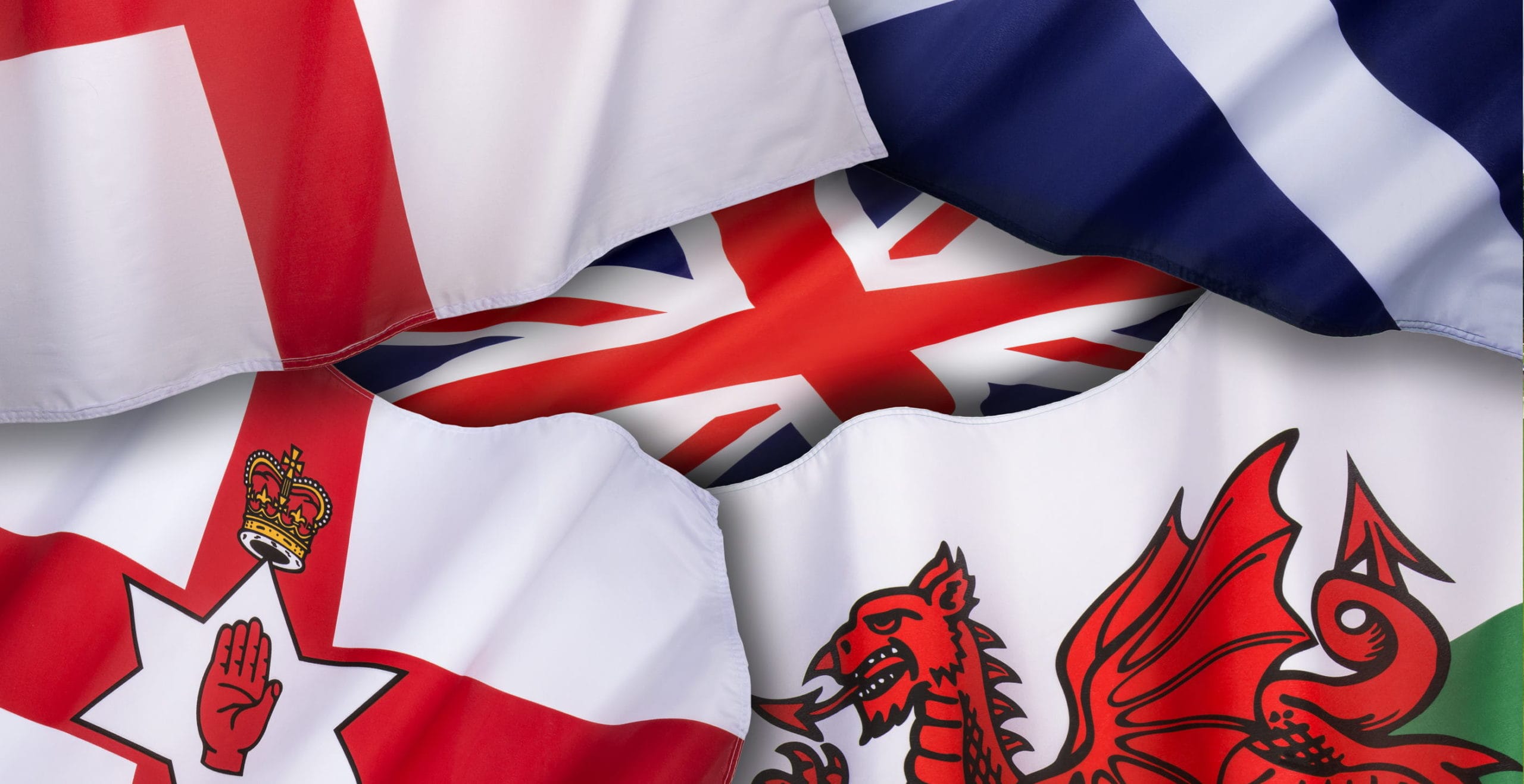
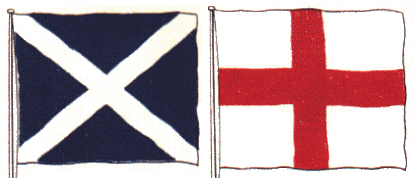
Scotland kept its independence with respect to its legal and religious systems, but coinage, taxation, sovereignty, trade, parliament and flag became one. The red cross of St. George combined with the blue cross of St. Andrew resulting in the ‘old’ union flag. This is popularly called the Union Jack, although strictly speaking, this only applies when it is flown on the jackstaff of a warship.
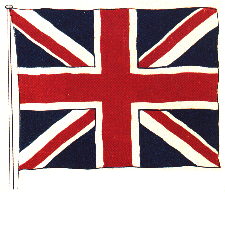
The Union flag that we recognise today did not appear until 1801, after another Act of Union, when the ‘old’ flag combined with the red cross of St. Patrick of Ireland. By 1850 approximately 40% of total world trade was conducted through and by the United Kingdom (UK), making it the most successful economic union in history. By this time Glasgow had grown from a small market town on the River Clyde into the “Second City of the British Empire”.
2007 marked the 300th anniversary of the Act of Union between England and Scotland. A commemorative two-pound coin was issued to mark the anniversary, which occurred 2 days before the Scottish Parliament general election on 3 May 2007.
Published: 28th February 2015.