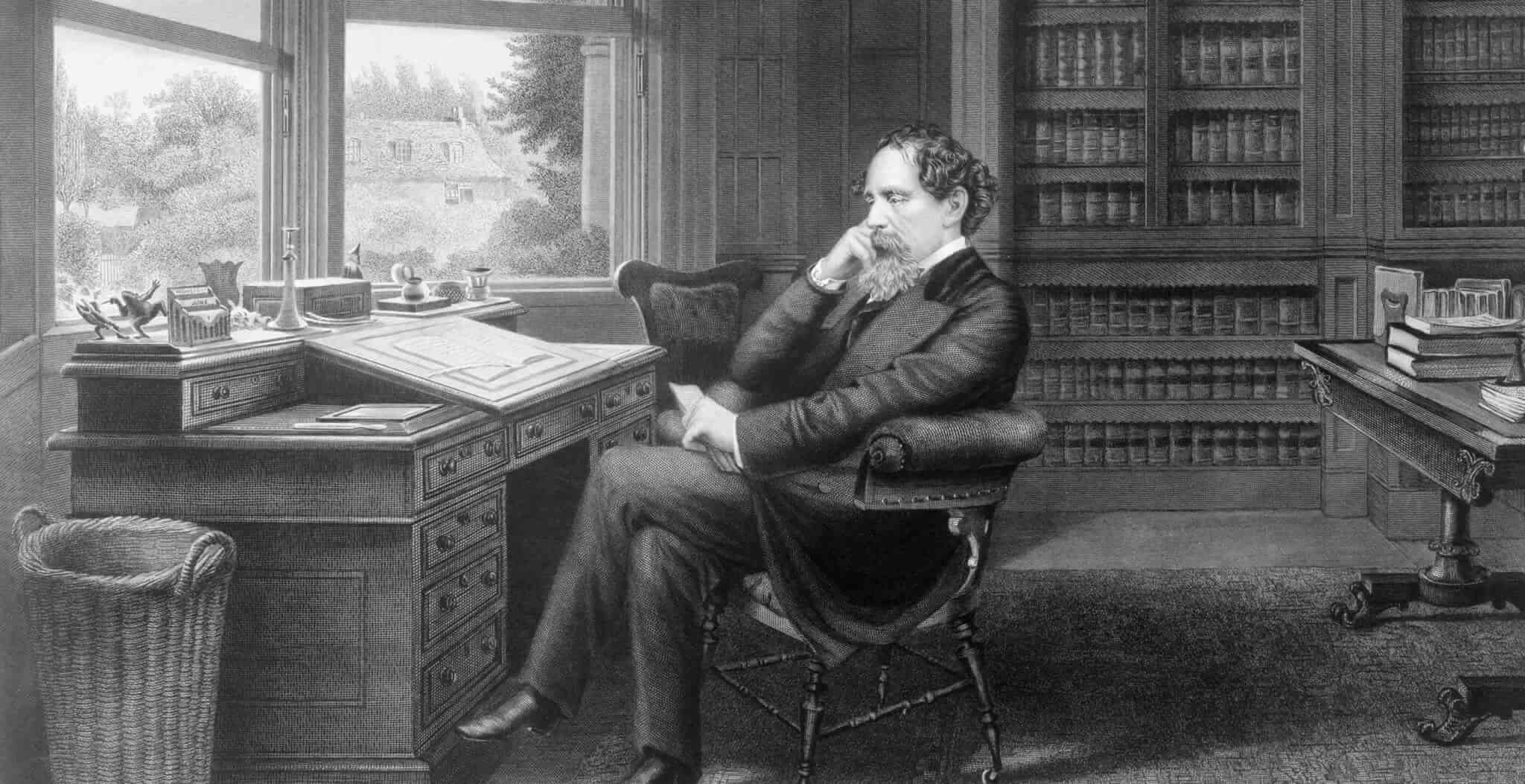


Our selection of historic birthdates in February, including Queen Anne, Samuel Pepys and Dame Elizabeth Taylor. The picture above is of Charles Dickens.
| 1 Feb. | 1915 | Sir Stanley Matthews, the first ever soccer player to be knighted, he made 880 first-class appearances playing 54 times for England, spread over an amazing 22 years. | |
| 2 Feb. | 1650 | Nell Gwyn, actress and mistress of King Charles II by whom she had two sons. She began her theatrical career selling oranges at the Theatre Royal in Drury Lane, London | |
| 3 Feb. | 1928 | Frankie ‘Mr Moonlight’ Vaughan, Liverpool-born crooner famous for his tuxedo, top hat and cane. Born Frank Abelson, he took his stage name because his Russian grandmother said he would be her “number vorn” singer. | |
| 4 Feb. | 1920 | Sir Norman Wisdom, one of the true greats of British comedy and international star of stage, television and the silver screen. | |
| 5 Feb. | 1788 | Robert Peel, Lancashire-born Conservative politician and Prime Minister, as Home Secretary he reorganised the London police force who are still referred to today as the ‘Peelers’ or ‘Bobbies’. | |
| 6 Feb. | 1665 | Queen Anne, the last Stuart ruler of Great Britain and Ireland. A golden age for Britain in the fields of science, literary output, architecture and war, it was also during her reign that the Act of Union with Scotland was passed in 1707. | |
| 7 Feb. | 1812 | Charles Dickens, the most widely known English writer after Shakespeare, his many novels present a vivid portrayal of social life in Victorian England. | |
| 8 Feb. | 1819 | John Ruskin, London-born writer, his many books on the subject including Modern Painters established him as the leading art critic of the day. Ruskin College at Oxford is named after him. | |
| 9 Feb. | 1865 | Mrs Patrick Campbell, nee Beatrice Stella Tanner, actress famous for her roles inThe Second Mrs Tanqueray and as Eliza in George Bernard Shaw’s Pygmalion. | |
| 10 Feb. | 1894 | Harold ‘Supermac’ Macmillan, Conservative politician and Prime Minister 1957-63; Famously led his party to victory in the 1959 elections with the slogan ‘You’ve never had it so good’. | |
| 11 Feb. | 1800 | Henry Fox Talbot, Dorset-born pioneer of photography which he developed independently of Daguerre in 1838. He went on to invent flash photography and the use of photographic negatives to make prints . | |
| 12 Feb. | 1809 | Charles Robert Darwin, scientist and founder of the modern theory of evolution. His bookOn the Origin of Species by Means of Natural Selection in 1859, aroused bitter controversy as it disagreed with the Book of Genesis in the Bible. | |
| 13 Feb. | 1728 | John Hunter, Scottish surgeon who moved to London to study at St. George’s Hospital and developed such a flair for dissection that he is now considered the founder of scientific surgery. | |
| 14 Feb. | 1766 | Thomas Malthus, Surrey-born economist and clergyman, his Essay on the Principle of Population suggested that populations increase faster than the means of subsidence. This problem he addressed by promoting sexual abstinence and birth control. | |
| 15 Feb. | 1748 | Jeremy Bentham, philosopher and pioneer of utilitarianism, an ethical doctrine which argues that the aim of all actions and legislation should result in the greatest happiness and least pain for the greatest number of people. | |
| 16 Feb. | 1822 | Sir Francis Galton, Birmingham-born scientist and founder of eugenics (the science of creating superior offspring). Not surprising therefore, that he supported the theories of his cousin Charles Darwin. | |
| 17 Feb. | 1934 | Alan Bates, actor of stage, television and the silver screen, his films include Georgy Girl, The Go-Between and Secret Friends. | |
| 18 Feb. | 1517 | Mary Tudor, Roman Catholic daughter of Henry VIII, King of England, and Catherine of Aragon, she was also known as “Bloody Mary” because of her relentless persecution of Protestants. | |
| 19 Feb. | 1717 | David Garrick, Hereford-born actor and Drury Lane theatre manager, he dominated the English stage for 30 years. | |
| 20 Feb. | 1888 | Dame Marie Rambert, dancer and founder of the Ballet Rambert, born in Warsaw she moved to London in 1918, and was made DBE in 1962. | |
| 21 Feb. | 1801 | John Henry Newman, Cardinal and theologian noted for his philosophical writings. His poem The Dream of Gerontius was set to music by Edward Elgar. | |
| 22 Feb. | 1857 | Sir Robert Baden-Powell, soldier and hero of the Siege of Mafeking in the Boer War, he is best known however as the founder of the Boy Scout movement (1908) and, with his sister Agnes, of the Girl Guides (1910). | |
| 23 Feb. | 1633 | Samuel Pepys, the son of a London tailor, his celebrated Diary from 1660-69, intertwines the confessions of a man with a distinct love of life, naval administration, court intrigue and the three disasters of that decade. | |
| 24 Feb. | 1500 | Charles V. Born in Ghent, Belgium he was crowned Holy Roman Emperor in 1519, and thereby became the most powerful monarch in Europe at the tender age of 19. | |
| 25 Feb. | 1943 | George Harrison, Liverpool-born pop musician and former member of the Quarrymen, who adopted the name The Beatles in 1960. He went solo after the group disbanded in 1970, releasing My Sweet Lord that year. | |
| 26 Feb. | 1879 | Frank Bridge, composer and conductor of the New Symphony Orchestra from its inception at Covent Garden in 1905.. | |
| 27 Feb. | 1932 | Dame Elizabeth Taylor, London-born film star. She moved with her family to Los Angeles in 1939, where she made her screen debut at the age of ten. Famous for her many Academy Award nominations and marriages. | |
| 28 Feb. | 1820 | Sir John Tenniel, self-trained artist and cartoonist who supplied the original illustrations for Lewis Carroll’s Alice in Wonderland (1865) and Through the Looking Glass (1872). | |
| 29 Feb. | 1736 | Ann Lee also known as Mother Ann, Manchester-born blacksmith’s daughter who emigrated with a handful of followers to the USA in 1774 and founded the religious group the American Society of Shakers. | |