

May 8th 1945 was the date the Allies celebrated the defeat of Nazi Germany and the end of Adolf Hitler’s Reich, formally recognising the end of the Second World War in Europe. This became known as V.E (Victory in Europe) Day.
By April 1945 the Allies had begun to overrun Germany from the west as Russian forces advanced from the east. On 25th April 1945, Allied and Soviet forces met at the Elbe River: the German Army was all but destroyed.
Five days later, Hitler killed his dog, his new wife Eva and then committed suicide in his Berlin bunker. His successor, Admiral Karl Doenitz, sent General Alfred Jodl to General Dwight Eisenhower’s Supreme Allied Headquarters in Rheims to seek terms for an end to the war. At 2:41 a.m. on 7th May, General Jodl signed the unconditional surrender of German forces, which was to take effect from 8th May at 11:01 p.m.
After six years and millions of lives lost, the Nazi scourge was crushed and the war in Europe was finally over.
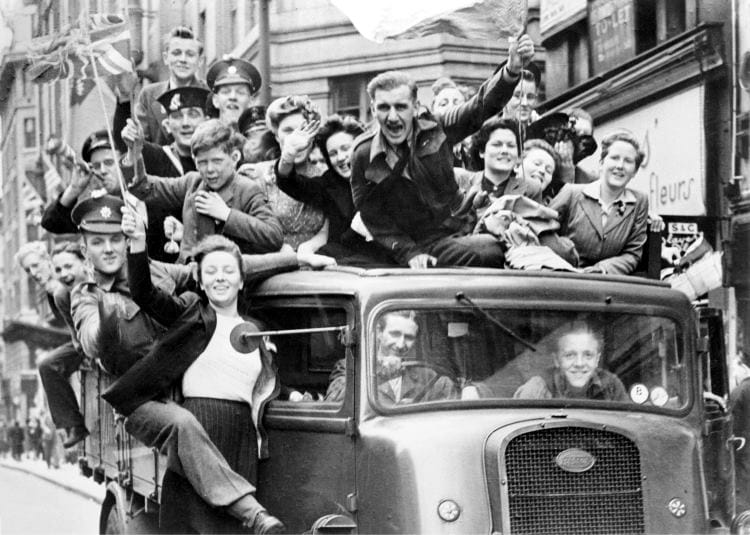
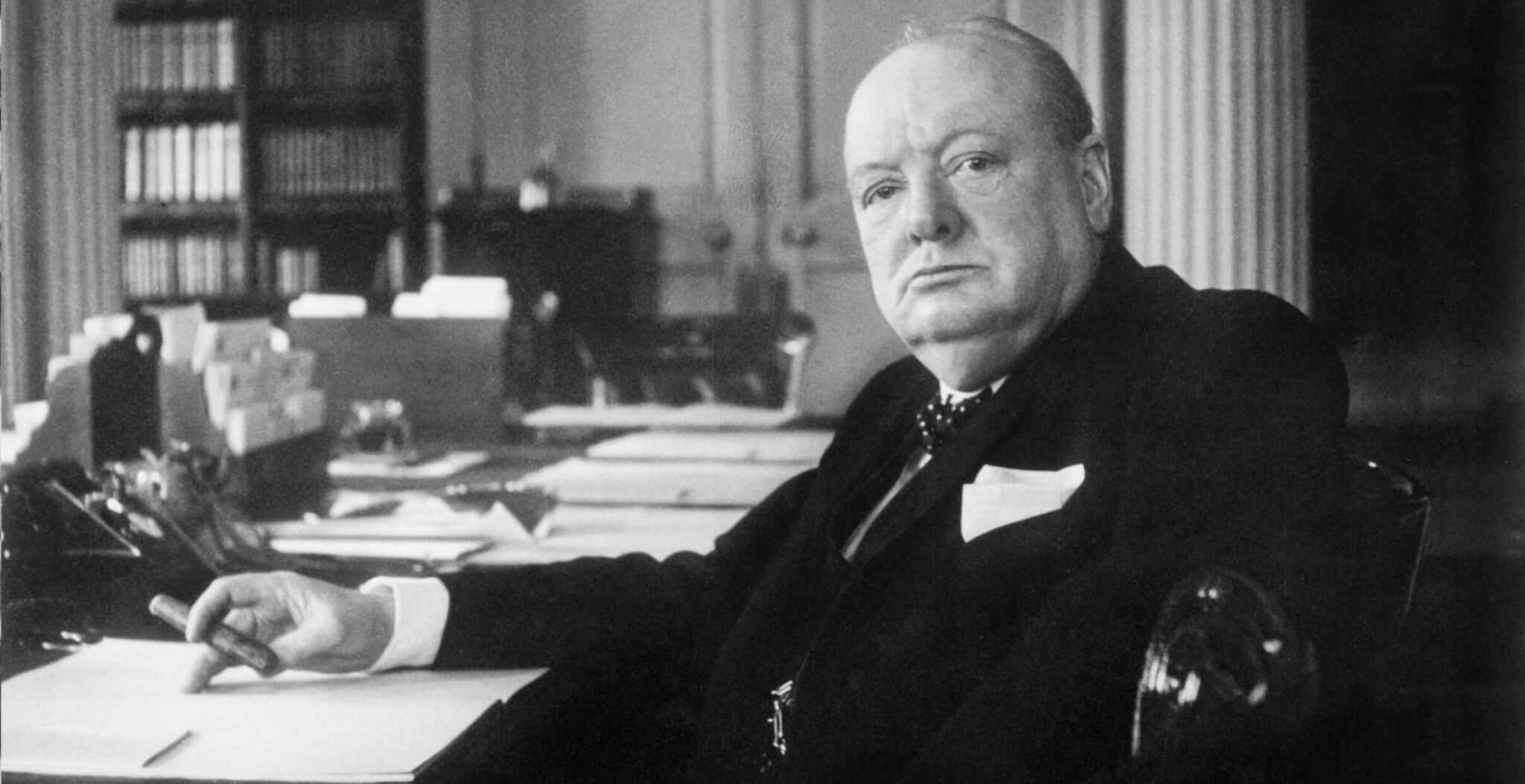
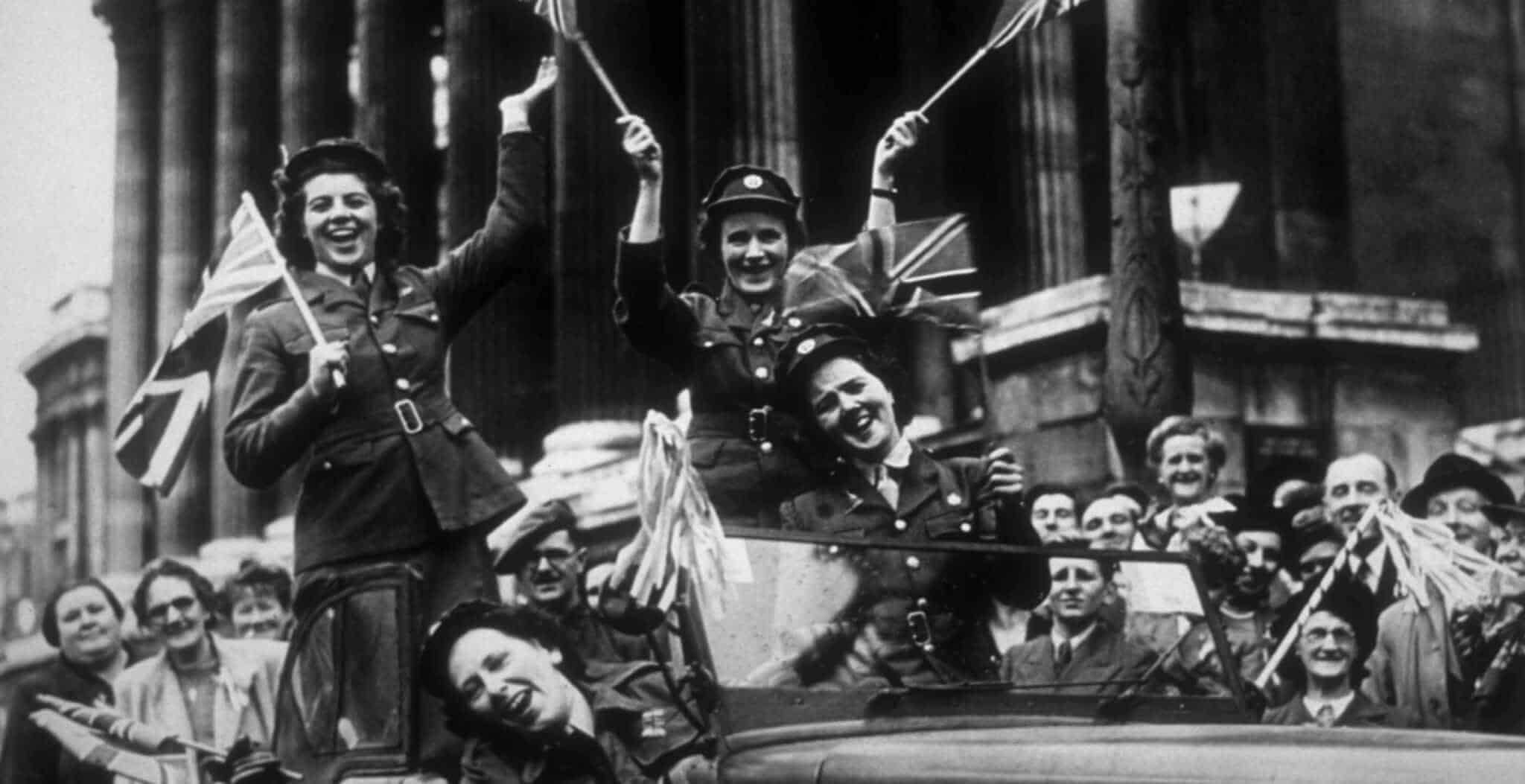
Great celebrations took place across Europe and North America to officially recognise the Allies’ formal acceptance of the unconditional surrender of German armed forces. In London over a million people celebrated Victory in Europe (VE) Day. Crowds massed in Trafalgar Square and up the Mall to Buckingham Palace, where King George VI and Queen Elizabeth, accompanied by the Prime Minister Winston Churchill, appeared on the balcony of the Palace to cheering crowds.
Amongst those crowds Princess Elizabeth (the future Queen Elizabeth II) and her sister, Princess Margaret blended anonymously, apparently enjoying the celebrations for themselves first hand.
In the United States, President Harry Truman, who celebrated his 61st birthday that same day, dedicated the victory to his predecessor, Franklin D. Roosevelt, who had died less than a month earlier on 12th April.
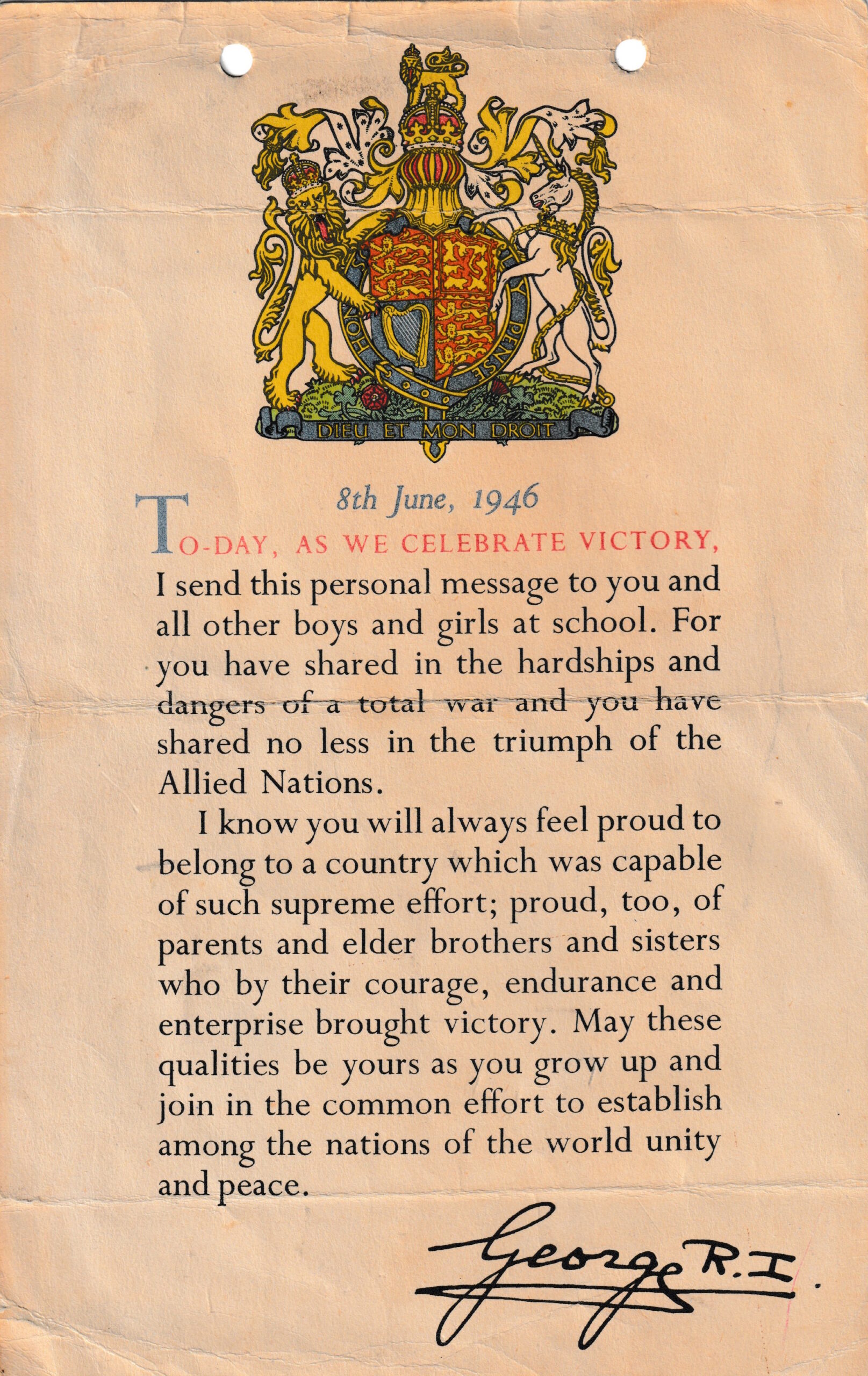
The Allies had originally agreed to mark 9th May 1945 as VE day, but eager western journalists broke the news of Germany’s surrender prematurely, thus signalling the earlier celebration. The Soviets kept to the agreed date, and Russia still commemorates the end of the Second World War, known in Russia as the Great Patriotic War, as Victory Day on 9th May.
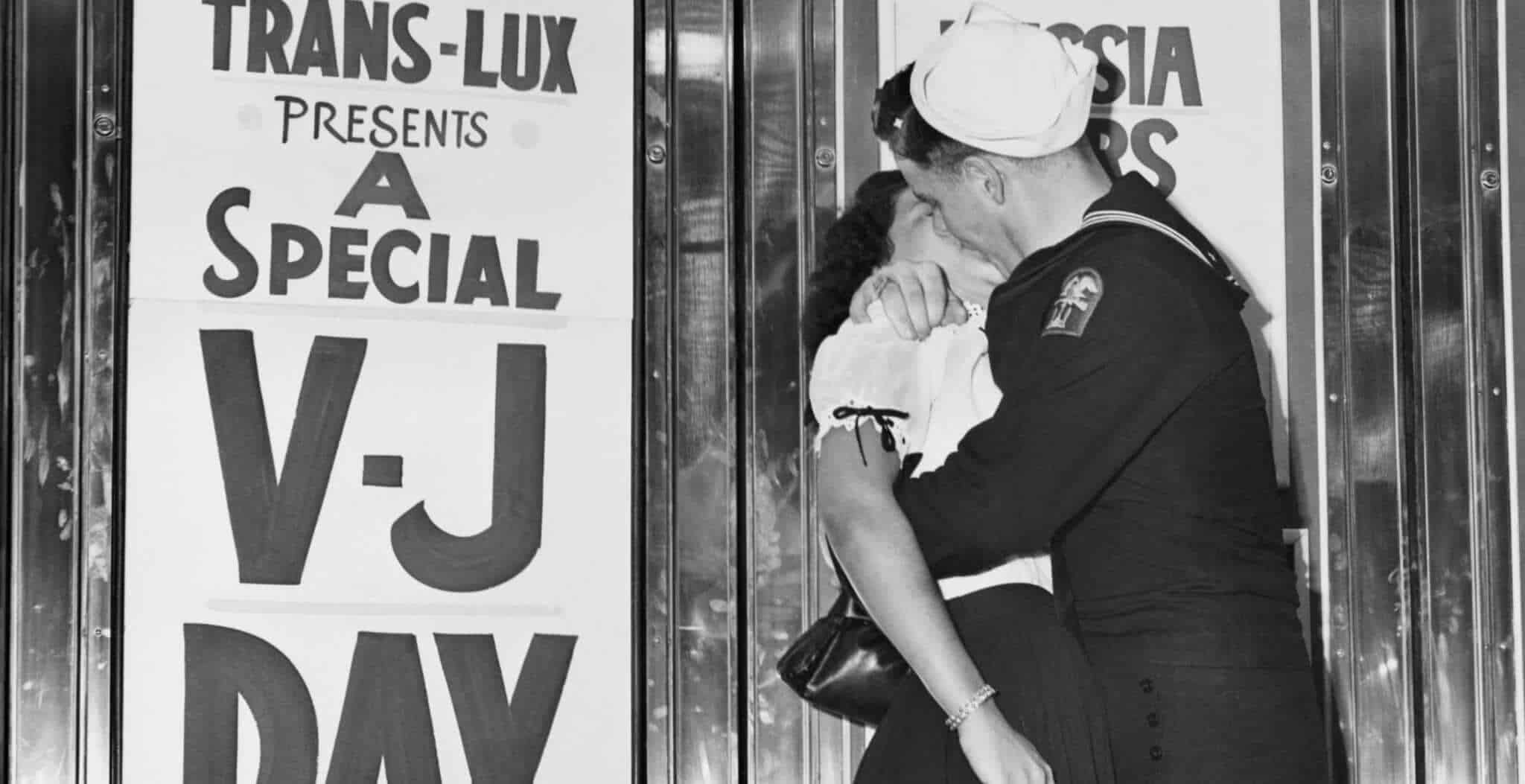
The Allied victory over Japan, known as VJ Day, did not take place until some months later on 15th August 1945.
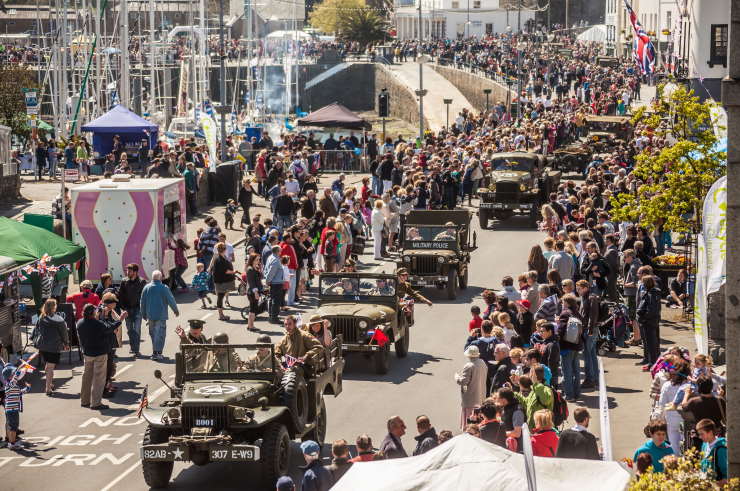
Parties were organised throughout Europe and North America in May 2005 to celebrate the 60th Anniversary of VE Day. Of special significance perhaps, were those events planned to commemorate the liberation of the Channel Islands, which were the only part of Britain to fall under the domination of the Third Reich.
The 75th anniversary of V.E Day in 2020 was a much smaller event due to the Covid-19 pandemic, however there was an address by the Queen to the nation and Churchill’s victory speech was broadcast on television. A national 2 minute silence was held at 11am.