

Throughout history, tales of brave, courageous people being executed for their beliefs, usually religious ones, are well known but the men who became known as the Tolpuddle Martyrs were not persecuted for their religion.
Tolpuddle is a village near Dorchester in Dorset, where in the years 1833 and 1834 a great wave of trade union activity took place and a lodge of the Friendly Society of Agricultural Labourers was established. Entry into the union involved payment of a shilling (5p) and swearing before a picture of a skeleton never to tell anyone the union’s secrets.
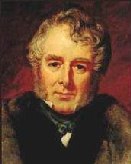 Lord Melbourne was Prime Minister at this time and he was bitterly opposed to the Trade Union Movement, so when six English farm labourers were sentenced in March 1834 to 7 years transportation to a penal colony in Australia for trade union activities, Lord Melbourne did not dispute the sentence.
The labourers were arrested ostensibly for administrating unlawful oaths, but the real reason was because they were trying to protest at their already pitiful wages. The labourers at Tolpuddle lived in meagre poverty on just 7 shillings a week and wanted an increase to 10 shillings, but instead their wages were cut to 6 shillings a week.
The Whig government had become alarmed at the working class discontent in the country at this time. The government and the landowners, led by James Frampton, were determined to squash the union and to control increasing outbreaks of dissent.
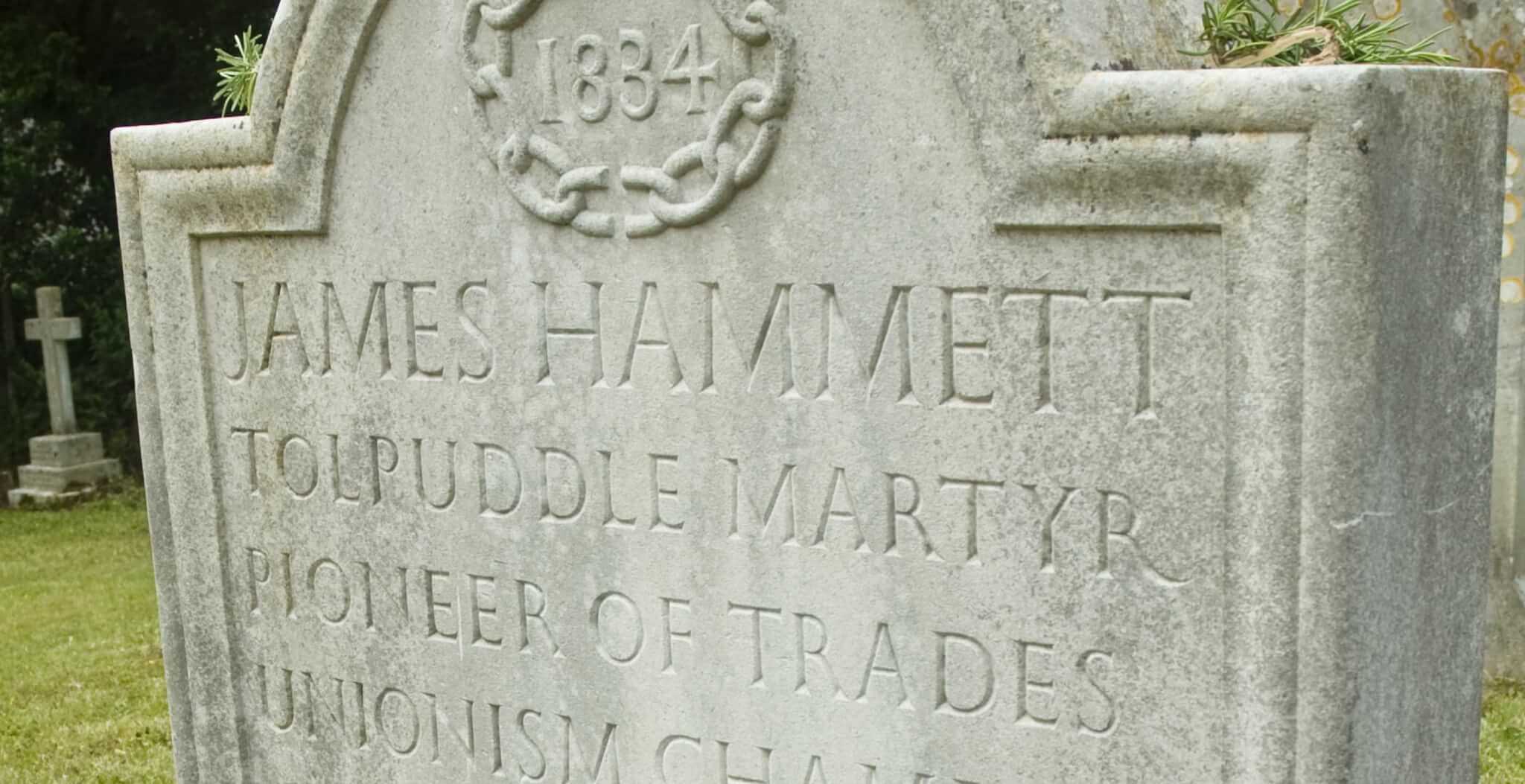
Six of the Tolpuddle labourers were arrested: George and James Loveless, James Brine, James Hammett, Thomas Stansfield and his son John. It was George Loveless who had established the Friendly Society of Agricultural Workers in Tolpuddle.
At their trial, the judge and jury were hostile and the six were sentenced to 7 years transportation to Australia. After the trial many public protest meetings were held and there was uproar throughout the country at this sentence, so the prisoners were hastily transported to Australia without delay.
The people were incensed at this treatment and after 250,000 people signed a petition and a procession of 30,000 people marched down Whitehall in support of the labourers, the sentences were remitted. After some delay, the the six were given a free passage home from Australia.
When finally home and free, some of the ‘martyrs’ settled on farms in England and four emigrated to Canada.
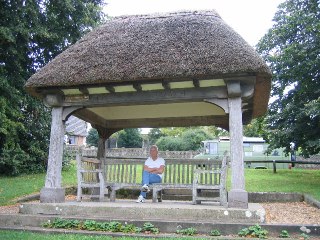
The tree under which the ‘martyrs’ met is now very old and reduced to a stump, but it has become a place of pilgrimage in Tolpuddle, where it is known as the ‘Martyrs Tree’. A commemorative seat and shelter was erected in 1934 on the green by the wealthy London draper Sir Ernest Debenham.
The story of the Tolpuddle Martyrs is perhaps the best known case in the early history of the Trade Union Movement.
Useful Information:
Tolpuddle Martyrs Rally – third week in July
The annual festival to commemorate the memory of the struggle of the Tolpuddle Martyrs is held on the third weekend of every July in the Dorset village of Tolpuddle. International speakers join with workers’ representatives, and progressive musicians and artists to make it an occasion to remember.
Shire Hall, Dorchester
Built in 1797, this Grade I Listed Building was designed by London architect Thomas Hardwick. It retains the courtroom where the Tolpuddle Martyrs were sentenced to transportation to Australia for their part in the early trade union movement in 1834. It appears today as it did at that time. Under the court are the cells in which prisoners were kept while waiting for their appearance in court.