

Sir George was an Elizabethan privateer, merchant trader, MP, military leader and founder of Bermuda (The Somers Isles), England’s first Crown Colony. He was also instrumental in ensuring the survival of the Virginian colony of Jamestown by sailing to their rescue from Bermuda (where he had been shipwrecked) with fresh food and supplies.
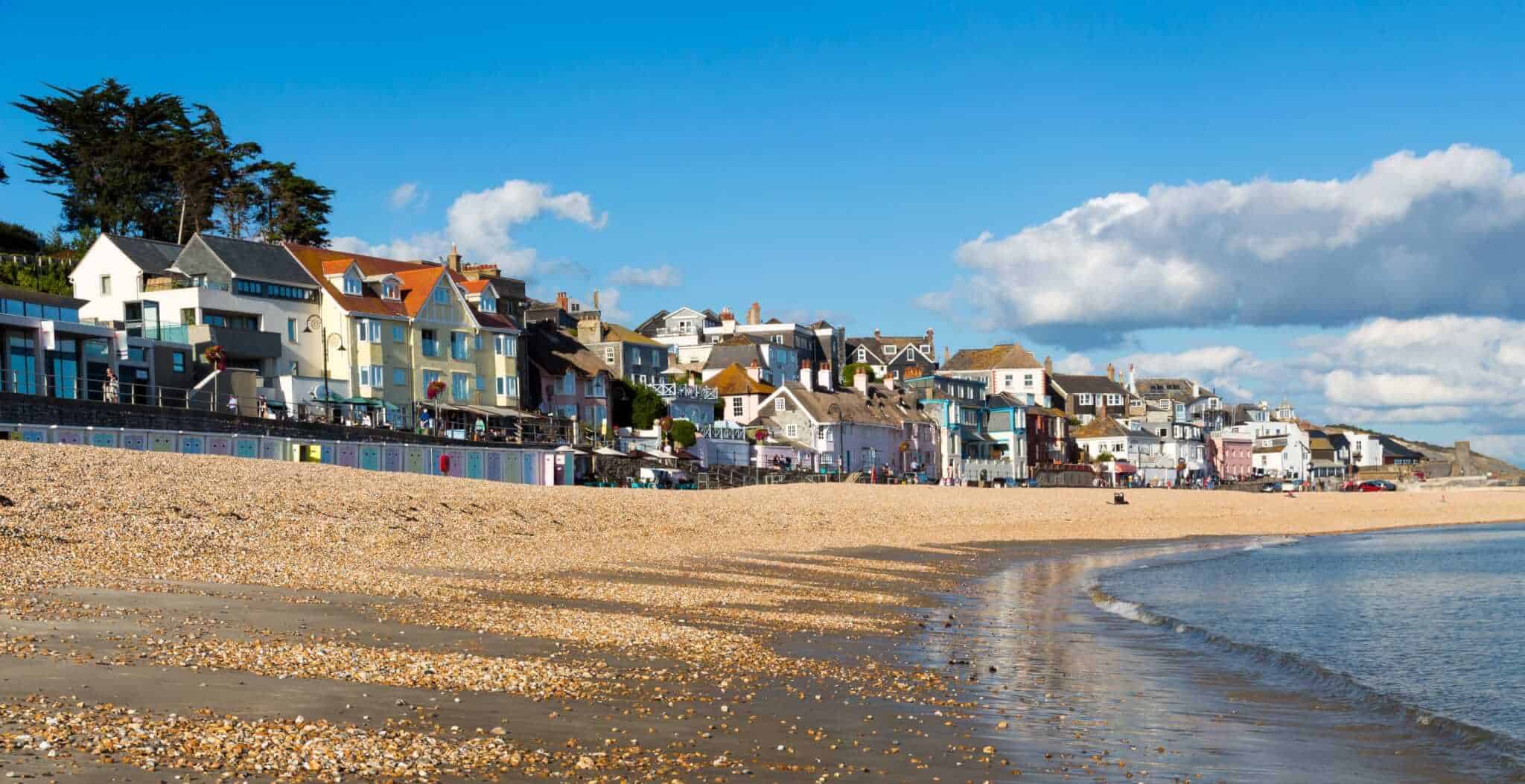
Sir George Somers was born in Lyme Regis, Dorset, in 1554, the son of John Somers. A friend of Sir Walter Raleigh, his career as a merchant trader and privateer made him a wealthy man and he was able to buy Berne Manor in Whitchurch Canonicorum near Lyme Regis in 1587.
As a privateer he took part in the sacking of Caracas, Venezuela in 1595. In 1600, he commanded HMS Vanguard which captured a Spanish treasure ship. In 1601, he captained HMS Swiftsure during the attack of the Spanish fleet off Kinsale and helped repel the Spanish invasion of Ireland.
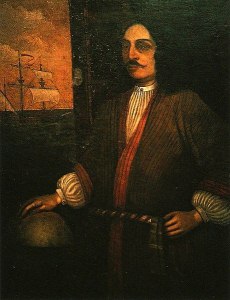 In 1603 he was knighted by King James I and became M.P. for Lyme Regis.
In 1606, he became a founder member of the Virginia Company, at the time the largest, most expensive and most ambitious colonial expedition by any nation, financed privately by merchants and noblemen.
In 1609 he was made Admiral of the Virginia Company’s Third Supply Relief Fleet, sailing from London and then Plymouth, bound for Virginia. The fleet of 9 ships, with Somers aboard the flagship Sea Venture, set sail from Plymouth with fresh supplies and additional colonists for the new British settlement at Jamestown. Also aboard were John Rolfe (who would become known as the husband of Pocahontas) and the governor-designate of the settlement, Sir Thomas Gates. On 25th July during a hurricane, the Sea Venture was separated from the main fleet and was wrecked off Discovery Bay, Bermuda. Somers and all aboard the Sea Venture were presumed dead by those who continued on to Virginia.
In fact, the ship was wrecked between two rocks or reefs and all 150 crew and colonists were saved. This marked the beginning of the colonisation of Bermuda, England’s first Crown Colony. At the time Bermuda was known as ‘Virgineola’ in tribute to the Virgin Queen, Elizabeth I. But with King James I now on the throne, the islands were renamed the Somers Isles, still today Bermuda’s official alternate name.
To continue their journey to Jamestown the castaways needed new ships, so Somers and Sir Thomas Gates between them oversaw the building of the Deliverance and the Patience from the wrecked Sea Venture and local timber. There was no lack of food on Bermuda, and the castaways were able to live well on fish, sea turtle eggs, fruit and wild hog (which had been landed and left behind on the islands by Spanish pirates). So during their ten months on the islands, the crew and passengers started the Bermuda colony, building a church and houses.
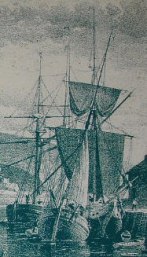 On 10th May 1610 the two small ships set sail with 142 people and some supplies on board. On arrival some fourteen days later, they found the Virginia Colony almost destroyed by famine and disease during what has become known as the “Starving Time”. Very few of the supplies from the Supply Relief Fleet had arrived (the same hurricane which caught the Sea Venture had also badly affected the rest of the fleet), and only 60 of the original 214 settlers remained alive.
Sir George Somers wrote to Robert Cecil reporting his shipwreck on Bermuda while on a voyage to Virginia, and telling of a famine at Jamestown so severe that people were forced to eat snakes. He planned to take the colonists by ship to Bermuda “the most plentifull place that ever I came to for Fishe, Hogges and Fowle”. However the plan to abandon Jamestown was shelved upon the arrival of the fourth relief fleet commanded by Lord Delaware in July 1610.
It was only through the arrival of the ships from Bermuda and the arrival of the fourth relief fleet that the colony at Jamestown was able to survive.
Sir George returned to Bermuda in the Patience to collect more food, but he became ill on the journey and died “of a surfeit in eating of a pig”, on November 9th 1610 in Bermuda. His heart was buried in Bermuda but his body, pickled in a barrel, was landed on the Cobb at Lyme Regis in 1618. A volley of muskets and cannon saluted his last journey to the church at Whitchurch Canonicorum where his body is buried.
The story of what happened to the Sea Venture is known through the work of Sylvester Jourdan, also from Lyme Regis, who was on board the Sea Venture and survived to record what had happened in a small book he wrote in 1610 called A Discovery of the Barmudas which was printed in London.
One of the backers of the Virginia Company was the Earl of Southampton, Shakespeare’s patron, and it is possible that Jourdan’s book about the shipwreck on the mysterious island, ‘the land of devils and spirits’, was the inspiration for Shakespeare’s play, The Tempest.
Lyme Regis is twinned with St George in Bermuda, however the town is named after St George, the patron saint of England, and not Sir George Somers, founder of the colony of Bermuda.
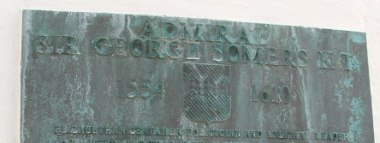
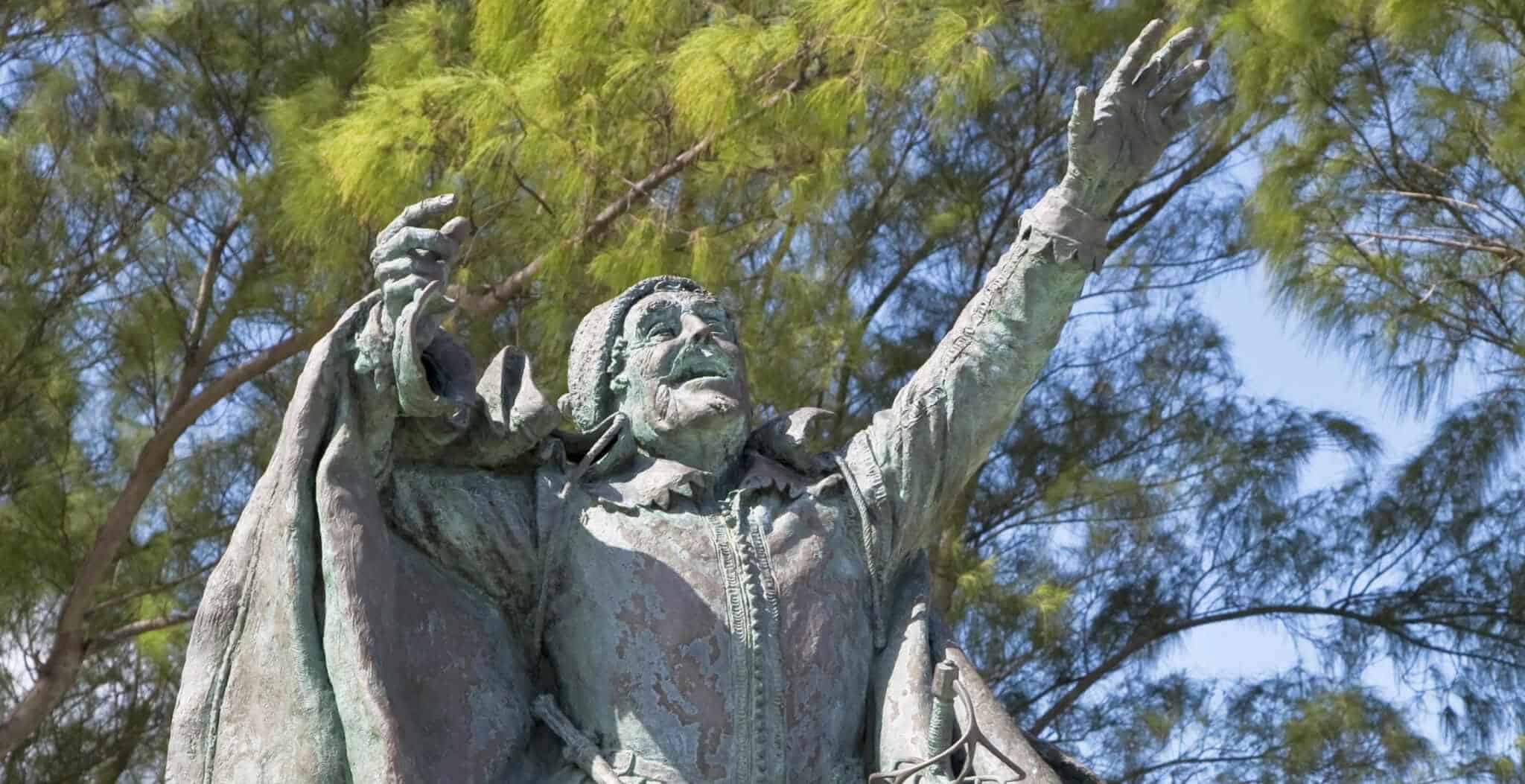
Part of the tablet on the wall of The Cobb, Lyme Regis, celebrating the achievements of Sir George Somers.
Published: 31st March 2015