

For three months in 1888, fear and panic stalked the streets of London’s East End.
During these months five women were murdered and horribly mutilated by a man who became known as ‘Jack the Ripper’, although some believe the true number to have been eleven.
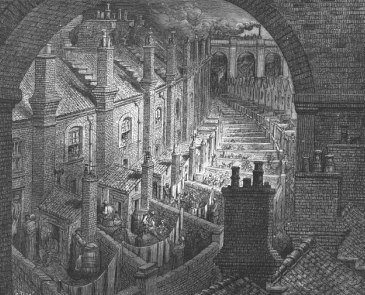
Whitechapel in the East End was like a festering sore on the face of Victorian London in the late 19th century.
The overcrowded population lived in hovels, the streets stank of filth and refuse and the only way to earn a living was by criminal means, and for many women, prostitution.
The only relief from this miserable life was a bottle of gin bought for a few pence, to give blessed oblivion.
The ‘terror’ started on Friday 31st August when the body of Mary Ann Nicholls, aged 42, was found in Bucks Row (now called Durwald Street). Her face was bruised and her throat had been slashed twice and nearly severed. Her stomach had been hacked open and slashed several times. She was subsequently acknowledged to be the first of the ‘Ripper’s’ victims.
On the 8th September the second victim was found. She was Annie Chapman, a 47 year old prostitute. Her body was found in a passageway behind 29 Hanbury Street, her few possessions laid out next to her body. Her head was almost severed and her stomach torn open and pulled apart. Sections of skin from the stomach lay on her left shoulder and on the right shoulder, a mass of intestines. Part of the vagina and bladder had been carved out and taken away.
On 28th September a letter was received at the Central News Agency signed ‘Jack the Ripper’, threatening more murders. The name caught the public imagination when it first appeared in the newspapers and was used ever afterwards. Whitechapel was now in uproar – riots broke out as hysterical crowds attacked anyone carrying a black bag as a rumour had spread that the ‘Ripper’ carried his knives in such a bag.
The 30th September was a grim day. The ‘Ripper’ carried out two murders within minutes of each other.
Elizabeth stride was the unfortunate woman, also a prostitute, who was found first, at 1am, behind 40 Berner Street. When found, blood was still pouring from her throat and it seemed that the ‘Ripper’ had been disturbed at his grisly business.
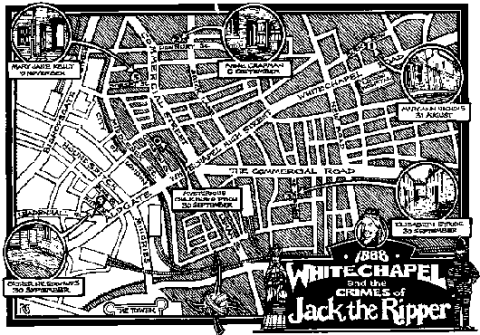
At 1.45am. the body of Catherine Eddowes, 43, was found just a few minutes walk away in an alley between Mitre Square and Duke Street (now known as St. James’ Passage). Her body had been ripped open and her throat slashed. Both eyelids had been cut and part of her nose and right ear were cut off. The uterus and left kidney were removed and entrails thrown over the right shoulder.
A trail of blood led the police to a doorway nearby where a message had been chalked. It read, “The Jewes are not the men to be blamed for nothing”. For some inexplicable reason, the head of the Metropolitan Police, Sir Charles Warren ordered it to be rubbed out! So what could have been a valuable clue was destroyed.
The horror of the double murder gripped London. Rumours now began to circulate – the ‘Ripper’ was a mad doctor, a Polish lunatic, a Russian Czarist and even an insane midwife!
Another letter was received by the Central News Agency in which the ‘Ripper’ said he was sorry he had not been able to send the ears to the police as he had promised! Catherine Eddowes’ left ear had been partially severed.
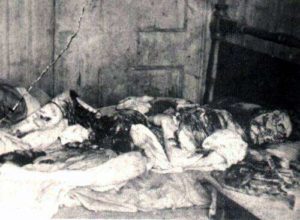
On the 9th November the ‘Ripper’ struck again. Mary Jeanette Kelly was the youngest of the women murdered: she was just 25 and an attractive girl. She was found in her room at Millers Court which ran off Dorset Street (now Duval Street). Mary, or what was left of her, was lying on the bed. The scene in the room was appalling. The rent collector who found her said, “I shall be haunted by this for the rest of my life”. Mary’s throat had been cut, her nose and breasts cut off and dumped on a table. Her entrails were draped over a picture frame. The body had been skinned and gutted and her heart was missing.
The panic and public outcry caused by this murder led to the resignation of Sir Charles Warren, Chief of Police.
Mary was the last of the ‘Rippers’ victims. His reign of terror ended as suddenly as it began. For a hundred years, various names have been suggested as the killer of these women.
Who was Jack the Ripper?
Since the murders, many names have been linked with the notorious murderer: here we discuss five of the suspects…
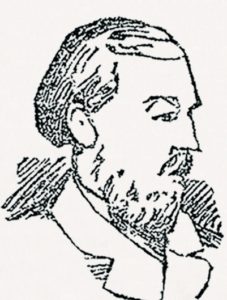
Name: William Henry Bury
Born: 25th Mary 1859
Died: 24th April 1889 (aged 29). Hanged in Dundee, Scotland for the murder of his wife, Ellen.
Suspicion:
First suspected in 1889 due to the similarities between his wife’s murder and the canonical five Ripper victims. Although Bury was arrested and executed in Dundee, Scotland, he had been residing in Bow, near Whitechapel during the three-month murderous spree of Jack the Ripper. If you were to consider all eleven unsolved Whitechapel murders that took place between April 1888 and February 1891, Bury resided in Bow from October 1887 to January 1889, placing him in the area at the appropriate time. It was reported that graffiti at his Dundee flat that said “Jack Ripper is at the back of this door” and “Jack Ripper is in the sellar (sic)” was found leading some to believe that Ellen was murdered to prevent her from identifying Bury as Jack the Ripper.
Doubt:
Although Bury pleaded not guilty to his wife’s murder, two days before his execution Bury confessed to a Reverend that he had killed his wife and at the urging of the Reverend, he wrote a confession which he asked to be held back until after his execution.
Bury confessed that he had strangled Ellen during a drunken row, then had attempted to dismember her body for disposal but was too squeamish to continue. Although his confession does not match expert testimony from the time, his confession just days before his death to a Reverend that he asked to be held back until he was dead can be seen as a confession of his sins. He did not mention being Jack at any point during this confession.
During the Jack the Ripper investigation, a Detective was sent to interview Bury in Dundee and although he was investigated, Bury was not considered to be a viable suspect.
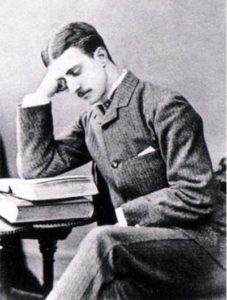
Name: Montague John Druitt
Born: 15th August 1857
Died: Early December 1888 (aged 31). Found floating in the River Thames.
Suspicion:
Although there is very little evidence to implicate Druitt, he is considered by many to be the number one suspect in the case. The son of a medical practitioner, Druitt fitted the assumption of the detectives at the time that due to the gruesome disembowelment and removal of organs, Jack the Ripper would have had skills of a physician or butcher.
The suspicion fell on Druitt after the memorandum of Macnaughten, who investigated the Ripper killings for Scotland Yard, became public.
Although Macnaughten did incorrectly age Druitt as 41 (Druit was 31 at the time of his death), it was clear that Macnaughten was implicating Druitt due to the details of his suicide. His suicide and the timing of this, is the main reason that Druitt is suspected.
Doubt:
There is little to no evidence of Druitt being the Ripper. Druitt resided in Blackheath and had no connection to Whitechapel. His only connection to the Ripper case is that made by Macnaughten.
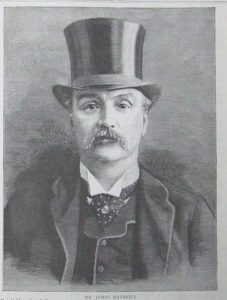
Name: James Maybrick
Born: 24th October 1838
Died: 11th May 1889 (aged 50). Suspected arsenic poisoning – his wife, Florence, was arrested, convicted and then released on re-examination of her case.
Suspicion:
Maybrick was not considered a suspect at the time of the murder or even mentioned in the Ripper case until more than a century after his death. Not surprisingly, as he was a cotton merchant residing in Liverpool.
In 1992, a diary surfaced taking credit for the slaying of the five Ripper victims as well as two other murders. Although a name is not mentioned in this diary, it is widely accepted due to references and hints throughout that this was Maybrick’s diary.
Then in 1993, a gentleman’s pocket watch was discovered that had J. Maybrick scratched on the cover alongside the initials of all five Ripper victims and the words “I am Jack”. The watch was made in 1847 or 1848 and testing has proved that the engraving outdates the vast majority of superficial surface scratches on the watch and although the engraving cannot be conclusively proven, it is considered to be of substantial age.
Doubt:
The diary and watch are the only two connections to the Ripper murders. Although the watch has some credibility in regard to its authenticity, the diary evidence is surrounded in doubt. Firstly questioned was the discovery of the diary, as the story changed from it being given to him by a friend to being handed down in his wife’s family.
The diary itself is a genuine Victorian scrapbook but 20 pages have been torn out. The handwriting style has been questioned due to it seeming more 20th century than Victorian, and the ink has been tested numerous times to no solid conclusion.
Since the discovery of the diary and pocket watch, it is thought that his wife, Florence, had discovered that her husband was Jack the Ripper and decided to put an end to his life to stop the killings. However, this is rumour and there is no evidence to support the theory.
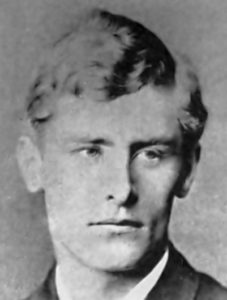
Name: Walter Richard Sickert
Born: 31st May 1860
Died: 22nd January 1942 (aged 81). Natural causes
Suspicion:
Sickert was a British painter who took inspiration from the Ripper case. He believed that he had lodged in the room once used by Jack the Ripper as his landlady had suspected a previous lodger.
For 70 years, no one mentioned Sickerts name in connection with the case until an author, Stephen Knight claimed that Sickert had been an accomplice in the murders, due to information gained from Sickert’s illegitimate son, Joseph Gorman.
The real interest into Sickert as the Ripper came in 2002 when crime novelist Patricia Cornwell stated that she believes Sickert was the Rippper. Cornwell has purchased 31 of Sickert’s paintings in the search for DNA evidence and has claimed that she was able to prove that mitochondrial DNA connected Sickert to a Ripper letter.
Doubt:
Other than the claims of Cornwell and Knight, there is no other evidence that suggests that Sickert was anything more than an artist inspired by the dark and sadistic Ripper case.
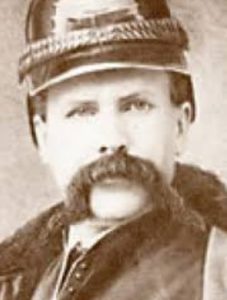
Name: Francis Tumblety
Born: 1833
Died: 28th May 1903 (aged 69/70). Natural causes in St. Louis, Missouri.
Suspicion:
Tumblety was suspected of being Jack the Ripper at the time of the murders. He was arrested on 7th November 1888 on unrelated charges and released on bail. Knowing that he was considered a suspect in the Ripper murders, Tumblety fled back to the United States via France. There is rumour that Scotland Yard tried to extradite him but New York City Police said “there is no proof of his complicity in the Whitechapel murders, and the crime for which he is under bond in London is not extraditable”.
Doubt:
It doesn’t seem clear why Tumblety was a suspect at the time, apart from his previous criminal record and his misogyny. His appearance was not similar to the descriptions of any of the eyewitness testimony and there is no concrete evidence he even visited Whitechapel.
It is claimed that Tumblety collected uteri. But this allegation was made by a unreliable witness who was a known practical joker and the allegation had only been made after the press linked Tumblety to the murders.
Name: Aaron Kosminiski
Born: 11th September 1865
Died: 24th March 1919 (aged 53). Natural causes in Leavesden Asylum.
Suspicion:
Kosminiski was a Polish Jew hairdresser in Whitechapel and has been suspected since the initial investigation and is mentioned in the Macnaghten Memoranda. He was also considered a suspect by the majority of officers responsible for the Ripper case. By the 7th February 1891 he was certified as insane and taken to an asylum. Until 2007 there was no substantial evidence to suspect Kosminiski, just the suspicions of senior officers.
However in 2007, a shawl purchased at auction would reignite the suspicion into Kosminiski.
The shawl is alleged to be that found laying on the ground near the body of one of the Ripper victims. It had been handed down by a senior officer’s family and then in 2007 it was sold at auction to Russel Edwards who saw an opportunity. The shawl still contained traces of blood and other genetic material.
Edwards contacted Dr Jari Louhelainen from Liverpool John Moores University, who tested the shawl and formed a connection between distant Eddowes and Kosminiki descendants.
Doubt:
There was only suspicion prior to 2007. No evidence was found connecting Kosminiski to the Ripper case prior to this. On his admission to the asylum in 1891 he was not considered a danger to others, which brings into question whether Kosminiski had the violent tendencies that Jack the Ripper showed through his brutal slayings.
The 2007 evidence has also been open to criticism, with claims that the evidence isn’t strong enough to declare the case closed. The new paper published by Dr Jari Lougelainen does not include key details on the specific genetic variants identified and compared between DNA samples.
Name: Joseph Barnett
Born: 1858
Died: 29th November 1926 (aged 68). Natural causes.
Suspicion:
Joseph Barnett has one of the strongest motives of all the Ripper suspects. He lived with Mary Kelly, the last of the five Ripper victims. He was rumoured to have been in love with Mary Kelly and was fed up with her prostituting herself to other men. He believed he could support her and did so for awhile, until he lost his job in June 1888. Mary Kelly then returned to prostitution. It is thought that Barnett had tried to scare Kelly away from this line of work through the Ripper murders, but did not succeed. Ten days before her death, Barnett and Kelly had an argument which resulted in Barnett moving out of the property.
Mary Kelly was found brutally murdered in her bed in a locked room. It was the most brutal of all the canonical five murders and was the only one that did not take place on the street. It was also the last which would explain why the killings ceased after her murder.
His physical description and appearance also fits a number of the eye witness reports.
Doubt:
No evidence. Although Barnett fits the FBI profile and the physical description, there is no evidence, just a strong motive for the murders which is all speculation.
Published: 29th October 2017.