

For 100 years, between the 17th and 18th centuries, Hounslow Heath, near London, was the most dangerous place in England. Across the Heath ran the Bath and Exeter roads used by wealthy visitors to the West Country resorts and courtiers returning to Windsor. These travellers provided rich pickings for highwaymen.
Dick Turpin is one of the best remembered highwaymen who operated in this area, although he was often to be found in North London, Essex and Yorkshire. Turpin was born in Hempstead in Essex in 1706 and trained as a butcher. Turpin frequently used the Old Swan Inn at Wroughton-on-the-Green in Buckinghamshire as his base. He was finally imprisoned in York and was later hanged and buried there in 1739. His grave can be seen in the churchyard of St. Denys and St. George in York.
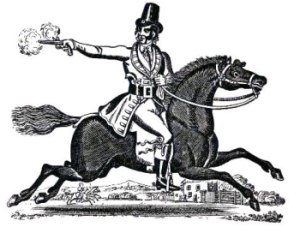
Turpin’s famous ride from London to York was almost certainly not made by him but by another highwayman, ‘Swift Nicks’ Nevison during the reign of Charles II. Nevison also ended up on the gallows at York and the leg-irons which held him while in prison there before his execution can be seen in York Castle Museum.
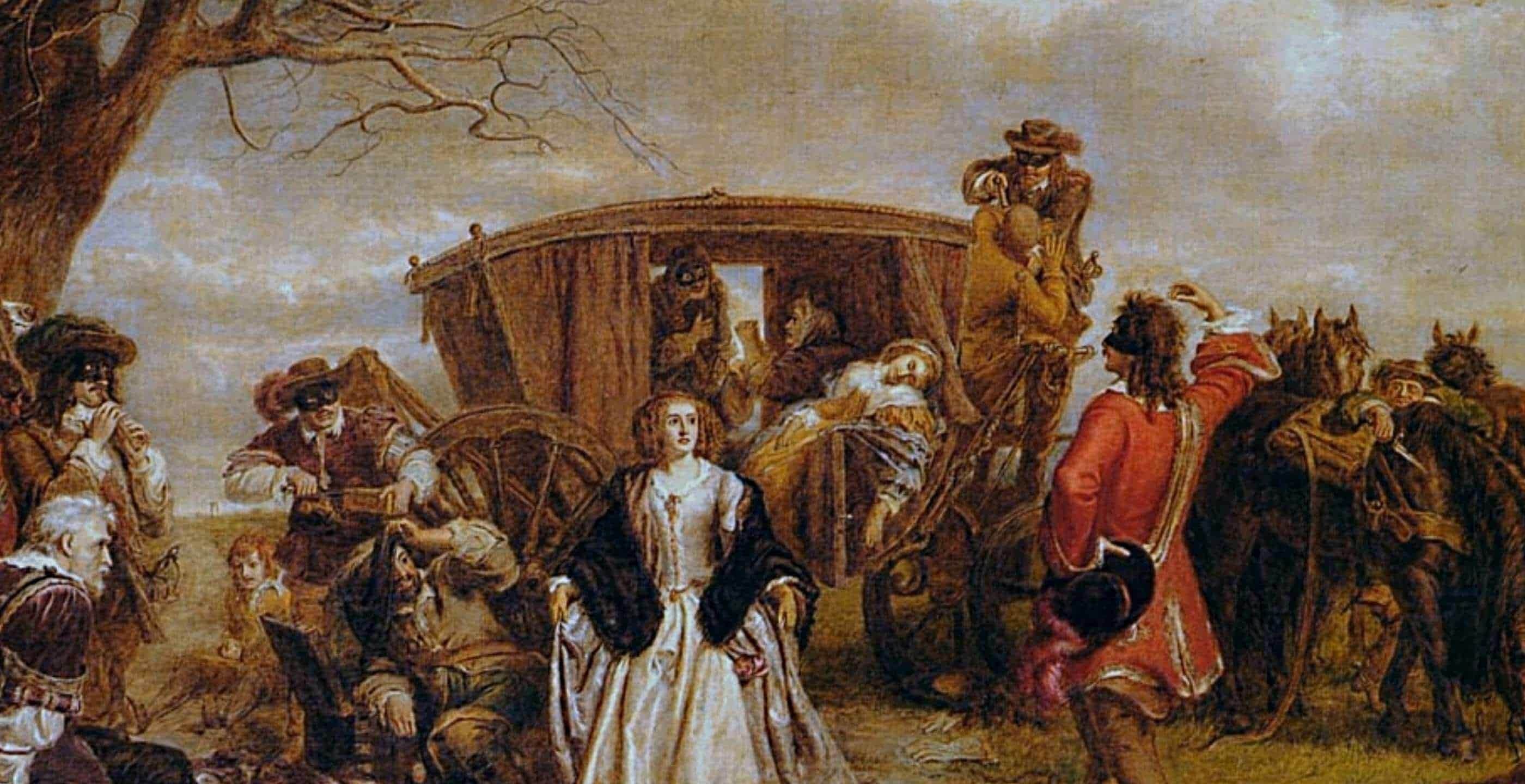
The most gallant of the Heath’s highwaymen was French-born Claude Duval. He was idolised by the ladies he robbed, as he made much use of his ‘gallic charm’. His manners it seems were impeccable as far as his lady victims were concerned! He once insisted on dancing with one of his victims after robbing her husband of £100. Claude Duval was hanged at Tyburn on 21st January 1670 and buried at Convent Garden. His grave was marked (now destroyed) by a stone with the following epitaph:- “Here lies Duval, if male thou art, look to your purse, if female to thy heart.”
Claude Duval painting by William Powell Frith, 1860
Most of the highwaymen were not like Duval, they were really no more than ‘thugs’, but one exception was Twysden, Bishop of Raphoe who was killed carrying out a robbery on the Heath.
Three brothers, Harry, Tom and Dick Dunsdon were famous 18th century highwaymen in Oxfordshire, known as “The Burford Highwaymen”. Legend has it that Sampson Pratley fought one of these brothers in the Royal Oak Inn in Field Assarts. The fight was really a wager to see who was the strongest and the prize was to be a sack of potatoes for the winner. Sampson Pratley won, but never got his potatoes as two of the brothers, Tom and Harry, were caught shortly afterwards and hanged at Gloucester in 1784. Their bodies were brought back to Shipton-under-Wychwood and gibbeted from an oak tree. Dick Dunsdon had bled to death when Tom and Harry had had to cut off one of his arms to free his hand which was trapped in a door-shutter, as they were attempting to rob a house.
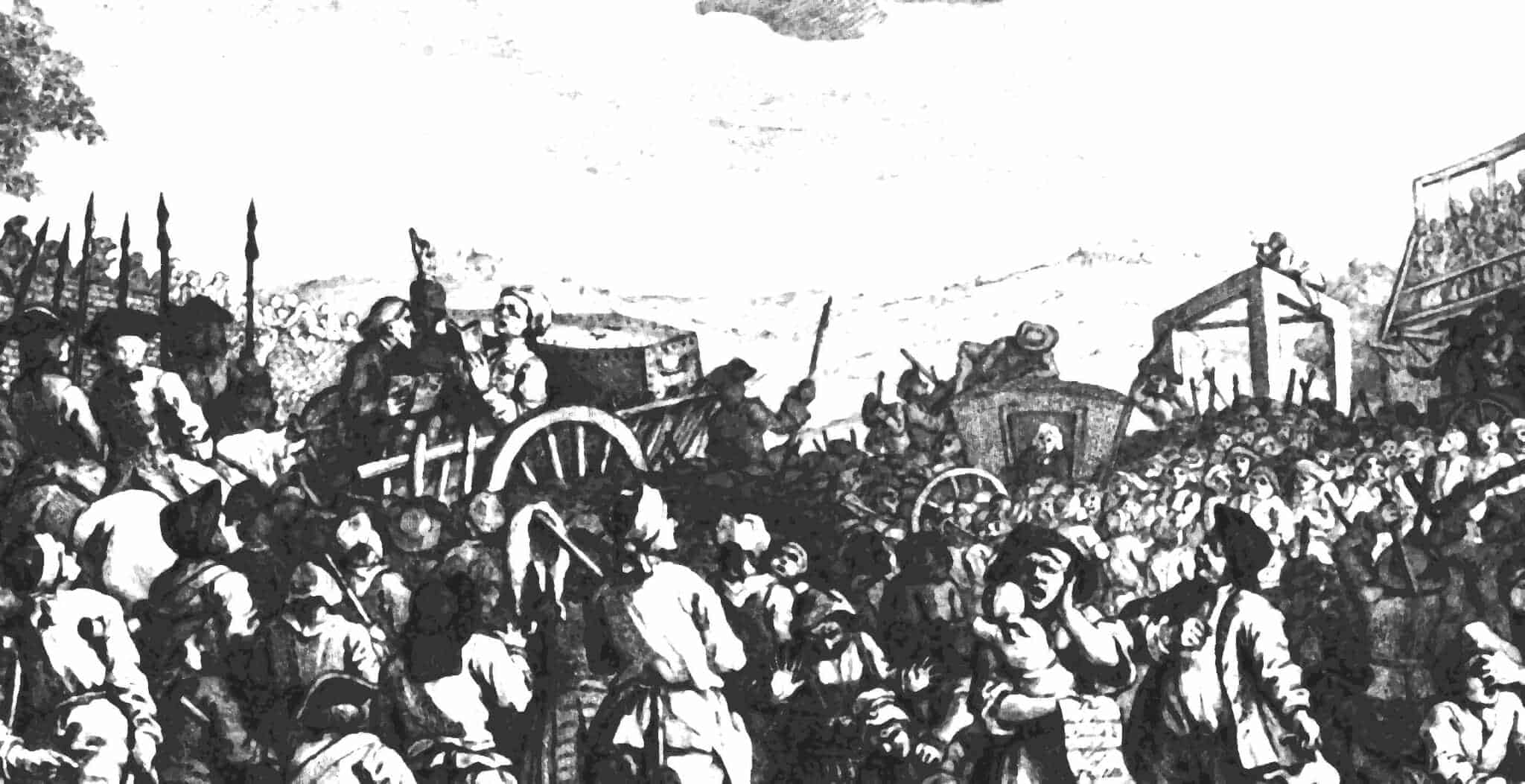
A condemned highwayman’s last journey to Tyburn was graphically described by Jonathan Swift (author of Gulliver’s Travels) in 1727:
“As Clever Tom Clinch, while the Rabble was bawling,
Rode stately through Holbourn, to die in his Calling;
He stopt at the George for a Bottle of Sack,
And promis’d to pay for it when he’d come back.
The Maids to the Doors and the Balconies ran,
And said, lack-a-day! he’s a proper young Man.
But, as from the Windows the Ladies he spy’d,
Like a Beau in the Box, he bow’d low on each Side…”
‘Tom Clinch’ was a highwayman named Tom Cox, the younger son of a gentleman, who was hanged at Tyburn in 1691.