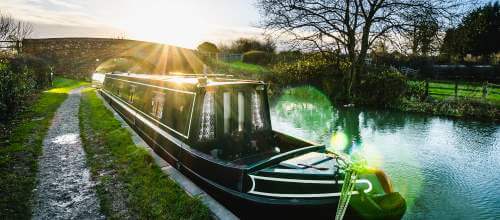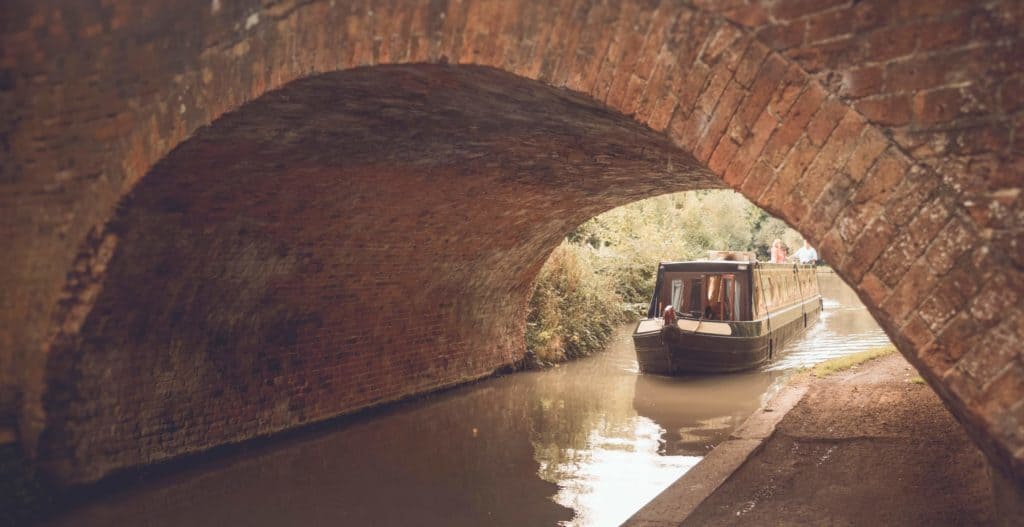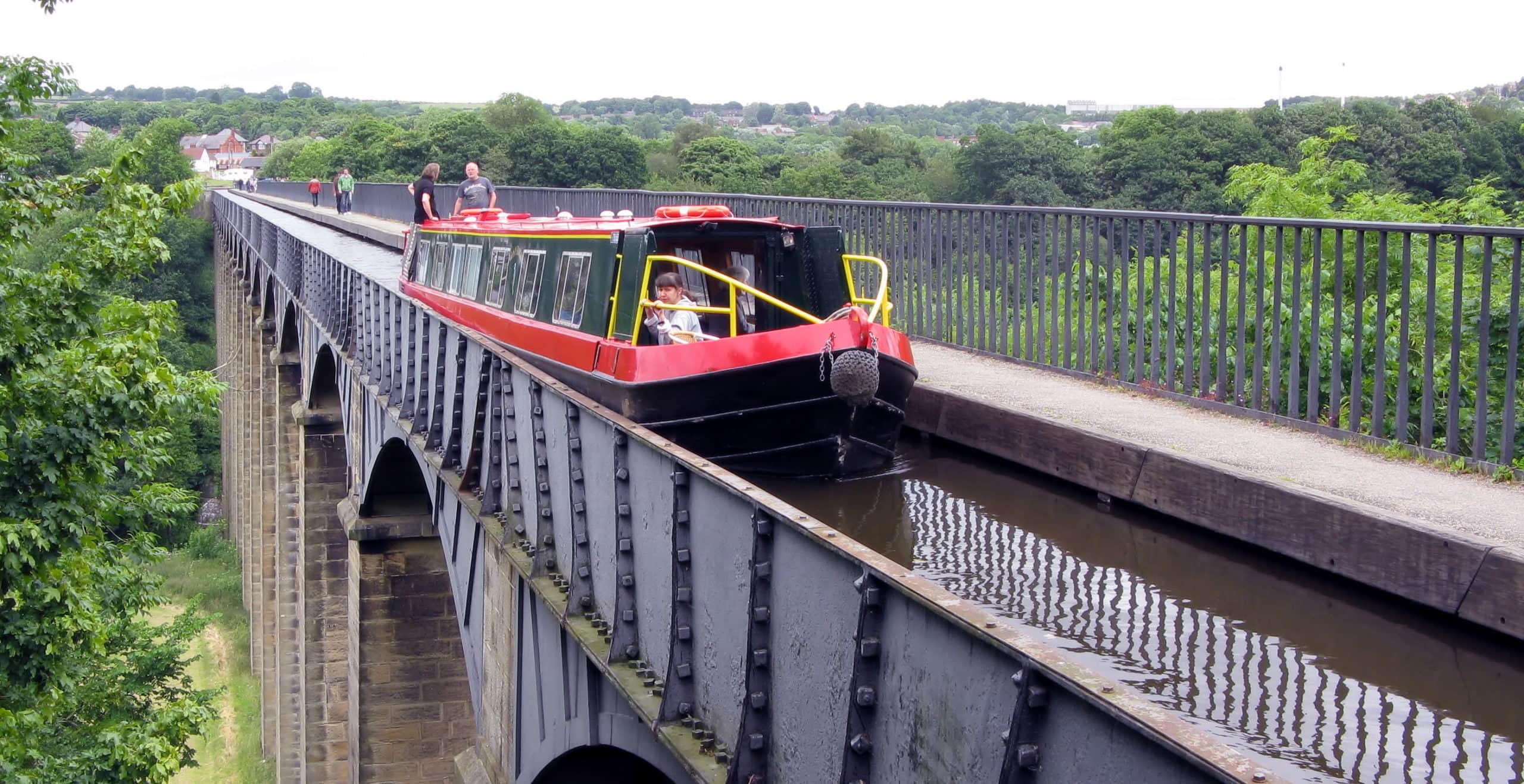


In today’s world where even the seemingly simplest of civil engineering projects, like installing a new roundabout or laying a new stretch of railway track, appears to take decades to complete at the cost of billions of pounds, prepare to stand back and be amazed by the monument to the Industrial Revolution that is the Pontcysyllte Aqueduct. The sight of a canal boat travelling along an 11 feet (3.6m) wide, 1,007 feet (307m) long cast iron trough, supported by 18 stone towers some 127 feet (39m) above the River Dee, does make you wonder as to the pioneering engineering geniuses that played their part in making Britain the hot bed of the Industrial Revolution.
The civil engineering geniuses responsible for the Pontcysyllte Aqueduct were Thomas Telford, who came up with the crazy idea, and William Jessop, the brave man who approved the design for the Ellesmere Canal Company. The project supervisor was one Mathew Davidson, with the cast iron sections being supplied by Mr William Hazledine’s foundries at Shrewsbury, and at nearby Cefn Mawr. The two master masons were John Wilson and John Simpson. Members of this team would work together again and again on many more major civil engineering structures of the time.
The original concept for the Ellesmere Canal was to link the River Mersey with the River Dee, and then on to the River Severn at Shrewsbury. The proposed canal would have several branches providing access to the lucrative ironworks and collieries round the Wrexham area of North Wales. Pontcysyllte Aqueduct literally translates as “the bridge that connects the river”.
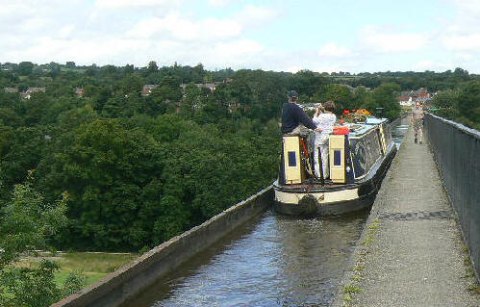
William Hazledine purpose-built the Plas Kynaston Foundry at nearby Cefn Mawr, in order to provide many of the cast iron sections for the aqueduct. Once the stone piers had been constructed, Hazledine’s cast iron supporting arches and water trough sections could be manoeuvred into place and bolted together. Telford ensured that the trough was watertight by developing a strange combination of Welsh flannel and a lead, iron and sugar concoction. He tested the structure for leaks over several months before he was finally satisfied with it.
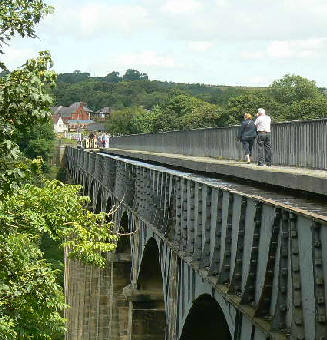
The Pontcysyllte Aqueduct was finally opened on 26th November 1805, having taken ten years to design, build and test. The total cost for the project was £47,000 (close to £3,000,000 in today’s money). The careful planning that Telford dedicated to the project helped to ensure that only one fatality was recorded during the entire construction period. A remarkable achievement considering the lack of technology available in those times and the heights involved.
Telford went on to complete many other great works of civil engineering, including opening up vast swathes of the Scottish Highlands with the building of canals, harbours, thousands of new bridges and almost a thousand miles of roads. Such was his reputation in this field that he earned the nickname, the Colossus of Roads.
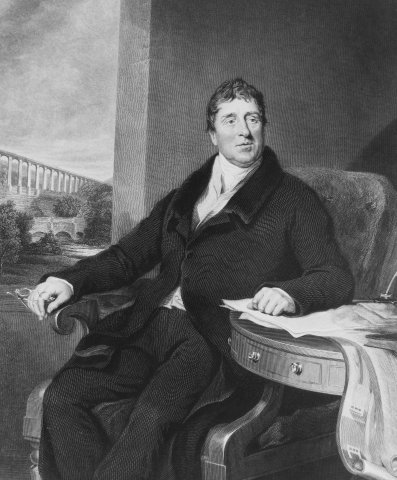
Telford’s genius was recognised by all concerned when he was made the first president of the newly formed Institution of Civil Engineers in 1820. To mark the occasion the institution commissioned a portrait of the great man; notice that the painting includes just one structure in its background – the Pontcysyllte Aqueduct:
Recently nominated for World Heritage Site status, the iron towpath still hangs precariously over the eastern side of the aqueduct’s water trough, with walkers protected from the sheer drop below by metal railings fitted to the outside edge. No such protection for the tillerman of the narrowboat however; the holes on the other side of the trough intended for safety railings were never fitted with such!
Head for heights? Try it for yourself, hire a narrowboat on the Llangollen Canal and test your own, as well as Thomas Telford’s 250 year old, metal.
Getting here
Pontcysyllte Aqueduct is also by road, please try our UK Travel Guide for further detailed information. Nearest rail stations are at Chirk and Ruabon, with regular local bus services to the aqueduct.
Museums
View our interactive map of Museums in Britain for details of local galleries and museums.
Castles in Wales
Try our interactive map of Castles in Wales to browse our huge database.