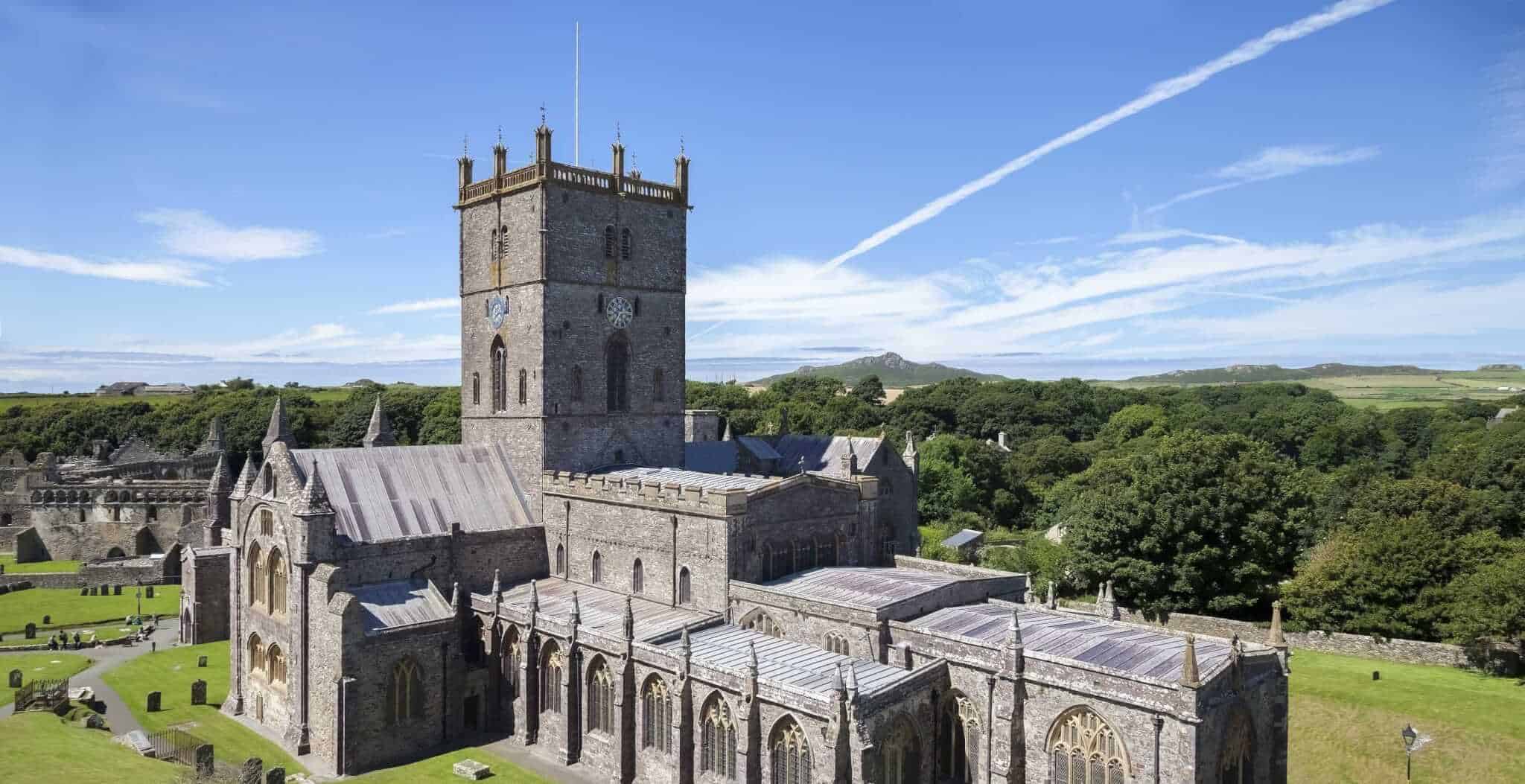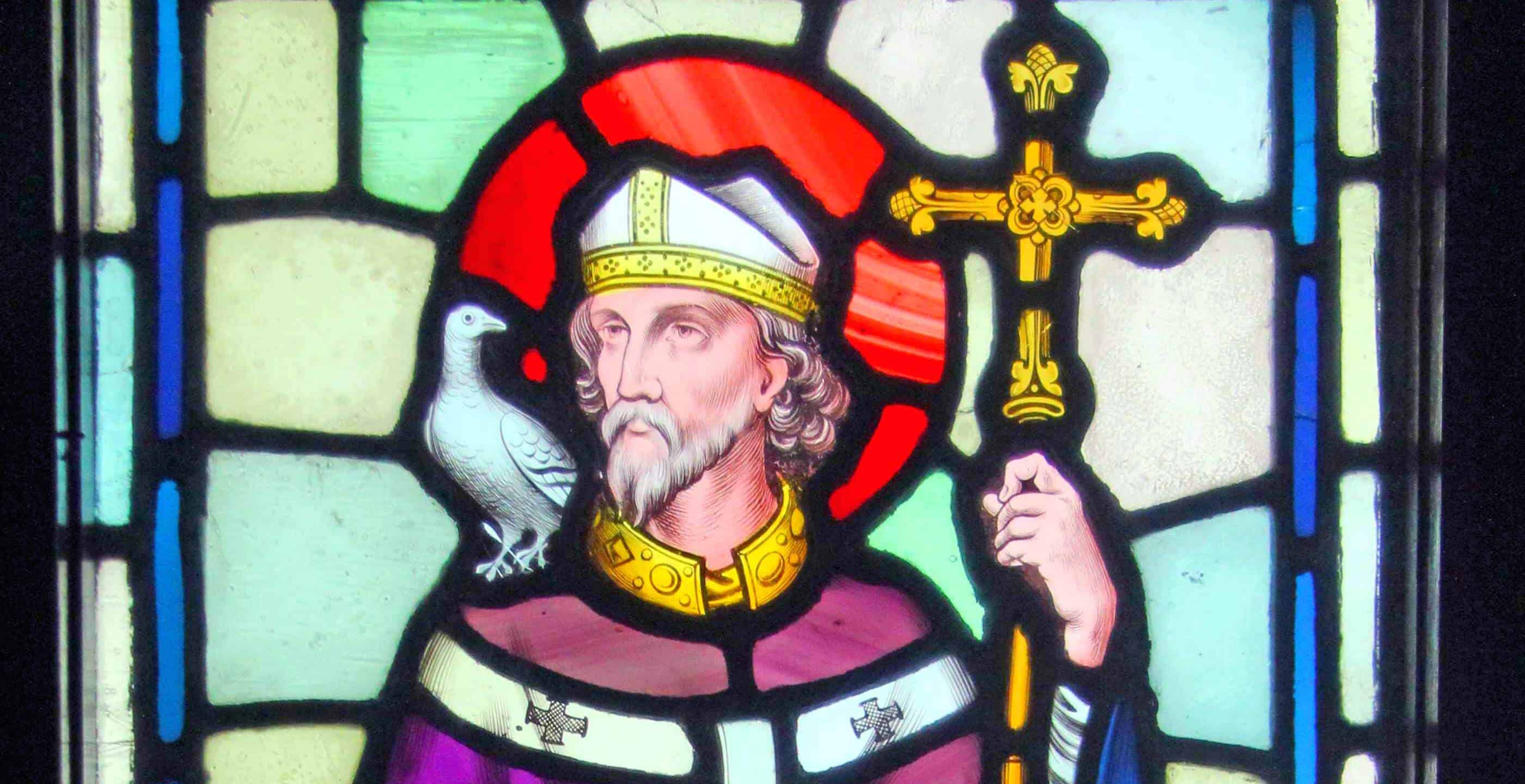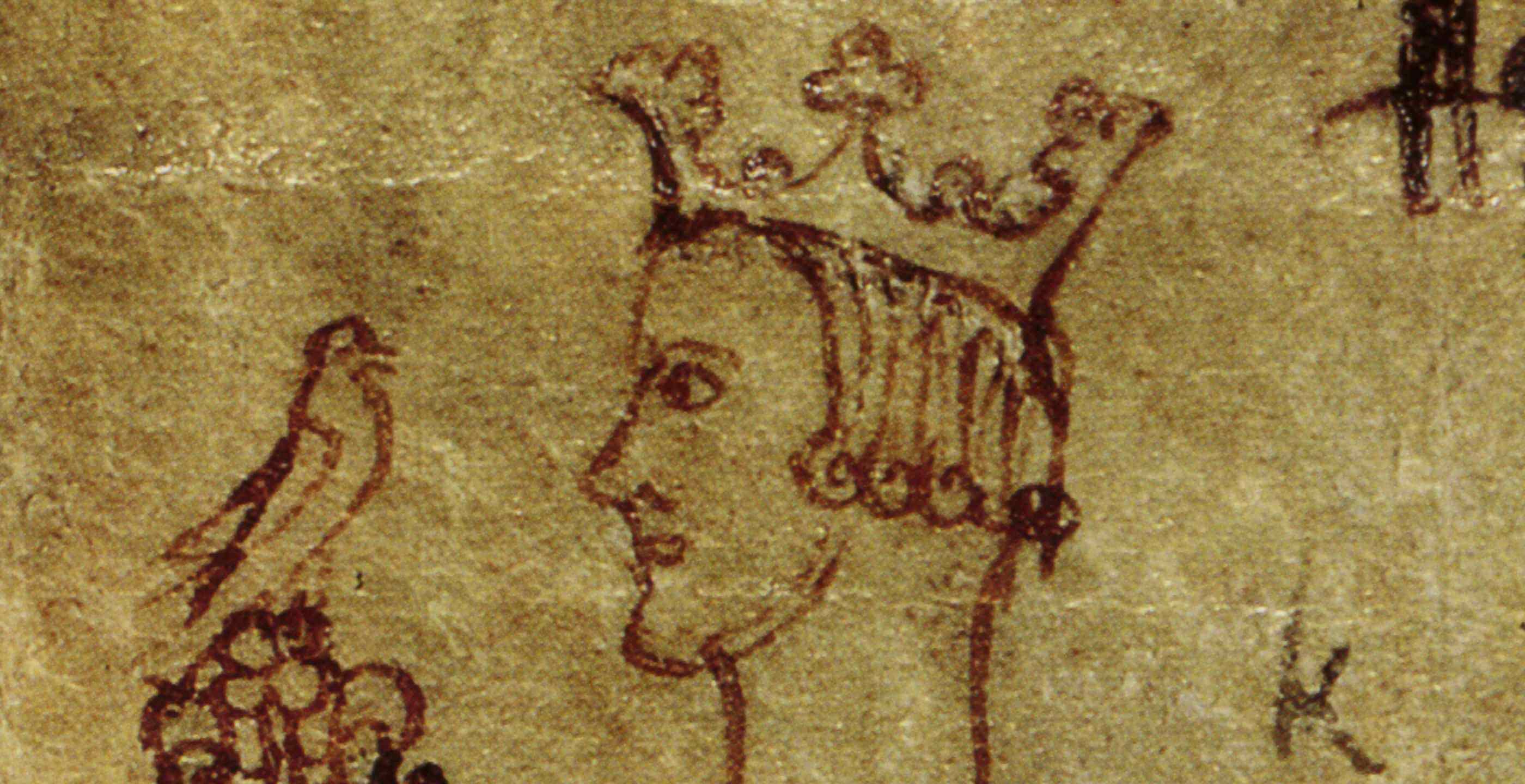

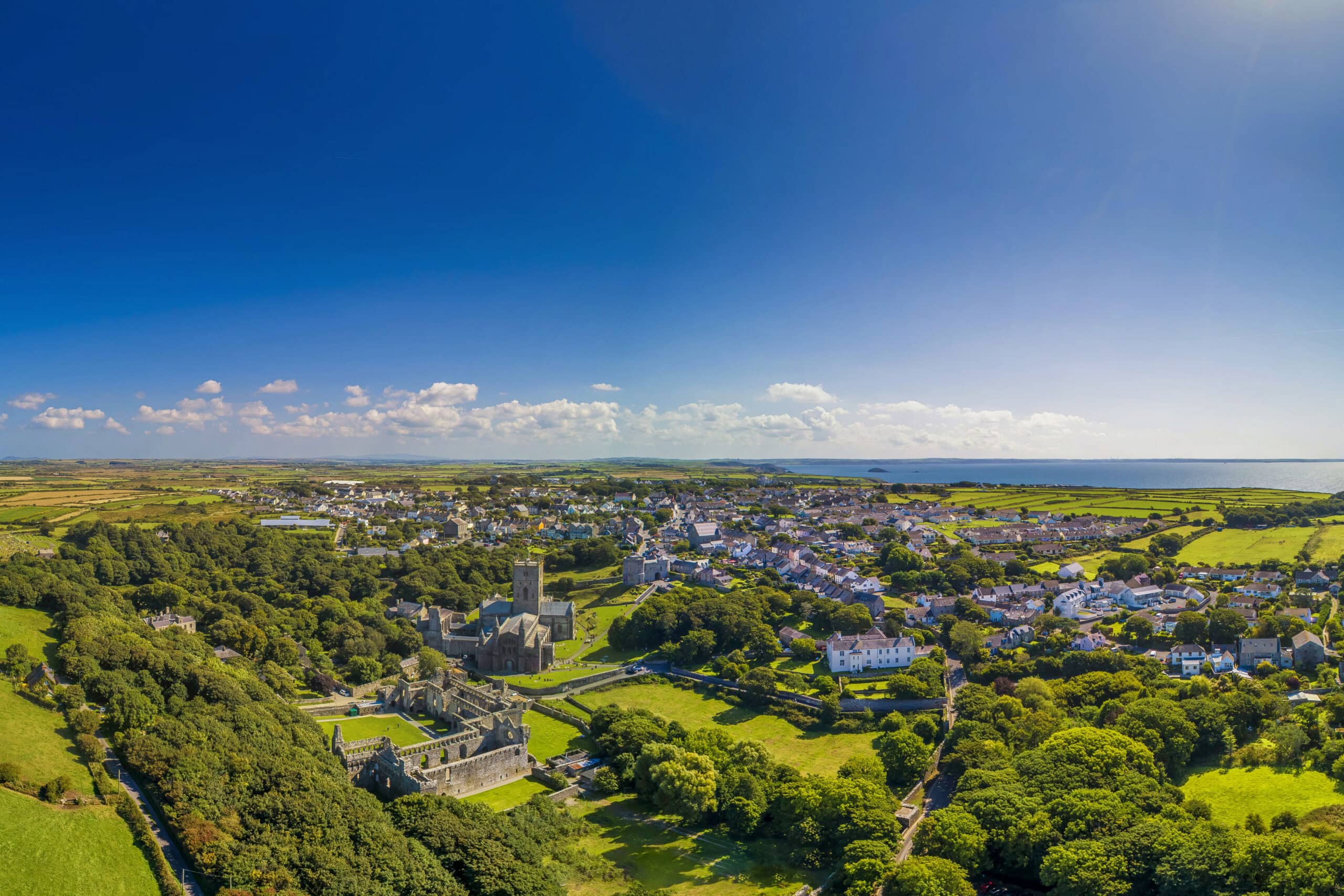
St Davids is a tiny cathedral city (really no bigger than a village) built on the site of the monastery founded by St David (Dewi Sant) in the 6th Century. The City status of St.Davids was granted to all of St.Davids by HM the Queen by Royal Charter on 1st June 1995.
Situated within the Pembrokeshire Coast National Park in South Wales, St Davids, or Dewisland, is surrounded by spectacular coastal scenery renowned for its beauty and abundance of wildlife.
This area of Pembrokeshire is rich in early Christian heritage – not only as the site of St David’s monastery but also as the place from which St Patrick is said to have set sail when he went to convert Ireland to Christianity. Several chapels in Pembrokeshire are dedicated to St Patrick.
To understand part of the reason that St. Davids is so special, you have to know a little about the history of the area. St. David is the patron saint of Wales. David was reputedly born on a cliff top on the South-West Wales coast during a fierce storm. The site of David’s birth is marked by the ruin of a tiny ancient chapel close to a holy well and the more recent 18th century chapel dedicated to his mother Non can still be seen near St. David’s Cathedral.
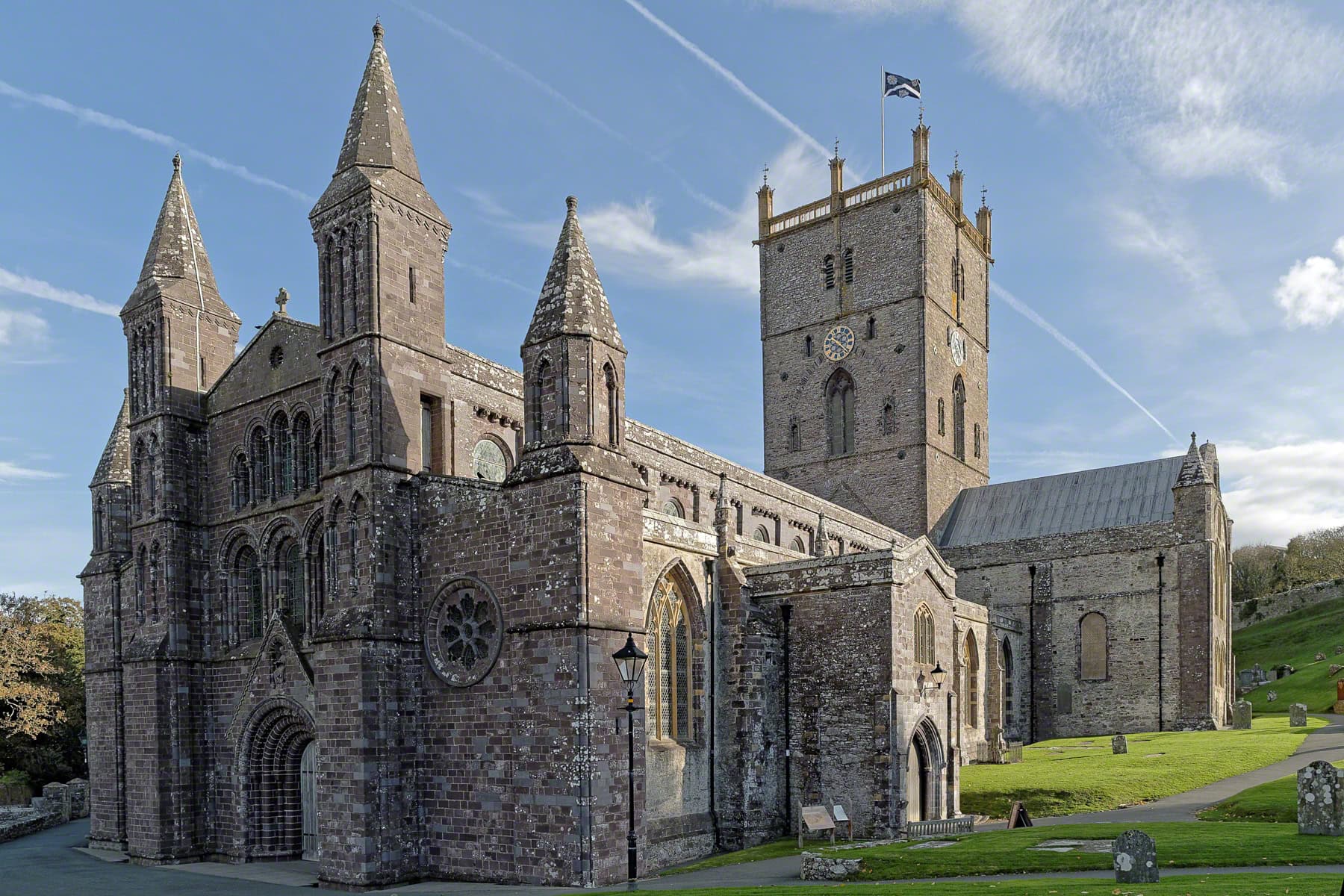
He was the founder of a strict monastic order and was the most influential clergyman in all Wales during the “Age of Saints.” The purple-stoned St Davids Cathedral, built in the 12th Century, became one of the most important shrines of medieval Christendom – two pilgrimages to St. Davids equalling one to Rome. A container made of wood and metal, kept behind the High Altar, is believed to hold the bones of St David and St Justinian, his colleague and confessor.
Before reliable roads, the pilgrims arrived by boat; there are shrines and chapels dotted along this part of the coast where they would have stopped on the journey to give thanks for safe passage.
Adjacent to the cathedral stand the magnificent ruins of the medieval Bishops Palace. Dating from the 14th century but derelict from the 18th, this splendid medieval ruin still conveys the affluence and power of the medieval church. Unlike the frugal founding saint, the bishops of St Davids in the Middle Ages enjoyed all the trapping of wealth and influence. The Palace was largely the work of Bishop Henry de Gower (1328-47) who built the great hall.
The location of St Davids Cathedral, nestling almost hidden in a grassy hollow beneath the tiny city, adds to the very special atmosphere that most visitors feel when they come here.
St Davids today is a very attractive place with narrow streets filled with cafes, restaurants, hotels and art galleries – but only one pub! The 13th century Tower Gate and the Celtic Old Cross are also well worth a look. The highlight of every summer is St David’s Cathedral Festival held in May – an annual celebration of classical music and the chance to see the most historic and revered building in Wales.
Attractions in the area also include a marine life centre, a sea aquarium, adventure boat trips to the offshore islands and a 9-hole links golf course. Nearby Whitesands Bay is a regular winner of the prestigious European Blue Flag award.
* A ruined chapel in the private grounds of the coastguard station at Porthstinian marks the burial spot of St Justinian. According to legend, he retreated to Ramsey Island, a mile offshore, to devote himself to God. His discipline became too strict for his followers, who rebelled and cut off Justinian’s head, whereupon the saintly man walked across the treacherous waters of Ramsey Sound, carrying his head under his arm!
Getting here
The nearest railway station is at Haverfordwest (16 miles), with local bus services (Route No 411) operating to St Davids, please try our UK Travel Guide for further road and rail information.
Museums
View our interactive map of Museums in Britain for details of local galleries and museums.
Castles in Wales
Try our interactive map of Castles in Wales to browse our huge database.
Cathedrals in Britain
Browse our interactive map showing all the Christian Cathedrals of Britain.