

Oxwich is a small seaside village situated 11 miles from Swansea in South Wales. Travelling along the A4118, turn left at the huge gates to the Penrice Estate and take the road down to the sand dunes and marshland of the Nature Reserve. Coming into the village you pass the shop on the right hand side and the large car parks on the left.
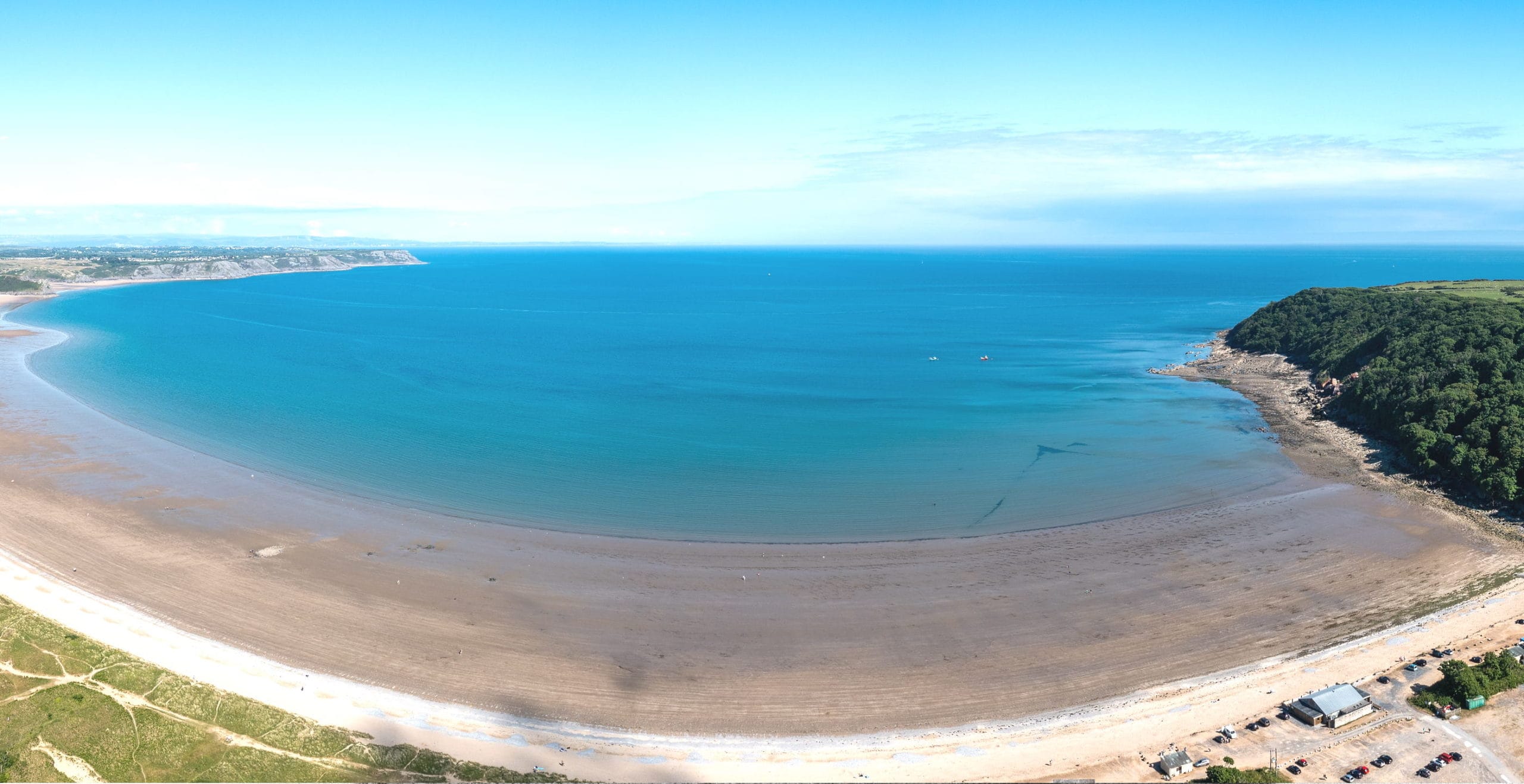
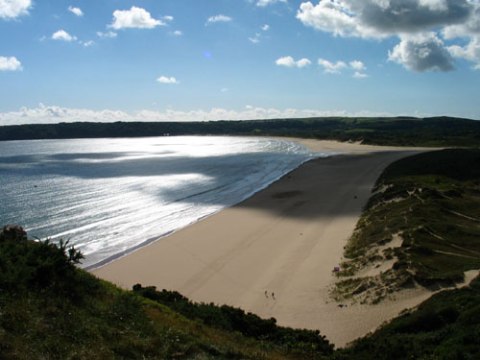
Once a port, exporting limestone quarried from the headland of Oxwich Point, the village is now a quiet backwater except for the summer months when it comes alive with visitors. There are several holiday and caravan parks in the village, as well as the superbly located Oxwich Bay Hotel almost on the beach itself. This is an ideal place to sit awhile and watch the small boats being launched from the slipway and the families playing on the sand. The bay is magnificent with three miles of sandy beach, wooded cliffs at one end and backed by sand dunes. In 1911, the beach was the venue for the first aeroplane flight in Wales by Mr E. Sutton in his Bleriot monoplane.
But there is much more to Oxwich than a summer seaside resort.
The village has several fine cottages, some thatched, which once housed the local quarry men. The Nature Reserve is rich in wild flowers and insects, and mountain goats graze on the scrub. There is also a very interesting Information Centre just across the road from the shop which is well worth a visit.
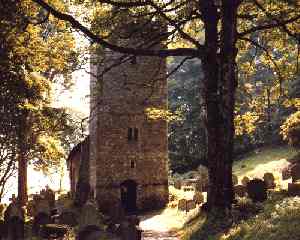 If you wander past the hotel and take the track up the cliff into the trees, you come to the village church of St. Illtud, originally founded in the 6th century. The little churchyard here is full of atmosphere – a little eerie even. Perhaps this is due to the strange creatures that are supposed to have shown themselves here, such as the half-man-half-horse creature seen striding down through the woodland graves towards the foreshore. At the rear of the churchyard stands the grave of an unknown soldier whose body was washed ashore on the nearby beach during World War II. The woodland setting of the ivy clad church provides a little oasis of peace, especially in the summer when the shade and the quiet are in stark contrast to the cheerful chatter of the sunbathers, sailors and swimmers on the beach below.
Continuing past the church, the path climbs up the cliff and rewards the walker with superb views of the coast. Take the road up the hill and you come to Oxwich Castle, now maintained by CADW (Welsh Historic Monuments) and open to visitors between May and September. Oxwich Castle is actually a fortified Tudor manor house, built on and incorporating the original 14th century castle.
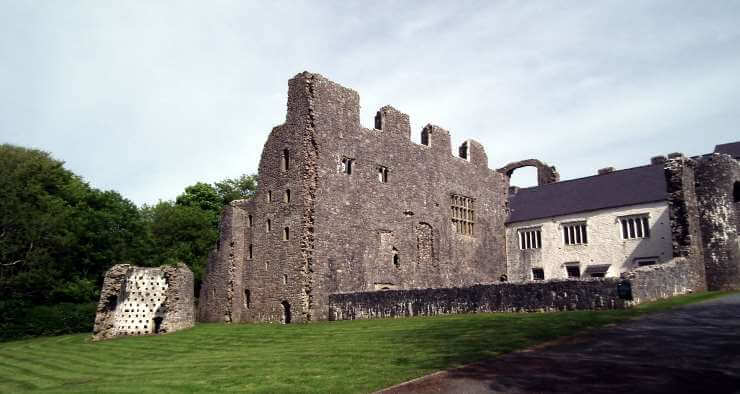
Oxwich has a history of ‘wrecking‘, in common with many coastal villages and one of the best recorded wrecking incidents occurred on December 27th 1557. The Mansel family lived at the castle at the time and apparently were not slow to take advantage of the fact that as the castle was so close to the beach, they could be the first to plunder any ships wrecked on the coast. Sir Rhys Mansel plundered the possessions of a French ship that had come to grief off Oxwich Point during a gale despite the fact that the salvage rights actually belonged to Sir George Herbert of Swansea, a very important and powerful local man. Sir George and his men descended on the castle and a fierce argument broke out between the two sides. Sir Rhys Mansel’s daughter Anne decided to try and break up the two sides but in the ensuing melee was hit on the head by a stone thrown by Sir George’s servant. She subsequently died six days later.
Sir Rhys Mansel took Sir George to court over the affair which resulted in Sir George being heavily fined and the servant stood trial for his part in Anne Mansel’s death. However the court decided to pardon the servant and Sir George managed to avoid paying the fine imposed. This resulted in a feud between the two families which lasted for many years until the Mansel family left Oxwich Castle for their new residence at Margam. Oxwich Castle was leased out to tenant farmers but subsequently fell into ruin.
The Gower Peninsular is one of the most beautiful regions of Wales with wild ponies roaming free in the interior. The sandy beaches and sand dunes of the south coast give way to the wild and windswept Worms Head and the cliffs at Rhossili at the end of the peninsular. This is part of the Gower Coast National Nature Reserve. A rocky stone causeway connects the island to the mainland and access is only possible at low tide. There is an important colony of breeding sea birds here, including razorbills, guillemots and kittiwakes. There is an Iron Age fort on the Inner Head on the island. The rough timbers of the Helvetia can be seen sticking out the sand at Rhossili Bay, witness to the treacherous seas around Worms Head.

Getting here
Oxwich is 11 miles due west of Swansea, please try our UK Travel Guide for further detailed information.
Oxwich National Nature Reserve
One of the richest varieties of coastal habitat in Britain – foreshore, sand dunes, marsh and woodlands. More details from the Reserve Centre : Tel: 01792 390 320
Museums
View our interactive map of Museums in Britain for details of local galleries and museums.
Castles in Wales
Try our interactive map of Castles in Wales to browse our huge database.