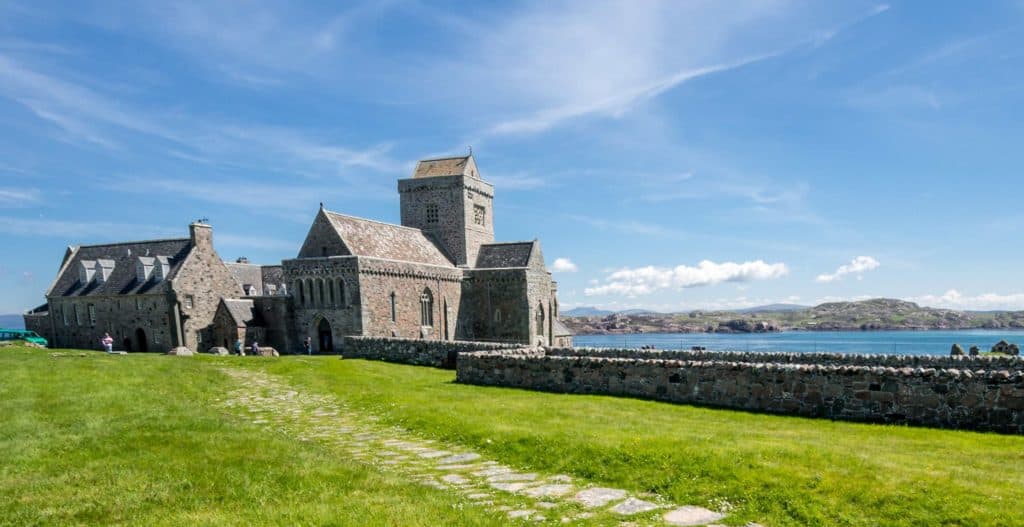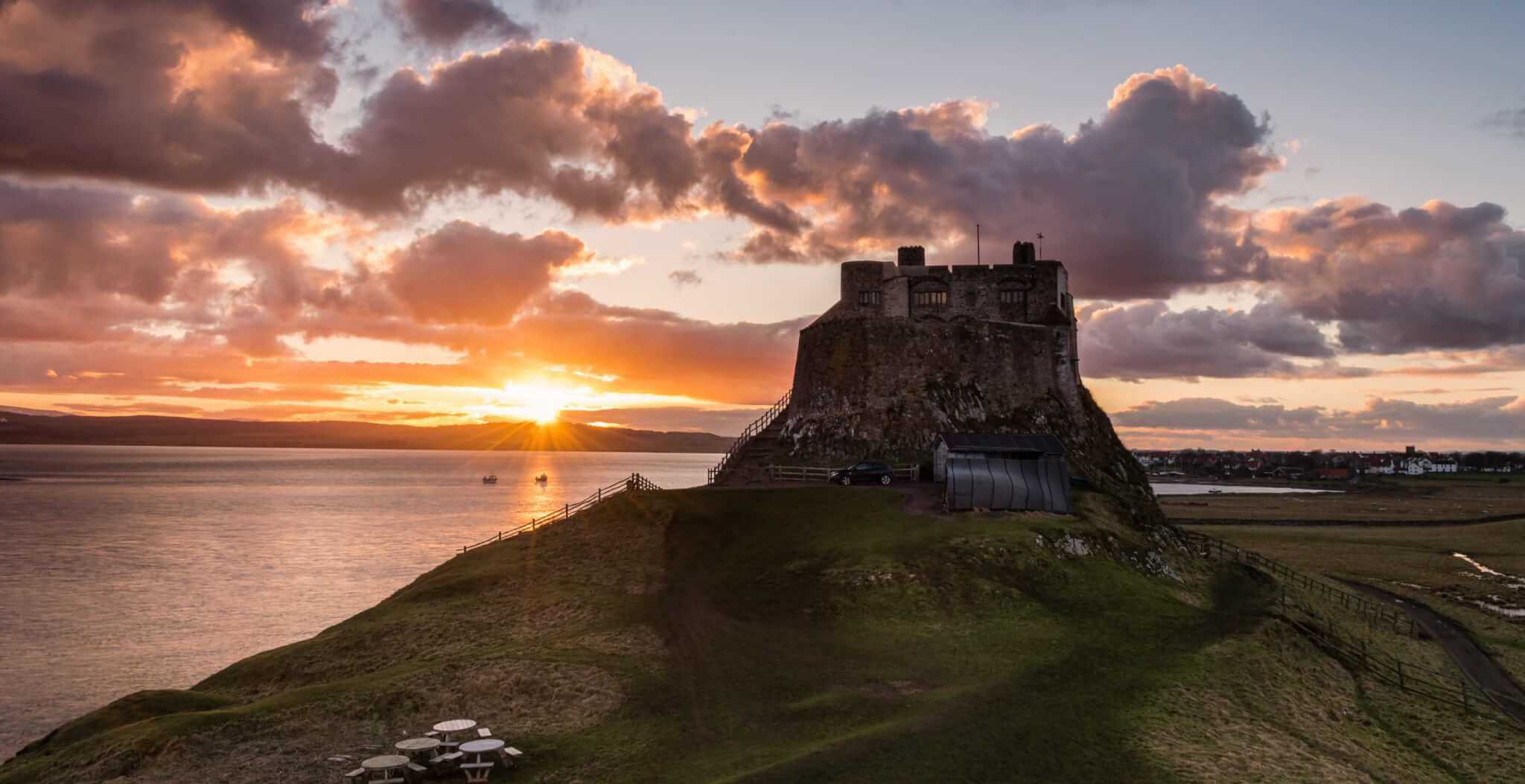


Holy Island (Lindisfarne) is situated off the Northumberland coast in the north east of England, just a few miles south of the border with Scotland. The island is linked to the mainland by a causeway which twice a day is covered by the tide.
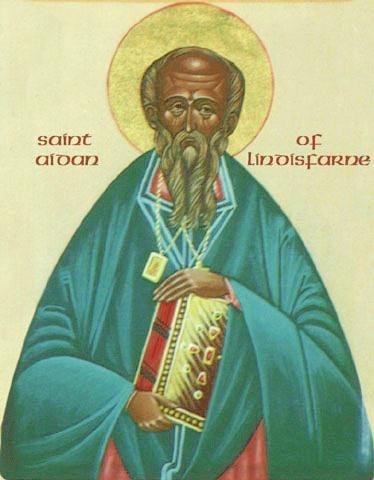
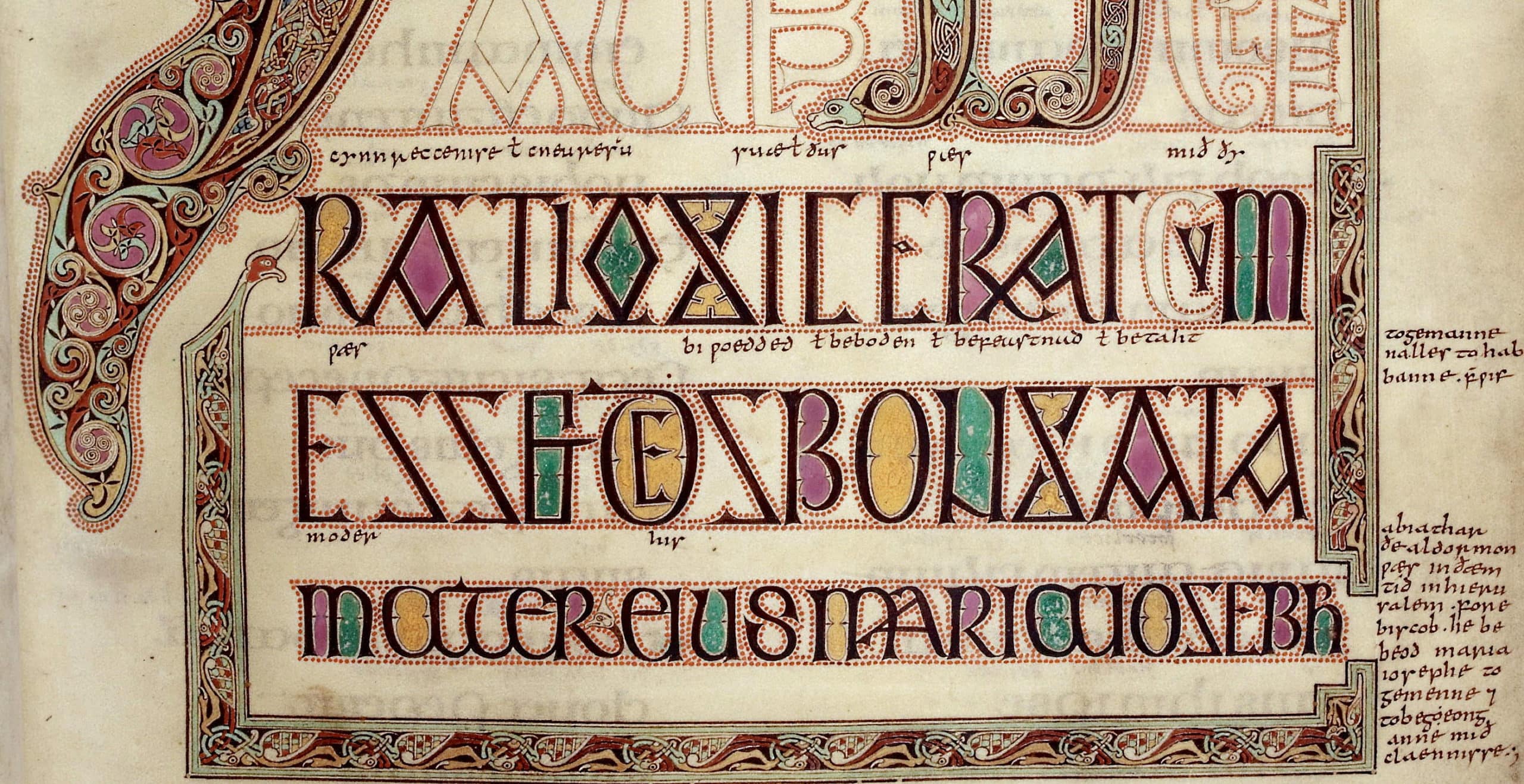
Possibly the holiest site of Anglo-Saxon England, Lindisfarne was founded by St. Aidan, an Irish monk, who came from Iona, the centre of Christianity in Scotland. St Aidan converted Northumbria to Christianity at the invitation of its king, Oswald. St. Aidan founded Lindisfarne Monastery on Holy Island in 635, becoming its first Abbot and Bishop. The Lindisfarne Gospels, a 7th century illuminated Latin manuscript written here, is now in the British Museum.
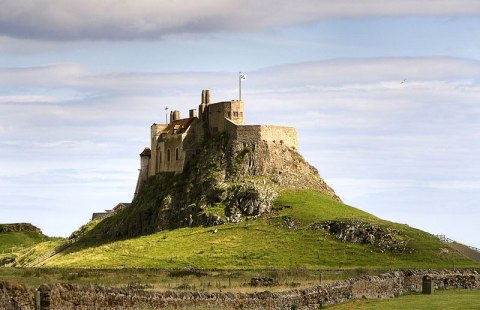
The island of Lindisfarne with its wealthy monastery was a favourite stop-over for Viking raiders from the end of the 8th century. These Vikings raiders obviously concerned the monks somewhat as they vacated the monastery and did not return for 400 years. Lindisfarne continued as an active religious site from the 12th century until the Dissolution of the Monasteries in 1537. It seems to have become disused by the early 18th century.
With its ancient associations, its castle and priory ruins, Lindisfarne remains today a holy site and place of pilgrimage for many. Visitors are advised to check the tide tables prior to their arrival as at High Tide the causeway linking Holy Island to the Northumberland mainland is submerged under water and the island is cut off.
The island is a thriving community, with a busy harbour, shops, hotels and inns. There is much to see on the island and on the mainland. Bird watching, fishing, golf, painting and photography are just some of the activities to be enjoyed on Holy Island.

Getting here
Lindisfarne is located off the Northumberland coast, 20 miles north of Alnwick, 13 miles south of Berwick-on-Tweed. Please try our UK Travel Guide for further information, however don’t forget to consult the local Tide Tables before arriving!!!
Anglo-Saxon Remains
Try our interactive map of Anglo-Saxon Sites in Britain for details of nearby sites.