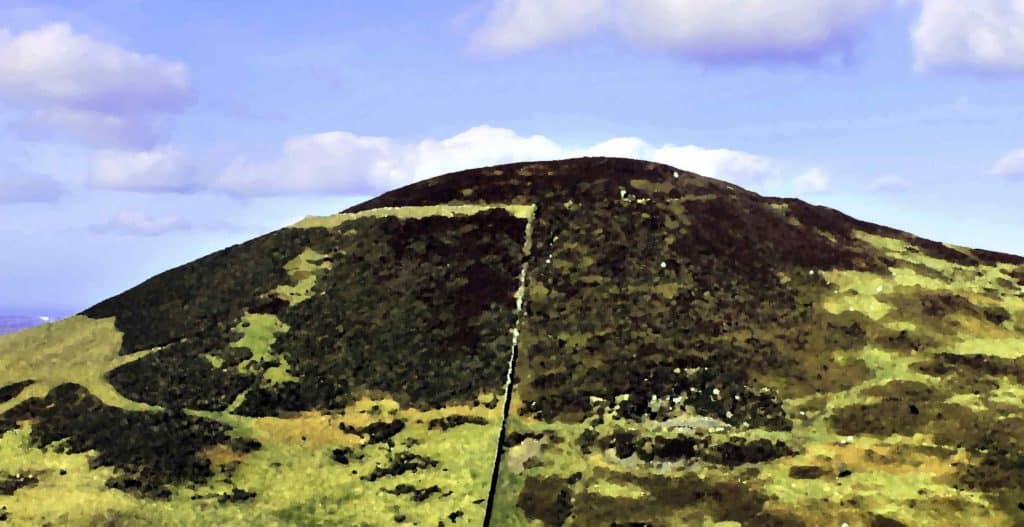


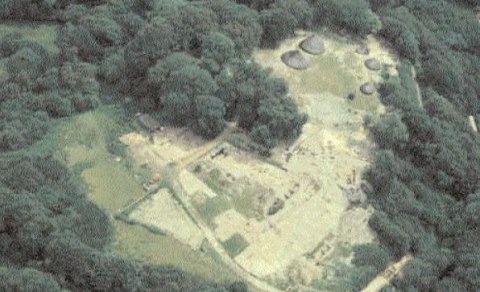
Situated between Newport and Cardigan, Castell Henllys is an Iron Age inland promontory fort, which has been excavated for over 20 years. In fact, the site is one of the most intensively studied hillforts in Britain and has a continuing programme of research and excavation, run to train the archaeology students at York University.
The hillfort consists of a natural headland with steep scarps to the east, south and west, augmented by a bank. To the north of the site, where the entrance was, there are significant earthworks in the shape of several ditches and banks. Inside these fortifications, archaeologists have found evidence for numerous Iron Age roundhouses dating to between 500 and 100 BC. Adjacent to the fort they discovered a farmstead settlement, which is believed to have been occupied throughout the Romano- British period.
Defended communities
There are a large number of Iron Age hillforts in west Wales. These are generally much smaller than their counterparts in England – Castell Henllys covers an area of less than half a hectare (just over one acre), compared to 19 hectares (47) acres at Maiden Castle in Dorset, for example – but far more numerous.
Hillforts such as Castell Henllys were probably home to a community of extended families, maybe up to 150 people, and building and maintaining the site would have been a big commitment for the inhabitants. Excavation of the defences has shown how massive and complex they were, particularly at the gateway end, going through many phases of rebuilding and construction. This may show that Welsh Iron Age society was violent, and that’s why so many communities were prepared to invest in hillforts. A large slingshot hoard – a rare find for Britain – was discovered behind the rampart at Castell Henllys, suggesting the defences were ready for use. Alternatively, or additionally, it might suggest that these hillforts were high-status sites, where the inhabitants used the massive and elaborate defences to demonstrate to observers that they could afford to spend labour and resources on building them. Interestingly, one of the original motivations for excavating the site was the name: the ‘llys’ part means ‘palace’ or ‘court’ and this name is associated with high-status locations in the early medieval period.
One of the most unusual defensive discoveries at Castell Henllys was made by archaeologist Harold Mytum. Below one of the outer banks of the hillfort he discovered a ‘cheveaux-de-frise’, what Mick refers to as a ‘sort of prehistoric barbed wire’. It was particularly effective at stopping cavalry and chariots, and that’s why it extends in a band outside the gateway area, so attackers would become entangled at the point where they were in slingshot range. This feature is common in France and Spain, but relatively unknown in Britain. Before Harold Mytum’s excavation no one knew that these stones existed at Castell Henllys, and it makes you wonder how many others are waiting to be found at other sites.
Roundhouse reconstruction
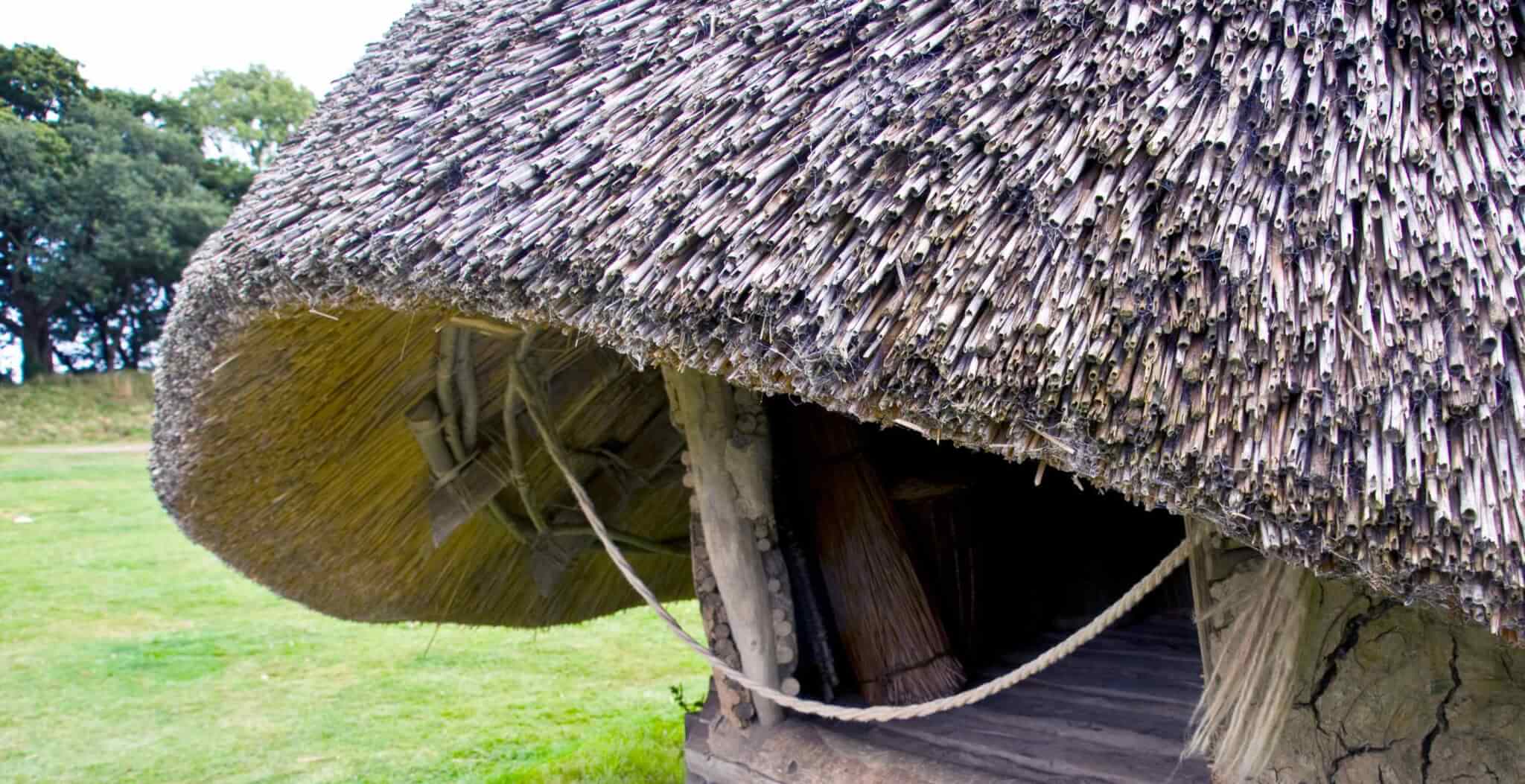
A large portion of the interior of the hillfort has been excavated, and this has produced detailed information about the layout of the site and the lifestyle of its inhabitants – so much so that a number of roundhouses and a granary have been recreated on the exact location of the original Iron Age structures.
The granary and one of the old roundhouses are the oldest reconstructed prehistoric buildings in Britain. The first roundhouse (Roundhouse One) was excavated in 1981 and is located to the south-east of the site. Reconstructed the following year, it has a diameter of 10m (33ft) and is unique in that it has an inner ring of timber posts. Roundhouse Two is a smaller building (6m/20ft) in diameter), while Roundhouse Three is roughly the same size as Roundhouse One but, unlike its counterpart, it did not have an inner ring of wooden posts.
As well as the roundhouses, the site contained deposits such as carbonized bone, charcoal, grain, several iron objects, pieces of pottery, glass beads and a few spindle whorls. Mick particularly likes the fact that although the site is Iron Age, only a small number of iron objects have been found there, such as a small hunting spearhead and a sickle blade. This indicates what a highly valued commodity it was, and that it was never needlessly discarded but was probably carefully recycled instead.
Our View
Castell Henllys has a good visitor centre, and there are beautiful trails through the surrounding woodland (complete with prehistoric pigs). Don’t miss the recreated Iron Age ritual area with its wooden fertility figures, which has been adopted by New Age enthusiasts as though it really was an ancient feature. But then, it’s always nice to see people taking an interest in the past!
Getting There
Castell Henllys is 6 miles SW of Cardigan, off the A487. See www.castellhenllys.com or telephone 01239 891319 for opening times and other details. Admission charges apply.
Extract from “The Time Team Guide to the Archaeological sites of Britain and Ireland”, Tim Taylor