
Welcome to the city of Bath, World Heritage Site. Famous worldwide for its imposing architecture and Roman remains, Bath is a vibrant city with over 40 museums, good restaurants, quality shopping and theatres.
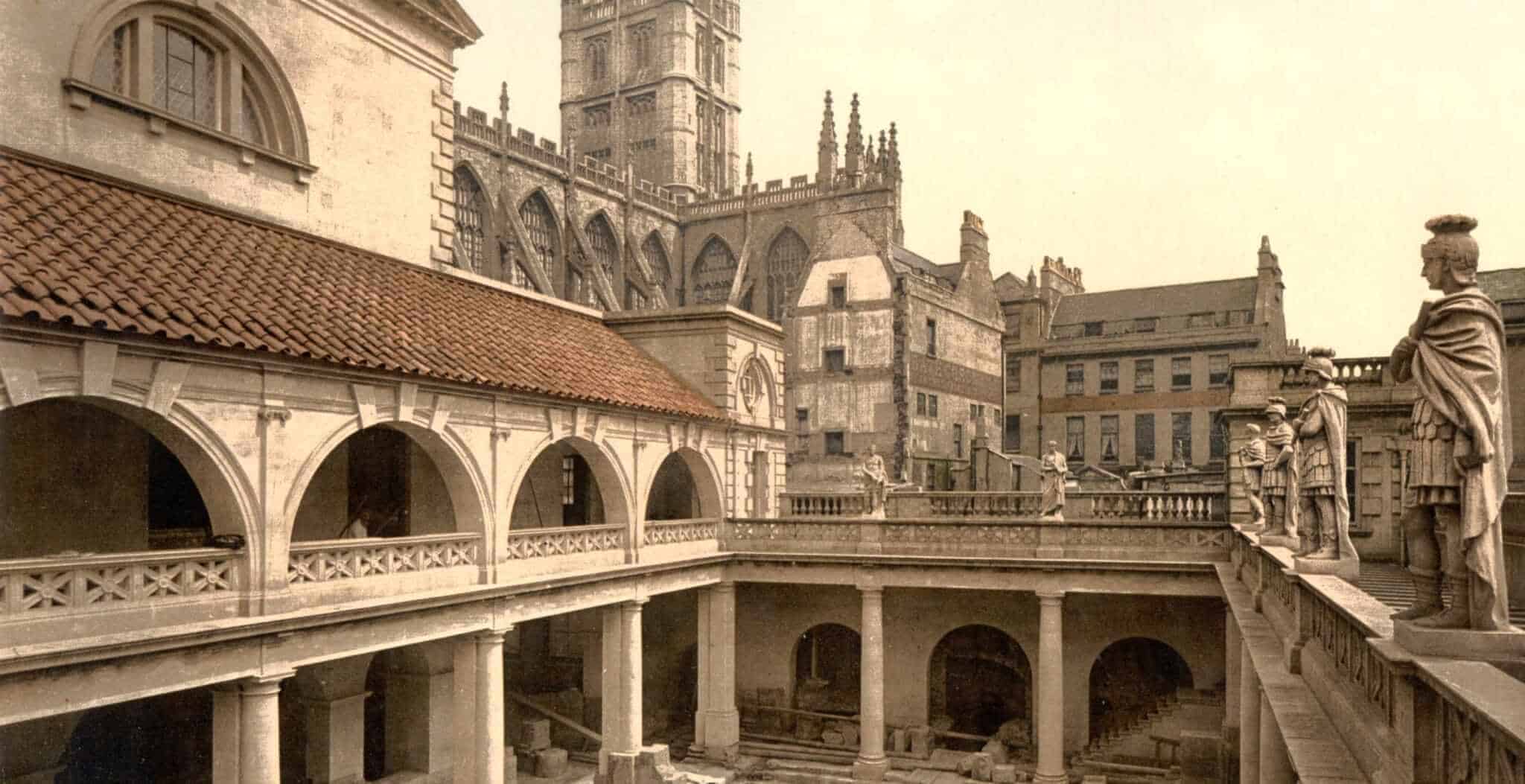
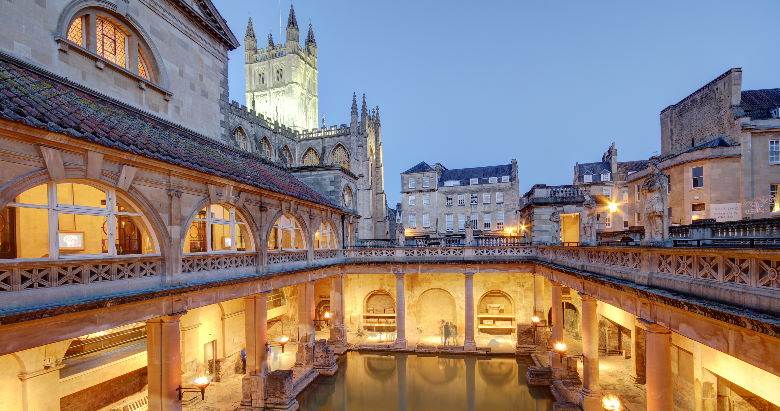
The Roman Baths and magnificent Temple were built around the the natural hot spring which rises at 46°C and were at the centre of Roman life in Aquae Sulis between the first and fifth centuries. The remains are remarkably complete and include sculpture, coins, jewelry and the bronze head of the goddess Sulis Minerva. A visit to the Roman Baths would not be complete without a visit to taste the waters and enjoy a tea, coffee or snack in the 18th century Pump Room, centre of Georgian entertainment in it’s day, which is situated just above the Temple.
The 15th century Abbey, Pump Room and Roman Baths are located right in the heart of the city. Bath Abbey Heritage Vaults are well worth a visit: the 18th century vaults provide an unusual setting for the exhibitions, displays and presentations of over 1600 years of abbey history.
One of the most famous landmarks in the city is Pulteney Bridge, one of only two bridges in Europe to support shops. Built in 1770 by the eminent architect Robert Adam and modelled on the Ponte Vecchio in Florence, here you will find small specialist shops and restaurants. Regular boat trips run from the east bank of the river, offering alternative (and very beautiful) views of Bath.
Bath is also well known for it’s ghostly residents. There are guided tours around the city to visit their favourite haunts. Perhaps among the best known are the Man in the Black Hat seen around the Assembly Rooms and the jasmine-scented Grey Lady of the Theatre Royal.
Bath’s most eccentric landmark must be Beckford’s Tower, an early 19th century folly in Lansdown with superb views over the city and across the River Severn to Wales. Built in 1827 and surrounded by a Victorian cemetery, the Tower is open to visitors and includes a museum in the two storey building at the base of the Tower. (Fit! ) visitors to the Tower can climb the 156 steps up the beautiful spiral staircase to the luxuriously restored Belvedere and admire the panoramic views.
Other places to visit include the Museum of Costume, the American Museum and the Jane Austen Centre. One of Bath’s most attractive qualities is that the city centre is small enough to be explored on foot. Parking in Bath can be quite a nightmare, but there are ‘Park and Ride’ schemes operating where visitors can park their cars, free of charge, and then take a bus into the city.
Tours of historic Bath
For information concerning tours in and around historic Bath, please follow this link.
Getting here
In the county of Somerset, Bath is easily accessible by both road and rail, please try our UK Travel Guide for further information.
Roman Sites in Britain
Browse our interactive map of Roman Sites in Britain to explore our listing of walls, villas, roads, mines, forts, temples, towns and cities.
Museums
View our interactive map of Museums in Britain for details of local galleries and museums.