

The ancient custom known as Well Dressing is peculiar to England, and Derbyshire and Staffordshire in particular.
When did well dressing begin and why did it begin in Derbyshire?
Well dressing is actually a bit of a mystery. Perhaps we can look to the location of Derbyshire as a reason why the custom developed here and nowhere else. Derbyshire is a very beautiful but remote county, even nowadays with modern road infrastructure. The Derbyshire hills and dales make it difficult to pass easily from place to place. If the practice of well dressing dates back to the Celts, then perhaps the remoteness of the Derbyshire dales prevented the succeeding Roman, Saxon, Danish and Norman invaders from imposing their customs on the local people.
The early Christians were not happy with the custom of dressing wells – they considered it water worship and promptly put an end to it!
But the tradition refused to die. Tissington was the first village to re-introduce well dressing in 1349, after the village managed to escape a terrible outbreak of the Black Death that swept through England at this time. Many villages began to dress the new water taps when piped water first came to the villages.
What exactly is well dressing and how is it done?
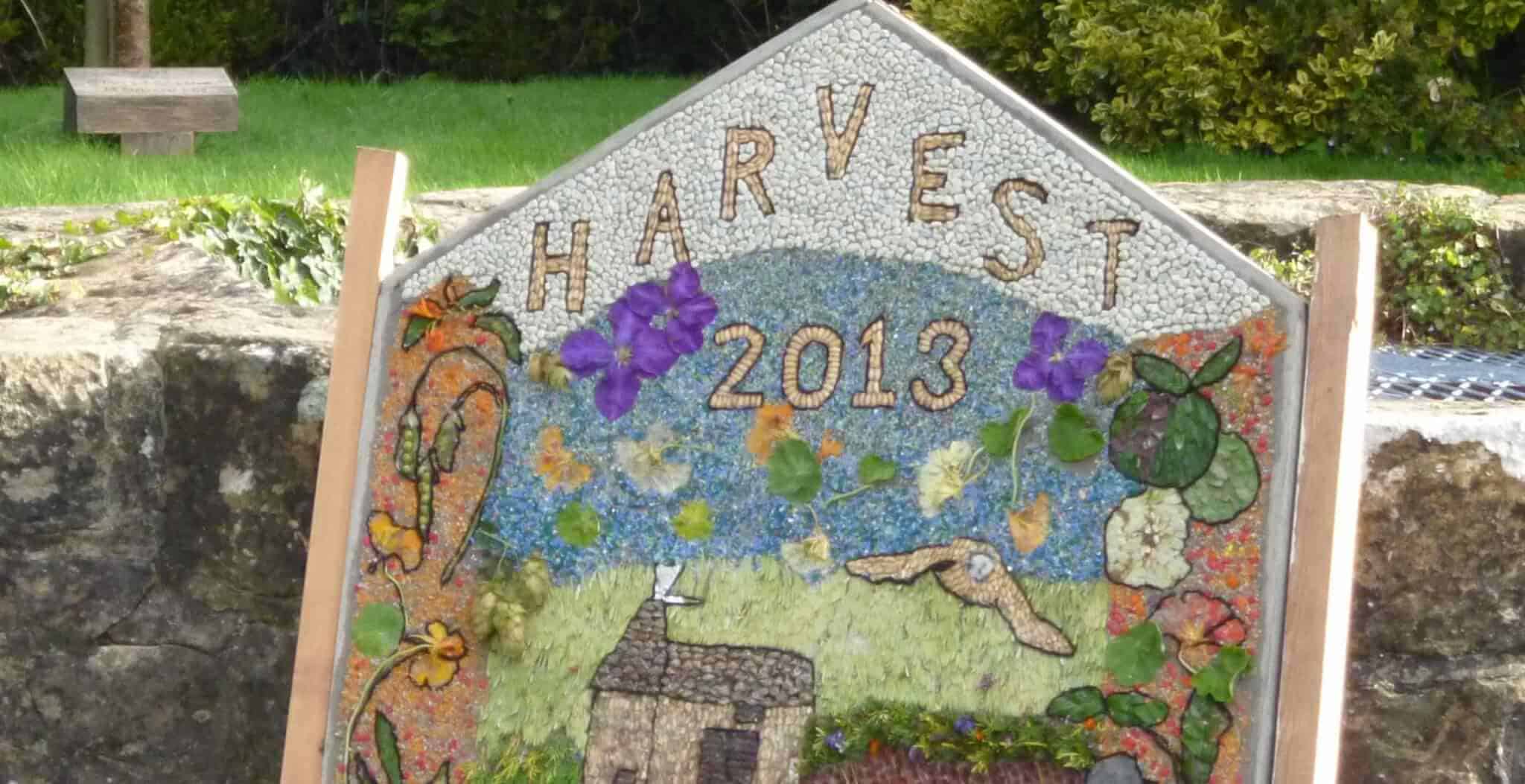
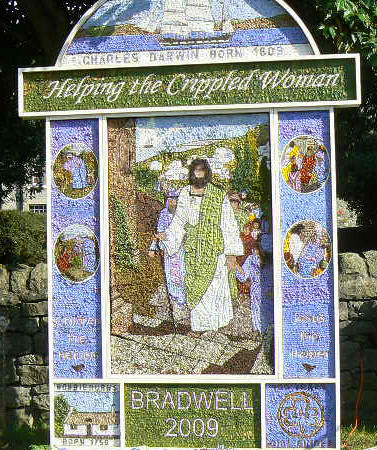
Well dressing involves the decoration of springs and wells with pictures made from living plants and flowers, and usually happens in the summer and early autumn. Some villages allow visitors to watch the preparations – details at the end of this feature
So how is a well dressed?
First take a wooden board, perhaps 4 feet wide, and over an inch deep. Some dressings take several boards, of different shapes and sizes. The board(s) are taken to the local river or pond and soaked for several days to ensure that they are really wet. Then they are covered with a layer of soft, wet clay onto which the artist etches the design.
The outline is the first thing to be done, followed by the ‘colouring in’. The materials used vary from village to village and depend also on the time of year that the dressing takes place. For instance, a village that dresses it’s well in May may use blossoms and flowers whereas later in the year, seeds and berries are used as these are more plentiful.
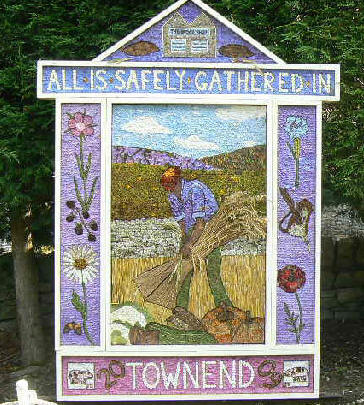
Town End Well, Bradwell, August 2009
How long does it take?
A well dressing can take up to 7 days, involving a team of local people. Unfortunately, it may then only last a week or so until the clay dries out and the flowers die. Then all is put away until next year.
Where can I see Well Dressing?
Well dressing starts in May – Tissington and Endon are two villages who dress their wells early in the year.
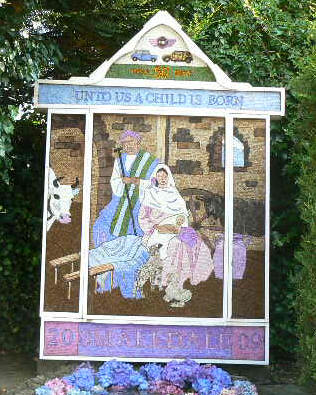
Small Dale, Bradwell, August 2009
Published: 18th April 2015