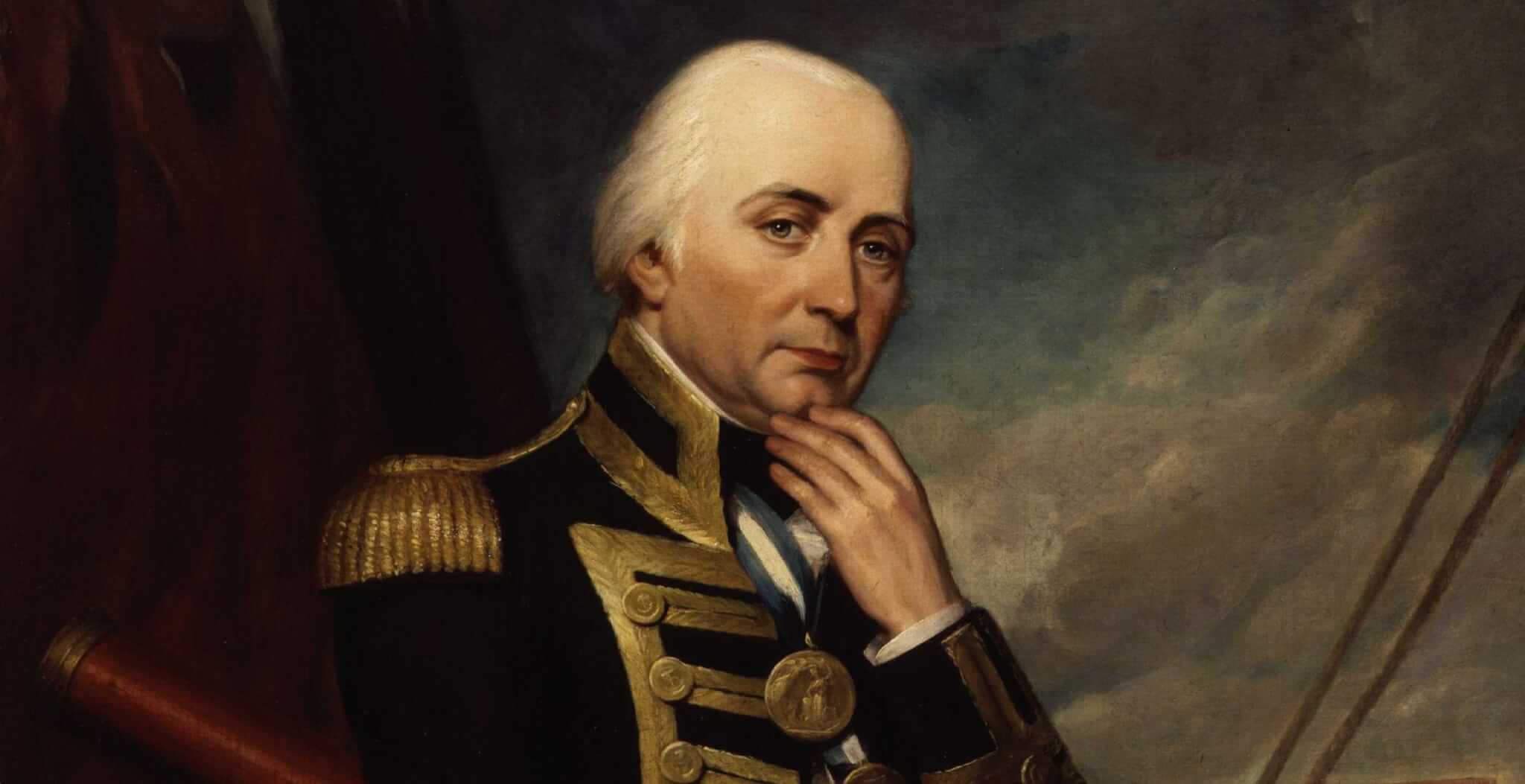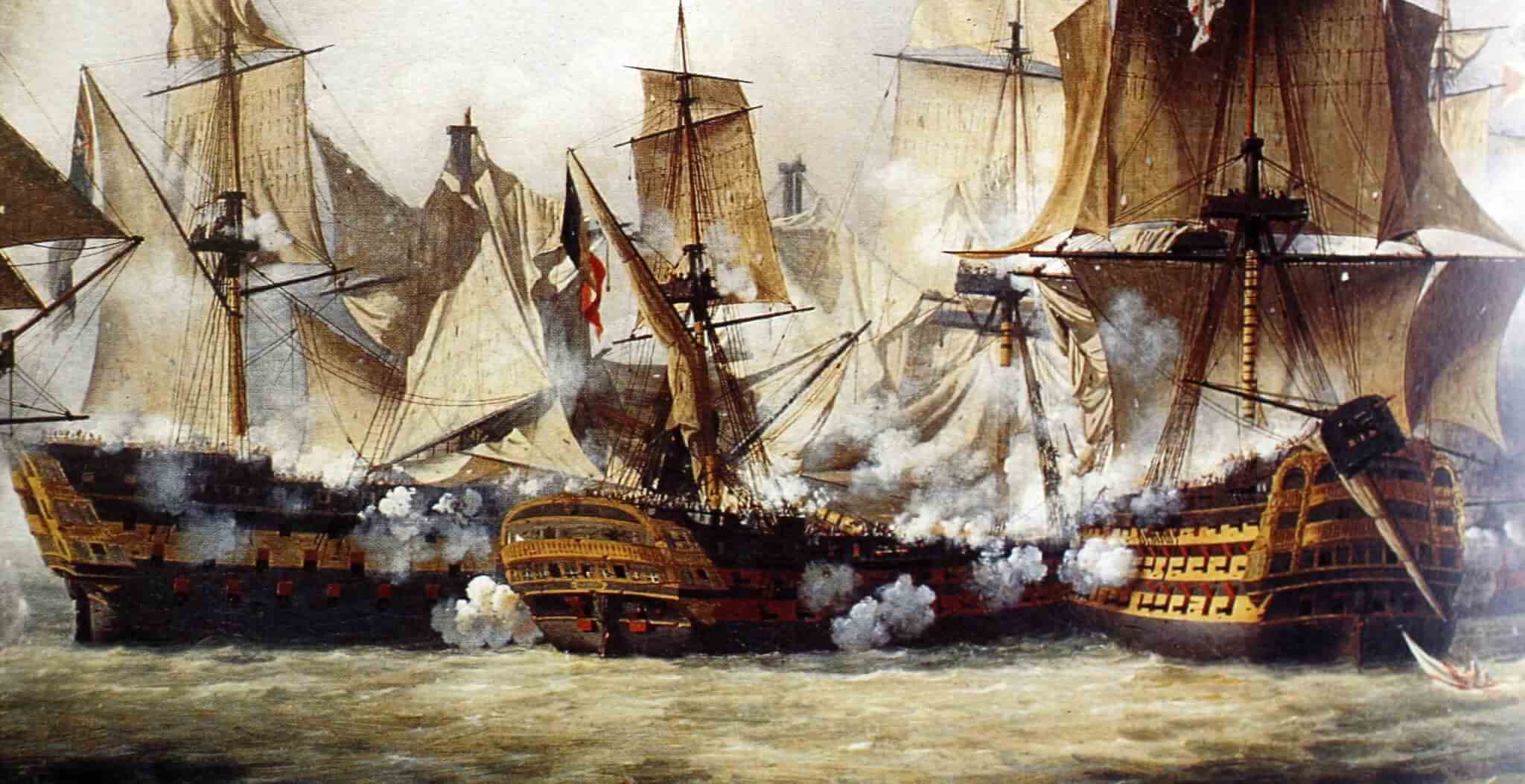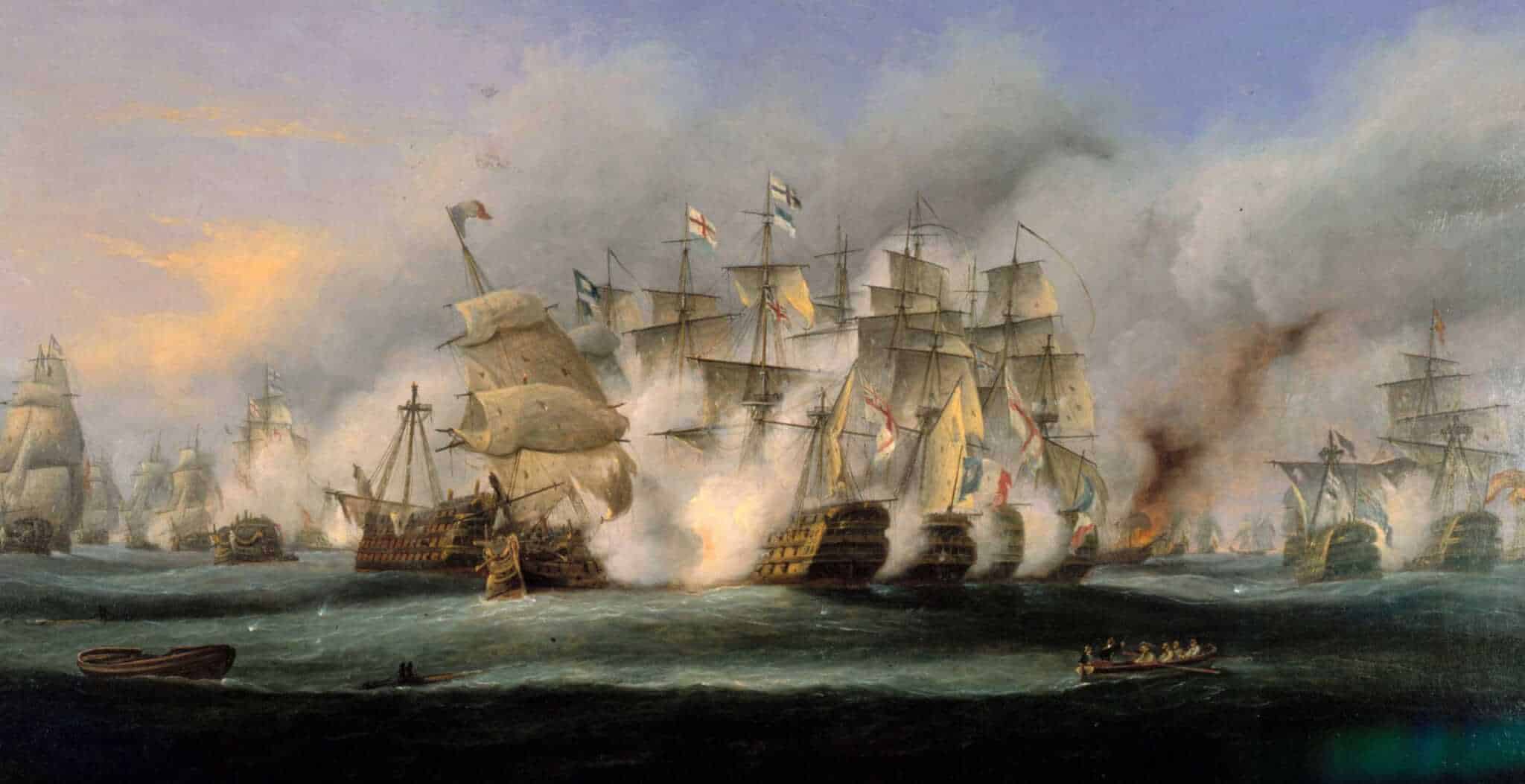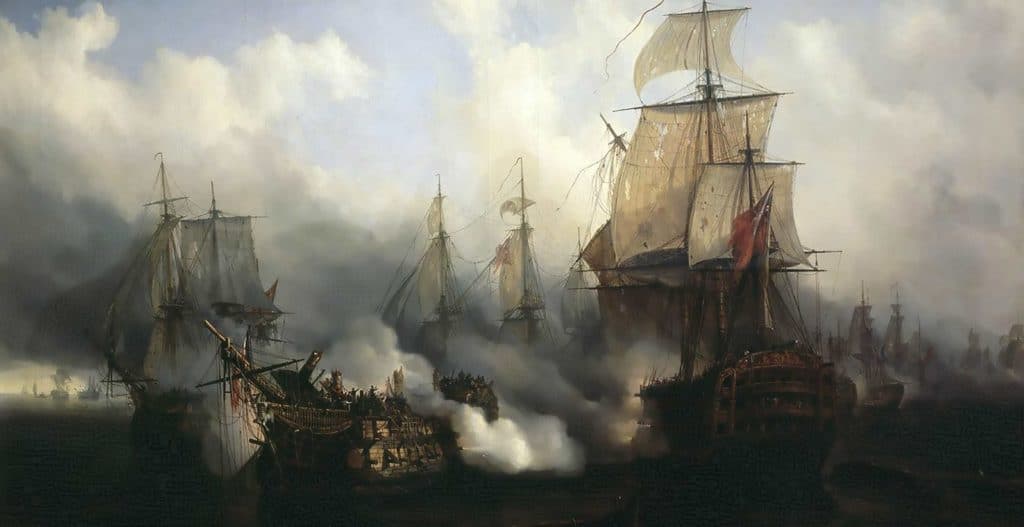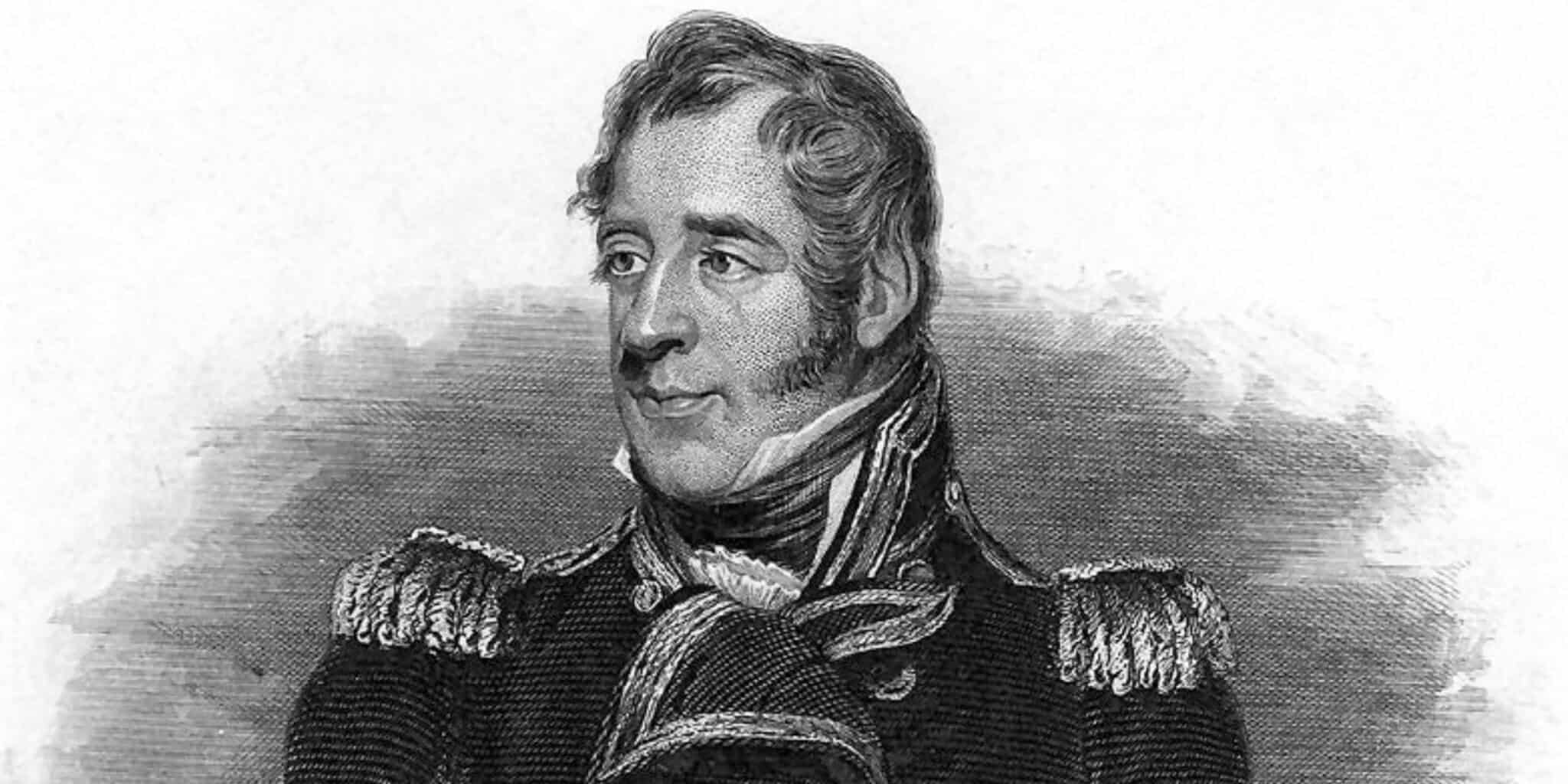


The list of British Naval heroes is a long and illustrious one, including the likes of Drake, Nelson, Rodney, Hood and of course Thomas Cochrane. Thomas who, you may ask? You may perhaps be more familiar with his exploits as fictionalised in C S Forester’s Hornblower novels, or as Jack Aubrey, in Patrick O’Brian’s Aubrey – Maturin series.
It was O’Brian’s series that provided the inspiration for the film Master and Commander, starring Russell Crowe. And in reality it was Cochrane rather than Crowe who escaped a chasing enemy frigate at night by tying a lantern to a barrel and letting it float off. The enemy frigate followed the glimmering light allowing Cochrane and his ship HMS Speedy to escape.
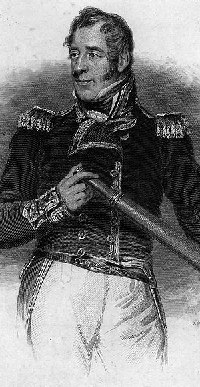 Thomas Cochrane was the son of a minor Scottish aristocrat, and although his father’s preoccupations appear to have involved many weird and wonderful inventions, his family background was one with a distinguished military service history. Born in Annsfield in South Lanarkshire on 14th December 1775, Thomas spent much of his early life roaming the family’s estate in Culross, Fife.
A late starter in the navy, Thomas signed up at the tender age of 17 in 1793, at the outbreak of the Revolutionary Wars in France, joining his uncle Captain Alexander Cochrane aboard HMS Hind. Cochrane had been listed as a crew member on Naval boats since he was five; an illegal tactic often employed so that, when he did join the Navy, there was a record of the length of service necessary to become an officer.
He became one of the most successful and bold captains of the Napoleonic wars; the French nicknamed him “le loup des mers”, or the “sea wolf”, but his time with the Navy was fraught with conflicts; with his superiors, subordinates, equals, even those he could have had natural alliances with. This path of conflicts began when Cochrane was tried by a court martial for disrespecting his superior; he was found innocent but was reproached for being flippant. In 1800, he set sail aboard HMS Speedy in his newly appointed position as Commander. In this role he narrowly escaped capture and death! The first he dodged by flying a Danish flag, pretending to be a merchant ship and claimed that the boat could not be searched as they were ridden with plague! The second escape was a stroke of genius; the enemy was chasing them by night, following the light from the Speedy. Cochrane let loose a barrel with a candle attached and the enemy ship followed that instead, allowing the Speedy to slip silently away.
One of his most famous feats was the daring and fearless capture of the Spanish frigate, El Gamo. By flying an American flag, Cochrane managed to get the Speedy so close to the Spanish that they couldn’t angle their cannons to fire at the their hull. This left the Spanish one option; to board their opponent’s ship. But Cochrane teased them, pulling away just as they reached out and aiming at those who attempted to board. In the end, Cochrane and crew boarded the El Gamo, despite being vastly outnumbered, and successfully seized her. He continued to be extremely successful in marine warfare, every movement was meticulously planned and executed to minimise the loss of his men.
In 1806, Cochrane stood for election into the House of Commons for the borough of Honiton. He aimed for parliamentary reform and this borough was renowned for the bribery of voters, exactly what Cochrane was against. In the first election, he lost but in the second he was victorious! And he strived onwards, campaigning for parliamentary reform alongside fellow radicals like Sir Francis Burdett. He openly criticised British conduct in the war and the corruption within the Navy which earned him many enemies. He even lost allies in his rather over enthusiastic defence of Francis Burdett.
Burdett had barricaded himself in his own house to avoid arrest by the House of Commons when Cochrane came to his aid. Cochrane decided to approach the defence of the house in the same manner he did when defending against enemy attack; there was potential for great loss of life for the guards of the House of Commons, as well as damage to Burdett’s house and surrounding area! On realising what Cochrane planned, Burdett took steps to end the siege peacefully.
And now to the fraud conviction: Cochrane was tried and convicted of being a conspirator to the Great Stock Exchange Fraud of 1814. This scam involved the fabrication of a story that Napoleon had been defeated, which sparked a colossal rise in the value of government securities. The sale of a large amount of government based stocks the same day lead to an investigation of those involved, one of whom was Cochrane’s uncle, Andrew Cochrane-Johnstone.
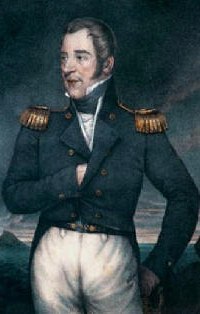 Convicted after a suspect trial, Cochrane was sentenced to one year in prison, public pillory and the loss of his naval rank. (Although the pillory was later dropped because of a fear that Cochrane’s supporters would revolt if it was allowed to go ahead.) He never gave up the right to prove his innocence, however, and was restored to the navy list in 1832, and given back his knighthood by Queen Victoria in 1847.
Before his name was restored, Cochrane left Britain for South America. He took command of the Chilean navy and led them towards independence from Spain. He also led the Chilean fleet to help gain independence from Spain for Peru too. He then moved on to Brazil and offered a helping hand in their fight for independence from Portugal. Having gained freedom for three South American countries, Cochrane sailed back to Europe and attempted to liberate Greece from the Ottoman Empire. However, the Greek sailors were poorly disciplined and Cochrane, for the first time ever, didn’t manage to make much of an impact.
The eventful and controversial life of a bold, brave and radical leader has inspired many characters in fiction; Horatio Hornblower, in C.S.Forester’s novels was modelled on his character and Sharpe’s Devil by Bernard Cornwell features an experience from Cochrane’s time in Chile. Perhaps the most famous fictional figure would be Captain Jack Aubrey, created by Patrick O’Brian and the inspiration for the 2003 film, ‘Master and Commander’.