

Many British folklore customs are of Celtic origin. The Celts divided their year by four great festivals, starting with Samhain, signifying the arrival of winter and the New Year, which fell on 1st November. Imbolc was next and occurred on 1st February, followed by Beltane on 1st May and Lugnasdh on 1st August.
Whilst these dates were all fixed within the Celtic year, the exact dates may not correspond precisely with those above, as dates were adjusted when first the Julian calendar was introduced, and later when England changed to the Gregorian calendar in 1751.
As with Christian festivals such as Easter, many Celtic celebrations do not have definite dates and are moveable or flexible.
Readers should always check with local Tourist Information Centres (TIC’s) that events or festivals are actually taking place before setting out to attend.
Permanent dates in January
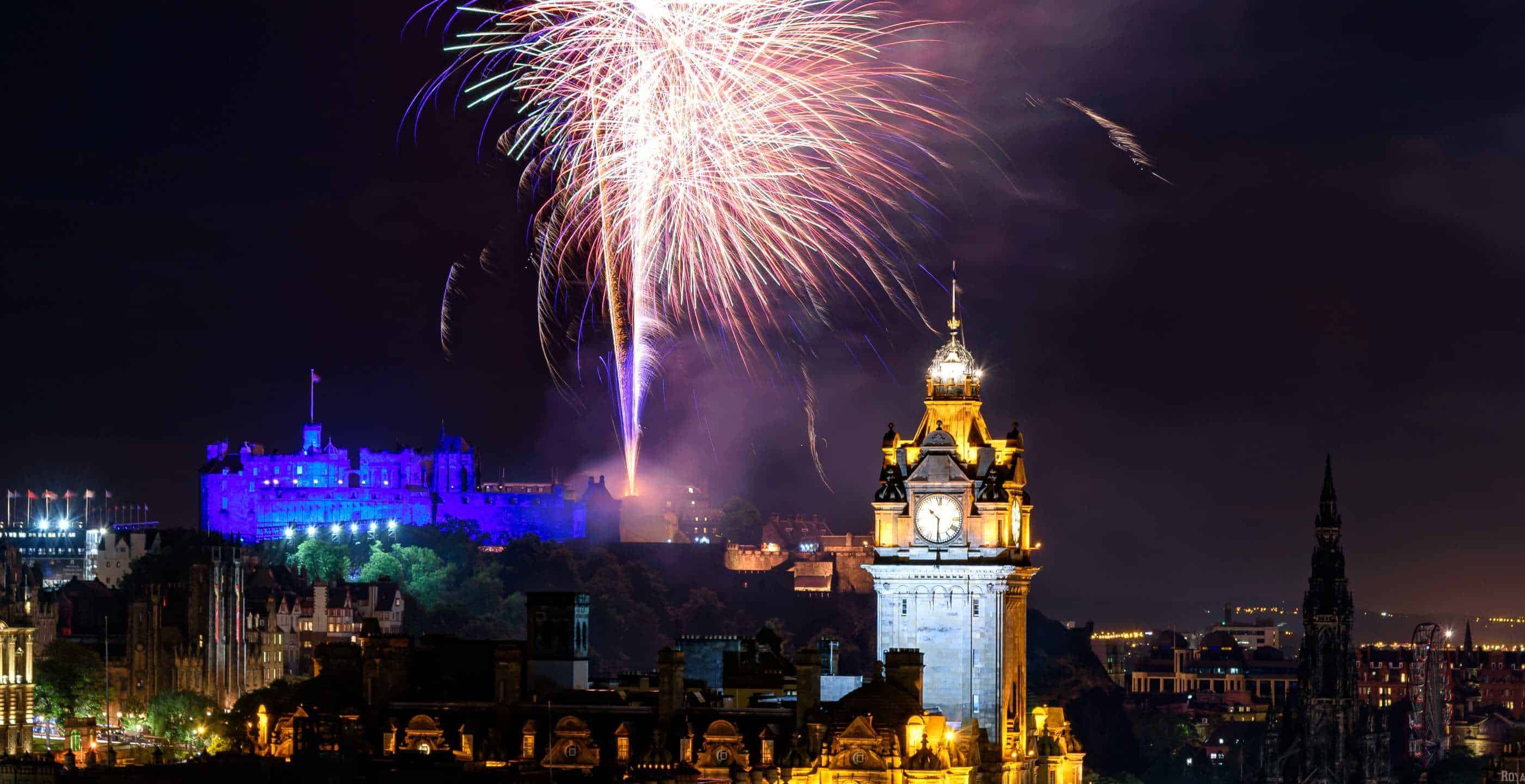
| 1st January | Hogmanay New Year Celebrations | Scotland | It is believed that many of the traditional Hogmanay celebrations were originally brought to Scotland by the invading Vikings in the early 8th and 9th centuries. |
| 1st January | Andrew’s Dole | Bideford, Devon | Dates from 1605, when Mayor John Andrew provided a loaf of bread to each of the poor old folk within the town |
| 1st January | Mummers’ Plays and sword dancing | Northumberland and Durham | Traditional masked mimes dating from the 15th century in which a character is killed and then brought back to life, so signifying the death of the Old Year and rebirth of the New Year. |
| 1st January | Mummers’ Play | Symondsbury, Dorset | |
| 1st January | Needle and Thread Ceremony | Queens College, Oxford | In a ceremony dating back 600 years, each college member is given a needle and some coloured silk thread to mend their academic hoods and instructed to ‘Take this and be thrifty’. |
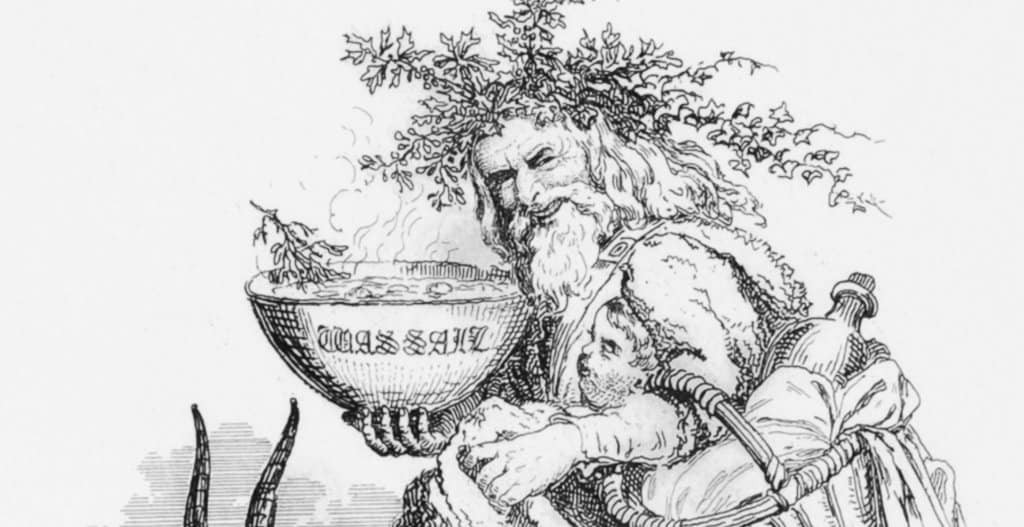
| 5th January | Twelfth Night | Throughout the UK | Formerly the last day of Christmas and the time to remove all Christmas decorations, also the night for the traditional Wassailing celebrations. |
| 6th January | Twelfth Day | The twelfth day after Christmas Day and the Old Calendar date for Christmas Day. | |
| 6th January | Baddeley Cake Ceremony | Theatre Royal, Drury Lane, London | In 1794 Robert Baddeley bequeathed a sum of £100, so that every year a Twelfth Night cake could be served to the cast performing at the theatre. |
| 6th January | Haxey Hood Game | Haxey, Lincolnshire | A tradition which started in the 13th century when Lady de Mowbray was riding through the village. A gust of wind blew the Lady’s silken hood away and the villagers fought for the privilege of returning it to her. |
| 6th January | Royal Epiphany Gifts | St James’s Palace, London | First started during the reign of George II, the monarch commemorates the Gifts of the Magi on the Feast of the Epiphany. Today money is donated to the poor of the parish. |
| 7th January | St Distaff’s Day | Traditionally the day when people returned to work after the Christmas festivities. | |
| 11th January | Old Calendar Hogmanay | ||
| 11th January | Burning the Clavie | Burghead, North East Scotland | Perhaps a little slow to change, the folk of Burhead ignore the fact that the calendar changed in 1752 and celebrate their New Year by burning the ‘clavie’, a half barrel nailed to long pole used for salmon fishing. |
| 13th January | St Hilary’s Day | Traditionally known as the coldest day of the year. | |
| 17th January | Wassailing Orchards | Carhampton and Roadwater, Somerset | Takes place on the Old Twelfth Night, when the wassailing party enter the orchards with a goodly amount of cider with which toast the trees and thus encourage a fruitful season. |
| 25th January | Burns Night | Scotland and now worldwide | Robert Burns is the best loved Scottish poet, admired not only for his verse and great love-songs, but also for his character and wit, his high spirits, ‘kirk-defying’, hard drinking and womanising! |
| 30th January | Charles I’s Martyrdom | Windsor Castle and London | Commemoration of the first anointed king to be officially executed. A memorial service is held at Windsor Castle and choristers march from St. Martin-in-the-Fields to Trafalgar Square. |
Flexible dates in January
| Various date throughout January – check here | Morris Dancing | Alvechurch, Birmingham, Bradford, Goathland, Horsham, Monkseaton, Turners Hill and West Chillington. | Regarded as an ancient tradition even in the reign of Elizabeth I, these ‘madde men’ with their ‘Devils dance’ were banned by the Puritans following the Civil War. |
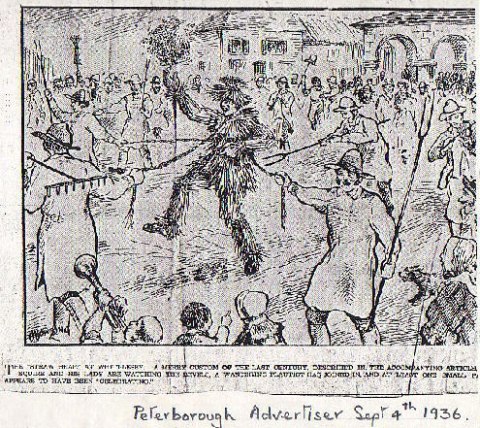
| Saturday before Plough Monday | Straw Bear Day | Whittlesey, Cambridgeshire | The `straw-bear’ being a man completely covered in straw, led by a string, and made to dance in front of people’s houses, in return for money, beer or food. |
| Sunday nearest the 5th of the month | Plough Sunday | Chichester and Exeter Cathedrals and Hedenham Church, Norfolk | Traditionally the first Sunday after Epiphany, the time to celebrate the long hours of tilling and preparing the soil before the seed can be sown. A celebration of the mystery of land and human labour. |
| Tuesday after Plough Monday | Straw Bear Day
|
The Fens, aka the Fenland region of Lincolnshire, Cambridgeshire and Norfolk. | See above. |
| First week of the month | Mari Lwyd Visits | Glamorgan, South Wales | A pagan practice is the wearing of animal disguises at the Winter festival. The custom lives on in the ‘Mari Lwyd’ Horse of Llangynwyd, with its snapping jaws and bottle-glass eyes. Mari Lwyd is believed to bring good luck and fertility to the houses they visit. |
| Last Tuesday in January | Fire Festival
|
Lerwick, Shetland, Scotland | Held every year to celebrate the end of Yule. Over 900 colourfully dressed “guisers” follow the Jarl’s squad of Vikings and their longship through the darkened streets of the town to the burning site. Here the official ceremony ends in a spectacular blaze as 800 flaming torches are thrown into the galley. |
| Last Thursday of the month | Dicing for Maids’ Money | Guildford, Surrey | Dating from a 1674 legacy, two servant girls of the town throw a dice to win the prize of a year’s wage. The ceremony takes place at the Council Chamber. |
Related Links:The Folklore Year – January |